


NCTE Regulations Prevail Over Executive Orders; Additional Chances for D.El.Ed. Candidates Are Unauthorised
 Copy Link
 Share
 Save
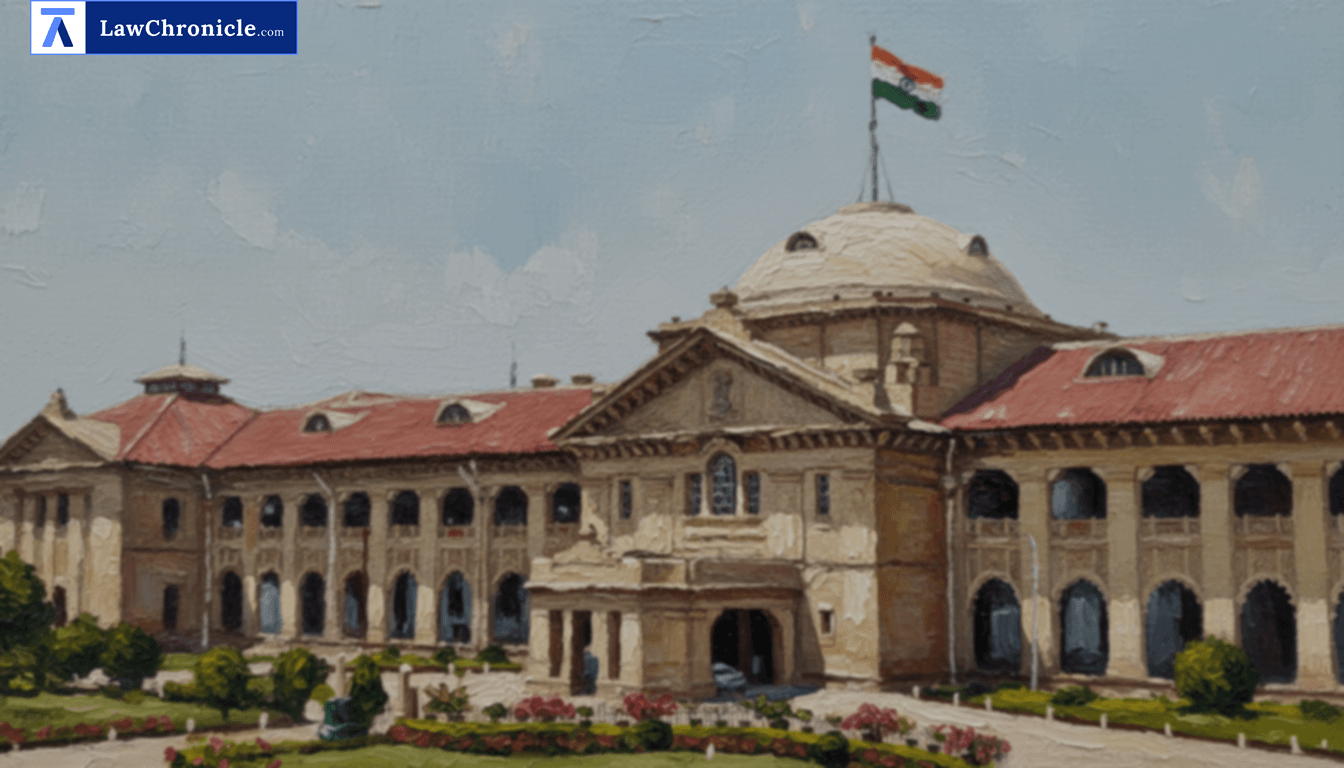
A bench of Justice Mahesh Chandra Tripathi and Justice Kunal Ravi Singh of the Allahabad High Court heard Special Appeal No. 191 of 2026 and connected matters in which the State of Uttar Pradesh challenged Single Judge orders that had directed the State to grant one additional attempt to Diploma in Elementary Education (D.El.Ed.) students who had failed a subject three times. The appeals raised the principal question whether executive orders of the Examination Regulatory Authority could override the National Council for Teacher Education (NCTE) Regulations, 2014 prescribing the maximum period for completion of the course.
The Court allowed the Special Appeals and set aside the writ orders that had extended the benefit of two circulars dated 11.09.2021 and 19.04.2022 to students whose names did not appear in lists annexed to those circulars. The High Court held that the NCTE Regulations, enacted under Section 32 of the NCTE Act, 1993, were binding and mandatory on the State and that Regulation 2.1 of Appendix‑2 fixed the maximum period to complete the D.El.Ed. programme at three years. The Court emphasised that the Secretary of the Examination Regulatory Authority lacked power to relax or extend the statutory time limit by executive order. The Court, in its reasoning, observed: “The orders dated 11.09.2021 and 19.04.2022 are only executive orders. They are subordinate to the Regulations, 2014. The executive order would not in any way override the Regulations having statutory force… the Authority could not issue any executive order that transgressed upon the norms and qualifications imposed by the Regulations, 2014.” The Court further noted that “no rights can be claimed based on the illegal orders” and reiterated that “negative parity cannot be claimed.”
Background
The respondents were students of various batches of the D.El.Ed. course who had failed in one subject three times, resulting in cancellation of their enrolment under the training rules. Following representations by some candidates, the Secretary of the Examination Regulatory Authority, U.P., issued orders dated 11.09.2021 and 19.04.2022 granting an additional chance to certain candidates whose names appeared in annexed lists. Several students whose names did not figure in those lists filed writ petitions before a Single Judge of the Allahabad High Court, alleging discrimination and violation of Article 14 by denial of equal treatment. The Single Judge framed queries to the State and NCTE, and by judgment dated 06.07.2023 allowed the petitions, issuing a writ of mandamus directing the State to grant one additional chance; the Single Judge qualified that the order would not be treated as binding precedent for future petitions.
The State appealed, contending that Regulation 2.1 of Appendix‑2 to the NCTE Regulations, 2014 fixed the course duration at two years with a maximum permissible period of three years and that no executive order could extend that statutory outer limit. The State relied on the statutory scheme under the NCTE Act, 1993 (Sections 12, 12‑A, 27 and 32) and earlier precedent recognising the binding nature of NCTE regulations. NCTE had filed affidavit asserting that any concession conflicting with the 2014 Regulations would violate those norms and standards.
The High Court analysed the legislative matrix, the Government Order of 27.02.2004 creating the Examination Regulatory Authority and its executive powers, and relevant precedents. Relying on Full Bench and Supreme Court authority that Regulations framed under the NCTE Act carried binding force, the Court concluded that executive directions could not supplant or dilute the Regulations. The Court held that the two circulars were contrary to the Regulations to the extent they purported to extend the period for completion and therefore were invalid; consequently, benefits based on those circulars could not be claimed by other petitioners who had not been included in the original lists. The appeals were allowed and the impugned Single Judge orders and other connected orders were set aside. The Court directed no costs. The judgment also observed that compliance orders issued during contempt proceedings did not confer vested rights on beneficiaries and that the validity of the executive orders had to be examined on appeal.
Case Details:
Case No.: Special Appeal No. 191 of 2026 (and connected SPLAs as listed in the judgment)
Case Title: State of U.P. through Secretary, Department of Basic Education, Government of U.P. Lucknow & others Vs. Sakshi & Others
Appearances:
For the Petitioner(s): Anoop Trivedi, Additional Advocate General; Ratan Deep Mishra, Advocate
For the Respondent(s): Alok Tripathi, Advocate; Jahnavi Singh, Advocate; Kauntey Singh, Advocate; Ravindra Singh, Advocate; Siddharth Khare, Advocate
Source: 2026 CaseBase(ALL) 27
Similar Articles


 Breaking News


