


High Court Can Condone Delay Beyond 120 Days Under Income Tax Act: Himachal Pradesh HC
 Copy Link
 Share
 Save
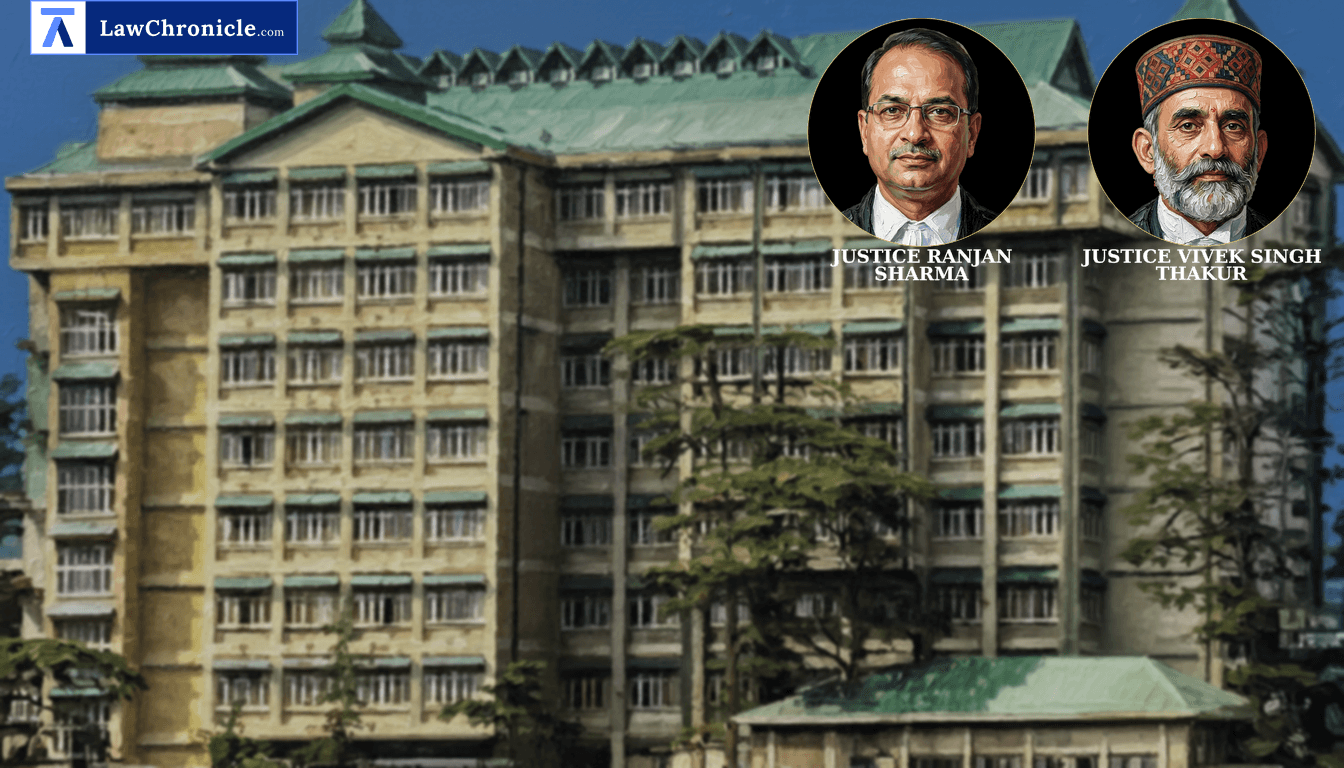
Refusing to let procedural rigor defeat substantive tax remedies, the Himachal Pradesh High Court held that Section 260A(2A) of the Income Tax Act, 1961 does not render the appellate court functus officio after 120 days, confirming its inherent discretion to condone delay where sufficient cause is established.
A Division Bench comprising Justice Vivek Singh Thakur and Justice Ranjan Sharma allowed an application filed by the Revenue seeking condonation of a 31-day delay in filing an appeal against an Income Tax Appellate Tribunal (ITAT) order.
Key Takeaways
Section 260A(2A) Does Not Exclude Condonation: The High Court retains statutory discretion to condone delay beyond 120 days since the provision lacks negative language like 'but not thereafter'.
No Merit-Hunting at Delay Stage: Courts cannot evaluate the underlying merits of an appeal while adjudicating an application for condonation of delay.
Procedural Excess Cannot Kill Substantive Rights: A minor procedural delay of 31 days caused by departmental administrative steps cannot extinguish the Revenue's statutory right to appeal.
Court's Rationale on Condonation of Delay
The High Court observed that administrative process, internal approvals, and festival breaks constituted a sufficient explanation for the nominal delay of 31 days. The Court stressed that rules of limitation are intended to advance justice rather than destroy substantive rights.
Referring to the ruling in Jittu Yadav vs State of Chahatisgarh and Others ( "Criminal Appeal No 2911 of 2026, decided on 27.05.2026": 2024 CaseBase(CTH) 17684), the Court noted that Section 260A(2A) of the Income Tax Act, 1961 does not contain restrictive language barring delay condonation. The Bench emphasized that unless an Act expressly excludes the Limitation Act, the court's discretionary jurisdiction remains intact.
The Court, in its reasoning, observed: "Rules of limitation cannot destroy the substantial rights of the Applicant-Authorities and liberal and purposely approach has to be adopted to advance a cause of justice. If the remedy is reduced to a husk by procedural excess, the right becomes a casualty and therefore, plea of the non-applicant-respondent cannot sustain."
Addressing the respondent's attempt to argue the merits of the main appeal, the High Court reiterated that premature evaluation of the case merits during delay condonation proceedings is impermissible, aligning with principles laid down in Shivamma (dead) by LRs v. Karnataka Housing Board & Ors. ( "2025 INSC 1104": 2025 CaseBase(SC) 650).
The Court issued the following directions:
"(i) Instant application i.e. OMP (M) No. 501 of 2025, titled as Principal Commissioner of Income Tax-1 vs M/s SBS Biotech Unit-II, is allowed;
(ii) Delay of 31 days in filing accompanying appeal is condoned;
(iii) As a sequel to the directions (i) and (ii) above, the accompanying appeal be registered and listed for admission hereinafter; and
(iv) Parties are left to bear respective costs."
Ratio
In the absence of explicit statutory prohibitions such as 'but not thereafter' in Section 260A(2A) of the Income Tax Act, 1961, the High Court retains statutory power to condone delay in filing appeals provided 'sufficient cause' and due diligence are established.
Background
The Principal Commissioner of Income Tax-1 sought condonation of a 31-day delay in filing an appeal against an order dated February 25, 2025, issued by the ITAT Chandigarh Bench. The Revenue stated that the delay occurred due to administrative routing of case records from Parwanoo to Chandigarh, legal opinion drafting, internal approvals, and intervening festival holidays.
The respondent opposed the plea, arguing that procedural delays do not constitute sufficient cause and citing Shivamma (dead) by LRs v. Karnataka Housing Board & Ors. ( "2025 INSC 1104": 2025 CaseBase(SC) 650), State of Odisha vs Managing Committee of Namrata Girls High School ( "2026 INSC 148": 2026 CaseBase(SC) 235), and Pathapati Subba Reddy (died) vs The Special Duty Collector ( "2024 INSC 286": 2024 CaseBase(SC) 24). The respondent also asserted that the proposed appeal lacked substantive merit.
In response, the Revenue distinguished the respondent's precedents, pointing out that Shivamma (dead) by LRs v. Karnataka Housing Board & Ors. ( "2025 INSC 1104": 2025 CaseBase(SC) 650) involved an unexplained delay of 3,966 days and State of Odisha vs Managing Committee of Namrata Girls High School ( "2026 INSC 148": 2026 CaseBase(SC) 235) involved an 11-year lapse. The Revenue relied upon precedents including Esha Bhattacharjee vs Managing Committee of Raghunathpur Nafar Academy ( "(2013) 12 SCC 649": 2013 CaseBase(SC) 742), Collector, Land Acquisition, Anantnag vs Mst. Katiji, and N. Balakrishnan v. M. Krishnamurthy ( "(1998) 7 SCC 123": 1998 CaseBase(SC) 331) to argue that short, bona fide delays ought to be condoned to prevent failure of justice.
Accepting the Revenue's explanation, the High Court condoned the 31-day delay and directed the registration of the appeal for hearing on merits.
Case Details:
Case No.: OMP (M) No.501 of 2025 in ITA No. ____ of 2025
Neutral Citation: 2026:HHC:36928
Case Title: Principal Commissioner of Income Tax-1 v. M/s SBS Biotech Unit-II
Appearances:
For the Petitioner(s): M/s Neeraj Sharma and Ishaan Kashyap, Advocates
For the Respondent(s): Mr. Deepak Vyas, Advocate (Through VC) & Ms. Soma Thakur, Advocate
Source: 2026 CaseBase(HP) 7970
Similar Articles
 Breaking News


