


No Right to Reclaim Acquired Land for Canal Even if Not Physically Submerged: Chhattisgarh HC
 Copy Link
 Share
 Save
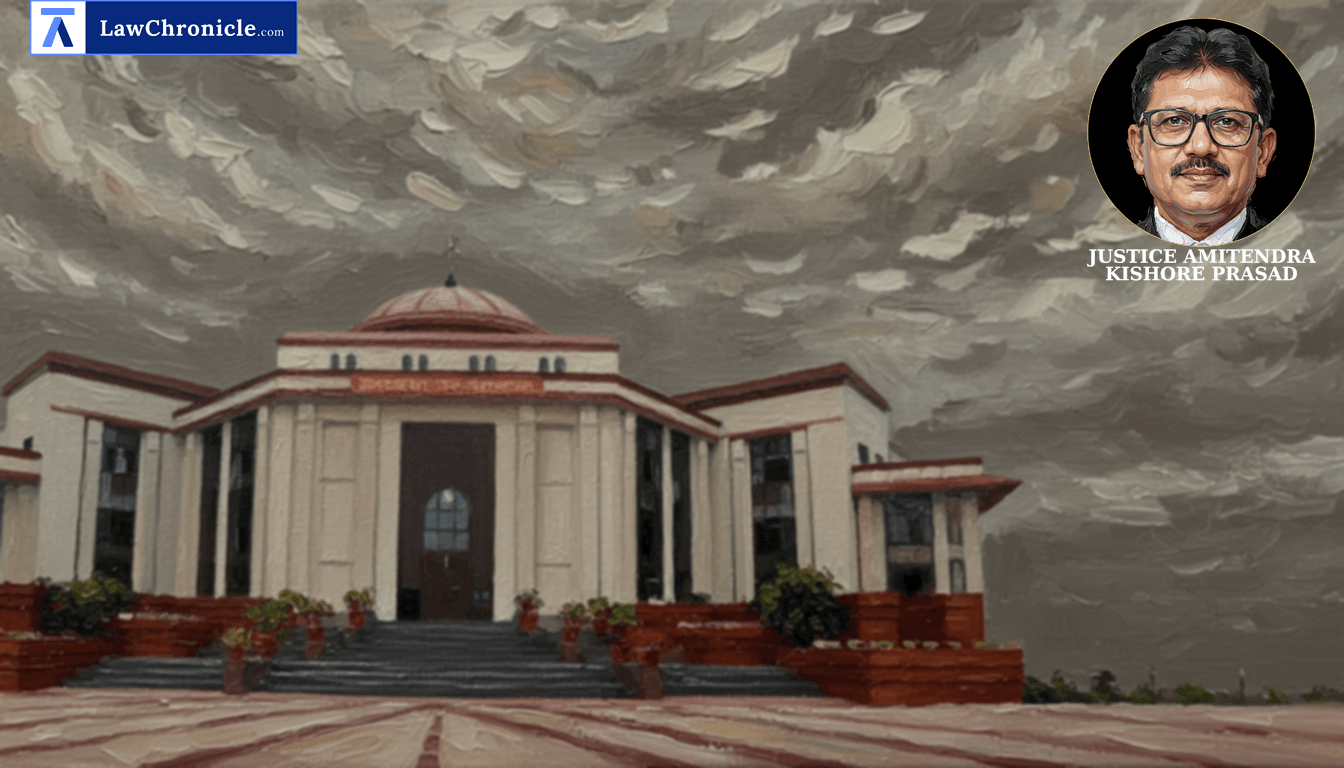
Reinforcing state sovereignty over acquired territory, the Chhattisgarh High Court has held that erstwhile landowners possess no enforceable right to seek restoration of unutilised land once it vests in the State, even if substantial portions are not physically occupied by the project's primary structure.
Justice Amitendra Kishore Prasad adjudicated on the challenge against an order passed by the Collector, Raigarh, which had rejected claims for the return of unutilised portions of land acquired for the Minimata Bango Canal Project. The petitioners sought the return of specific land parcels, arguing that since the canal construction was complete, the remaining unaffected areas should be restored to them under the current land acquisition regime.
Key Takeaways
Absolute Vesting Prevents Reversion
Once land is lawfully acquired and vests in the State under the Land Acquisition Act, 1894, the original owner loses all rights, and mere non-utilisation does not trigger a right to reconveyance.
Linear Project Requirements
For infrastructure like canals, 'utilisation' extends beyond the water-flow area to include inspection pathways, maintenance zones, and future operational reserves.
Non-Retroactivity of Act 2013
Section 101 of the Right to Fair Compensation and Transparency in Land Acquisition, Rehabilitation and Resettlement Act, 2013, which allows for the return of unutilised land, cannot be invoked to reopen or undo acquisitions concluded under the Land Acquisition Act, 1894.
The Scope of 'Public Purpose' and Technical Necessity
The Chhattisgarh High Court emphasized that the nature of a linear irrigation project necessitates technical assessments of alignment, width, and maintenance requirements. The Bench noted that the absence of a permanent physical structure on every part of the acquired land does not render it 'surplus'.
Highlighting the law pertaining to land acquisition, the Bench discussed that "...the legal position is well settled that, upon completion of acquisition and vesting of the land in the State in accordance with the applicable statutory provisions, the erstwhile landowner does not retain an automatic right to reclaim the acquired land merely because the land is subsequently alleged to be unutilised or is not being used for the principal physical structure for which it was acquired. ...The principle underlying the decisions of the Supreme Court in Satendra Prasad Jain v. State of Uttar Pradesh ( "(1993) 4 SCC 369": 1993 CaseBase(SC) 173), Indore Development Authority v. Manoharlal and Chennai Metropolitan Development Authority represented by its Member Secretary v. Dharmalingam and others is that the legal consequences flowing from a completed acquisition and statutory vesting cannot be displaced merely on the basis of subsequent circumstances, unless a right to such relief is established under an applicable provision of law."
Ratio
Land acquired for a public purpose and vested in the State free from all encumbrances under the Land Acquisition Act, 1894 cannot be reassigned or reconveyed to the original owner solely on the ground of non-utilisation. Section 101 of the Right to Fair Compensation and Transparency in Land Acquisition, Rehabilitation and Resettlement Act, 2013 operates only in respect of lands acquired under the 2013 Act and cannot be applied retroactively to acquisitions concluded under the 1894 Act. Furthermore, the State maintains the discretion to utilize acquired land for any other public purpose even if the original purpose has been fulfilled or altered.
Background
The dispute originated from land acquisition proceedings initiated in 2003 for the construction of a canal under the Hasdeo Bango Project. An award was passed on 28.02.2004 under the Land Acquisition Act, 1894. More than a decade after the canal's completion, the petitioners approached the revenue authorities, relying on demarcation reports to claim that specific portions of their khasra numbers were not utilized for the canal structure. They sought relief under Section 101 of the Right to Fair Compensation and Transparency in Land Acquisition, Rehabilitation and Resettlement Act, 2013, which provides for the return of land unutilised for five years.
The State opposed the petitions, citing the landmark rulings in Satendra Prasad Jain v. State of Uttar Pradesh ( "(1993) 4 SCC 369": 1993 CaseBase(SC) 173) and Indore Development Authority v. Manoharlal, asserting that the land had vested absolutely in the Government. The Executive Engineer of the Water Resources Department submitted that the 'unutilised' spaces were essential for inspection pathways, maintenance, and future departmental offices. The Chhattisgarh High Court found that since the petitioners had not challenged the original acquisition or the award, and since the 1894 Act lacked a restoration provision, the petitions were legally unsustainable.
Case Details:
Case No.: WPC No. 283 of 2022 and WPC No. 573 of 2022
Neutral Citation: 2026:CGHC:46846
Case Title: Bajrang Lal Vs. State of Chhattisgarh & Ors.
Appearances:
For the Petitioner(s): Mr. S.P. Kale assisted by Mr. Abhishek Singh, Advocates
For the Respondent(s): Mr. Priyank Rathi, Government Advocate
Source: 2026 CaseBase(CTH) 21293
Similar Articles
 Breaking News


