Non-Compete Clause | Negative Covenants Bind Even Sister Concerns As Separate Entities: Bombay HC
 Copy Link
 Share
 Save
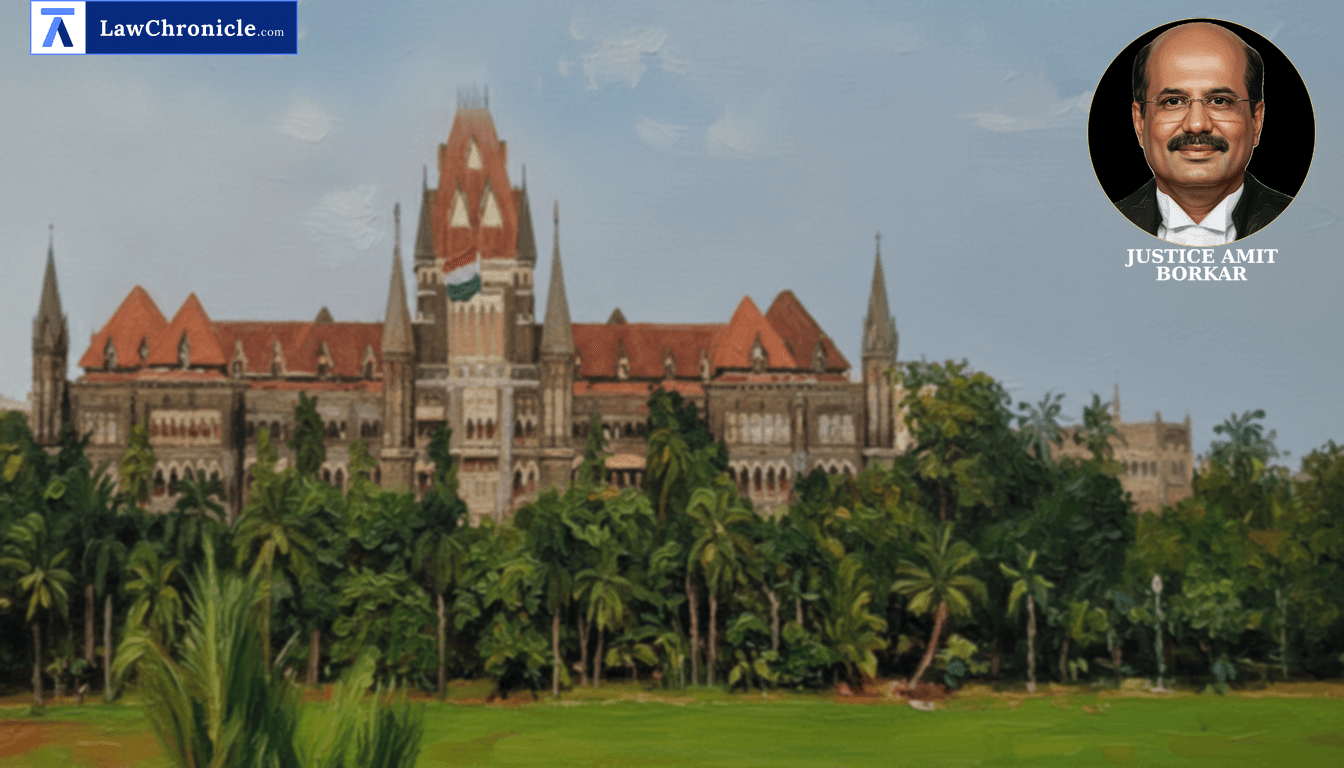
The Bombay High Court has fortified the sanctity of non-compete clauses in franchise agreements, ruling that a franchisee cannot circumvent restrictive covenants by carrying on competing business indirectly through a sister concern or associate entity. In a significant win for brand owners, the Bench held that the separate corporate identity of a related entity does not shield it from interim injunctions when the underlying contract expressly prohibits indirect competition.
Justice Amit Borkar, sitting in the Commercial Division, passed this order while hearing a petition under Section 9 of the Arbitration and Conciliation Act, 1996. The Bombay High Court was considering an application for interim protection filed by Parle Agro Private Limited against two entities of the KL Group, alleging a blatant breach of exclusivity and non-compete obligations through the manufacture of a competing packaged drinking water brand named 'SURE'.
Key Takeaways
- Substance Over Form in Indirect Competition
Entities cannot bypass non-compete clauses by simply floating or using a sister concern to conduct the prohibited business. - Wide Scope of 'Associate' Entities
Where a contract defines restrictions to include 'associates' or 'affiliates', the court will look at common management, shared infrastructure, and overlapping personnel to determine a breach. - Interim Relief Against Non-Signatories
Courts exercising jurisdiction under Section 9 of the Arbitration and Conciliation Act, 1996 possess the power to issue protective orders against non-signatory third parties if they are 'claiming under' a party to the agreement or aiding in the breach of its subject matter. - Protection of Technical Know-How
Franchise protections extend beyond trademarks to include operational manuals, quality standards, and distribution networks developed during the relationship.
Judicial Analysis of Corporate Inter-connectivity
The Petitioner argued that despite having separate franchise agreements for different products, Respondent No. 1 and Respondent No. 2 functioned as a single economic unit. An audit conducted in March 2026 revealed that while Respondent No. 1 held the franchise for 'BAILLEY' water, Respondent No. 2 had established a competing water manufacturing facility within the same compound, utilizing shared personnel and infrastructure. The Court noted that the 2014 agreement with Respondent No. 1 specifically prohibited carrying out activities "directly or indirectly through any associate/sister concern."
In its reasoning, the Bombay High Court Bench observed that "The separate identity has to be respected. But at the same time, the Court has to give effect to the promise made by Respondent No. 1 that it would not carry on the competing activity indirectly through the type of connected entity which is referred to in the Agreement... the language is wider than a simple shareholding test. The nature and extent of the interest and the manner in which the concerned entities are functioning are matters which can be looked into from the material on record."
Section 9 Powers and Third-Party Injunctions
The Respondents contended that Respondent No. 2, being a non-signatory to the 2014 agreement, could not be restrained under the Arbitration and Conciliation Act, 1996. The Bombay High Court rejected this, relying on the principle established in Girish Mulchand Mehta v. Mahesh S. Mehta, noting that Section 9 does not limit the court's jurisdiction to pass interim measures only against parties to the arbitration agreement if the third party's actions threaten to defeat the subject matter of the arbitration.
The Bombay High Court issued following directions:
"i) The Petition is partly allowed in terms of prayer clauses (a) and (b), subject to the following terms and conditions;
ii) Pending the adjudication of the disputes between the parties before the learned Sole Arbitrator, the Respondents, their affiliates, associates, sister concerns, group companies and/or such other organisations claiming through or under them are hereby restrained, directly or indirectly, from manufacturing, preparing, packaging, distributing, marketing, selling or otherwise dealing in “SURE” water or any other packaged drinking water product competing with the products of the Petitioner, in a manner contrary to the obligations contained in the Franchise Agreements;
iii) The Respondents, their affiliates, associates, sister concerns, group companies and/or such other organisations claiming through or under them are further restrained from using, disclosing, communicating, exploiting or deriving any benefit, in connection with such competing activity, from the Petitioner's confidential information, trade secrets, technical know-how, manufacturing processes, Quality Manuals, standard operating procedures, customer information, vendor information, supply-chain information, pricing information, distribution networks and other proprietary business information made available under the Franchise Agreements;"
Ratio
A negative covenant that prohibits a party from competing "directly or indirectly through an associate or sister concern" must be interpreted broadly to prevent the circumvention of contractual obligations. The separate corporate personality of a sister concern cannot be used as a shield to engage in activities that the primary contracting party is expressly barred from performing, especially when there is evidence of common management, premises, and shared business resources. A court under Section 9 of the Arbitration and Conciliation Act, 1996 can grant interim protection against non-signatories who are instrumental in such indirect breaches to preserve the subject matter of the dispute.
Background
The dispute arose when Parle Agro (PAPL) discovered that the KL Group, which had been its franchisee since 2001, had started manufacturing 'SURE' water. PAPL alleged this violated the 2014 Franchise Agreement with Respondent No. 1. The Respondents argued that the 2014 agreement was separate from Respondent No. 2’s 2018 agreement (which had been discontinued) and that Respondent No. 2 was a distinct legal entity not bound by the 2014 pact. They further contended that any post-termination restraint was void under Section 27 of the Contract Act.
However, the Bombay High Court found that the 2014 agreement was still subsisting and the negative covenant applied "during the subsistence." The Bench followed the logic in Elster Instromet B.V. v. Mrunal Gandhi regarding the interpretation of negative covenants in joint venture-like scenarios to ensure the intent of the parties is not defeated by affiliated entities. The petition was allowed, granting an interim injunction against the manufacture and sale of the competing water brand pending arbitration.
Case Details:
Case No.: COMM ARBITRATION PETITION (L) NO. 25994 OF 2026
Neutral Citation: 2026:BHC-OS:20863
Case Title: Parle Agro Private Limited Vs. Udayak Agro Products Pvt. Ltd. and Anr.
Appearances:
For the Petitioner(s): Dr. Birendra Saraf, Senior Advocate with Mr. Jay Sanklecha, Mr. Aditya Malhotra, Ms. Kanika Goenka, Ms. Prachi Gupta, Ms. Swagata Ghosh, Ms. Prachi Gupta and Mr. Pranay Malade
For the Respondent(s): Mr. Prathamesh Kamat with Mr. Sumit Towari for R1; Mr. Ravi Kadam, Senior Advocate with Mr. Shanay Shah, Ms. Aditi Deshpande, Mr. Tejas Popat and Ms. Rupal Dugar for R2
Source: 2026 CaseBase(BOM) 6488
Similar Articles

 Breaking News