Bombay HC Protects 33-Year-Old Vadilal Brand Rights Amid Family Feud
 Copy Link
 Share
 Save
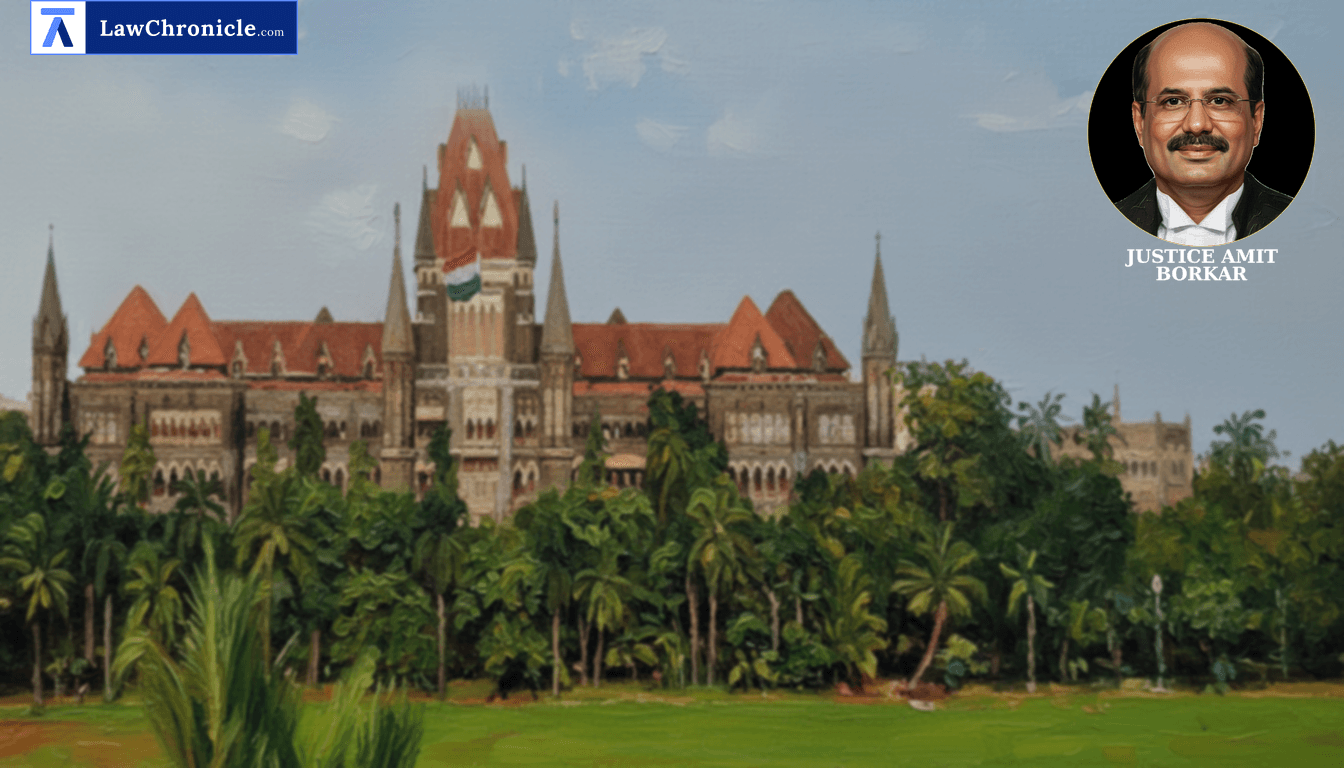
The Bombay High Court granted interim protection to the 'Bombay Group' of the Vadilal family, restraining the Ahmedabad-based branch from interfering with its decades-old right to use the 'Vadilal' brand in specified territories.
A single-judge bench of Justice Amit Borkar heard the dispute arising from a 1993 family settlement. The Court was tasked with determining whether a recent termination notice issued by the Ahmedabad Group could unilaterally extinguish brand rights that had been exercised for over thirty-three years. The Court observed that the various agreements executed between the parties appeared to be part of a composite family arrangement rather than isolated commercial contracts.
The Composite Nature of Family Settlements
The Court, in its reasoning, observed: "...the petitioners have raised a substantial case that all the four agreements constitute interconnected parts of one larger family arrangement. Whether this contention ultimately succeeds is entirely a matter for the learned Arbitral Tribunal after complete appreciation of the evidence. At this interlocutory stage, however, the petitioners' case cannot be rejected merely by treating every agreement as wholly independent and completely disconnected from the others."
Territorial Jurisdiction and Arbitrability
The respondents challenged the Court's jurisdiction, citing exclusive jurisdiction clauses in the Arbitration and Conciliation Act, 1996 and specific agreements. However, the Court relied on the arbitration clause within the Parent Agreement of 1993. Justice Borkar noted that the words "party who has necessitated arbitration" in the agreement suggested the party whose conduct triggered the dispute, which in this case was the respondents' act of termination.
Balance of Convenience and Irreparable Injury
Addressing the risk to the petitioners, the Court highlighted that immediate discontinuance of the brand would cause irreparable harm to goodwill developed since 1993. The Court remarked: "Loss of consumer confidence, market recognition, distribution channels and commercial identity over several decades cannot be reconstructed by directing payment of compensation. Money may compensate financial loss, but it may not restore goodwill which has developed through market presence over a long period."
Quality Control and Consumer Safety
While the respondents raised concerns regarding product quality under the Prevention of Food Adulteration Act, 1954, the Court balanced this by imposing strict compliance conditions on the petitioners rather than permitting the total cessation of their business. The Court has following directions:
"(i) The present petition is partly allowed;
(ii) Pending commencement, continuance, and conclusion of the arbitral proceedings and for a period of ninety days after publication of the arbitral award or until further orders of the learned Arbitral Tribunal, whichever is earlier, respondent No.17, respondent No.18 and the surviving respondent Nos.3 to 9, 12, 13 and 15, their servants, agents, directors, officers, employees, assigns or any person claiming through or under them are restrained from acting upon or giving effect to the communication dated 26 May 2026 in so far as it seeks to interfere with, obstruct or prevent the petitioners from continuing to exercise the disputed rights claimed under the Family Settlement dated 30 March 1993;
(iii) Respondent No.17, respondent No.18 and the surviving respondent Nos.3 to 9, 12, 13 and 15 are further restrained from interfering with the petitioners' continued use of the "Vadilal" brand within the territories claimed by the petitioners under the Family Settlement, subject to the conditions contained in this order;
(iv) Respondent No.17, respondent No.18 and the surviving respondent Nos.3 to 9, 12, 13 and 15 are restrained from transferring, assigning, licensing, encumbering, creating any third party rights or otherwise dealing with the disputed rights forming the subject matter of the present proceedings in any manner;
(v) The above protection shall not be construed as recognition of any final right in favour of the petitioners or as invalidating the termination dated 26 May 2026. All questions relating to validity of the termination, interpretation of the agreements and the respective rights of the parties are kept open;
(vi) Since the respondents have raised serious allegations regarding quality, standards, and possible prejudice to consumers, the petitioners shall continue to manufacture and store all products strictly in accordance with the provisions of the Food Safety and Standards Act, 2006, the Rules and Regulations framed thereunder and other applicable statutory requirement;
(vii) The petitioners shall continue to maintain all licences, statutory approvals and quality certifications required under law throughout the pendency of the arbitral proceedings;
(viii) The petitioners shall maintain complete manufacturing records, batch records, laboratory reports, quality control reports and inspection reports relating to all products sold under the "Vadilal" brand. Such records shall be preserved and shall be produced before the learned Arbitral Tribunal whenever directed;
(ix) Respondent No.17 shall be entitled, after giving not less than twenty-four hours' prior written notice, to have reasonable inspection of the manufacturing facilities and quality control records of the petitioners through authorised representatives, provided that such inspection shall not obstruct the petitioners' business operations;
(x) If any dispute arises regarding quality of any product, samples shall be drawn in the presence of representatives of both sides, properly sealed and forwarded to an NABL accredited laboratory or as may be directed by the Arbitral Tribunal. Copies of all reports shall be simultaneously furnished to both sides;
(xi) The petitioners shall immediately comply with every statutory direction issued by any competent food safety or regulatory authority. Nothing contained in this order shall prevent any statutory authority from exercising its powers under the applicable law in the interest of public health;
(xii) Neither party shall issue any public communication or representation stating that this Court has finally recognised or rejected the rights of either side. The present order shall not be projected as a final adjudication;
(xiii) Neither party shall create any irreversible third party rights in relation to the disputed trademark rights or the rights claimed under the Family Settlement without obtaining appropriate orders from the Arbitral Tribunal or the competent Court;
(xiv) In the event the proposed scheme of amalgamation involving respondent Nos.17 and 18 is sanctioned during the pendency of the arbitral proceedings, such amalgamation shall remain subject to the outcome of the arbitration and shall not by itself extinguish, enlarge or otherwise affect the disputed rights claimed by either side;
(xv) It is clarified that no operative relief is granted against respondent Nos.1, 2, 10, 11, 14 and 16, as they are stated to have expired. Liberty is reserved to the parties to take appropriate steps in accordance with law, if required;
(xvi) Liberty is granted to either party to approach the learned Arbitral Tribunal immediately upon its constitution for modification, variation, or vacation of the interim measures granted by this Court. The learned Arbitral Tribunal shall decide such application independently and in accordance with law without being influenced by any prima facie observations contained in this order.
(xvii) The observations contained in this judgment are purely prima facie and have been recorded only for deciding the present petition under Section 9 of the Arbitration and Conciliation Act. They shall not bind the learned Arbitral Tribunal while deciding all issues relating to jurisdiction, arbitrability, validity of the termination, interpretation of the agreements or the rights and liabilities of the parties.
(xviii) There shall be no order as to costs.”
Background:
The dispute traces back to 1993 when the Vadilal business was divided into the 'Bombay Group' (Petitioners) and the 'Ahmedabad Group' (Respondents) via a Parent Agreement. To implement this, three other documents were signed: a Branding Agreement, an Irrevocable Power of Attorney, and a Registered User Agreement. Under these, the Bombay Group gave up its shareholding in respondent No. 17 in exchange for exclusive rights to the brand in Maharashtra, Goa, Karnataka, Kerala, and Andhra Pradesh.
In 2026, Respondent No. 17 sought to terminate these rights, alleging quality issues based on laboratory reports. The petitioners argued these allegations were a pretext to force a buyout. The Court applied the principles from Kale & Ors. v. Deputy Directors of Consolidation & Ors. to recognize that family settlements should be preserved to maintain peace. It also considered the 'Group of Companies' doctrine as discussed in Cox & Kings regarding non-signatory respondents. Ultimately, the Court stayed the termination communication to preserve the status quo pending arbitration.
Case Details:
Case No.: COMM ARBITRATION PETITION (L) NO.18386 OF 2026
Case Title: Shailesh R. Gandhi & Ors. Vs. Late Ramchandra R. Gandhi & Ors.
Appearances:
For the Petitioner(s): Mr. Mustafa Doctor, Senior Advocate with Mr. Rohaan Cama, Mr. Hiren Kamod, Ms. Spenta Kapadiya, Mr. Kyrus Modi, Mr. Faraz Alam Sagar, Mr. Surya Sambyal, Ms. Aarti Abhjyankar, Ms. Aditi Goyal, Ms. Urja Dhapre, and Mr. Prateek Ayyappan i/by IndusLaw.
For the Respondent(s): Mr. Venkatesh R. Dhond, Senior Advocate (R3-8); Mr. Shiraz Rustomjee, Senior Advocate (R17); Mr. Zal Andhyarujina, Senior Advocate (R18).
Source: 2026 CaseBase(BOM) 261
Similar Articles

 Breaking News