


Non-Payment of Sale Price No Ground to Cancel Registered Sale Deed: Himachal Pradesh HC
 Copy Link
 Share
 Save
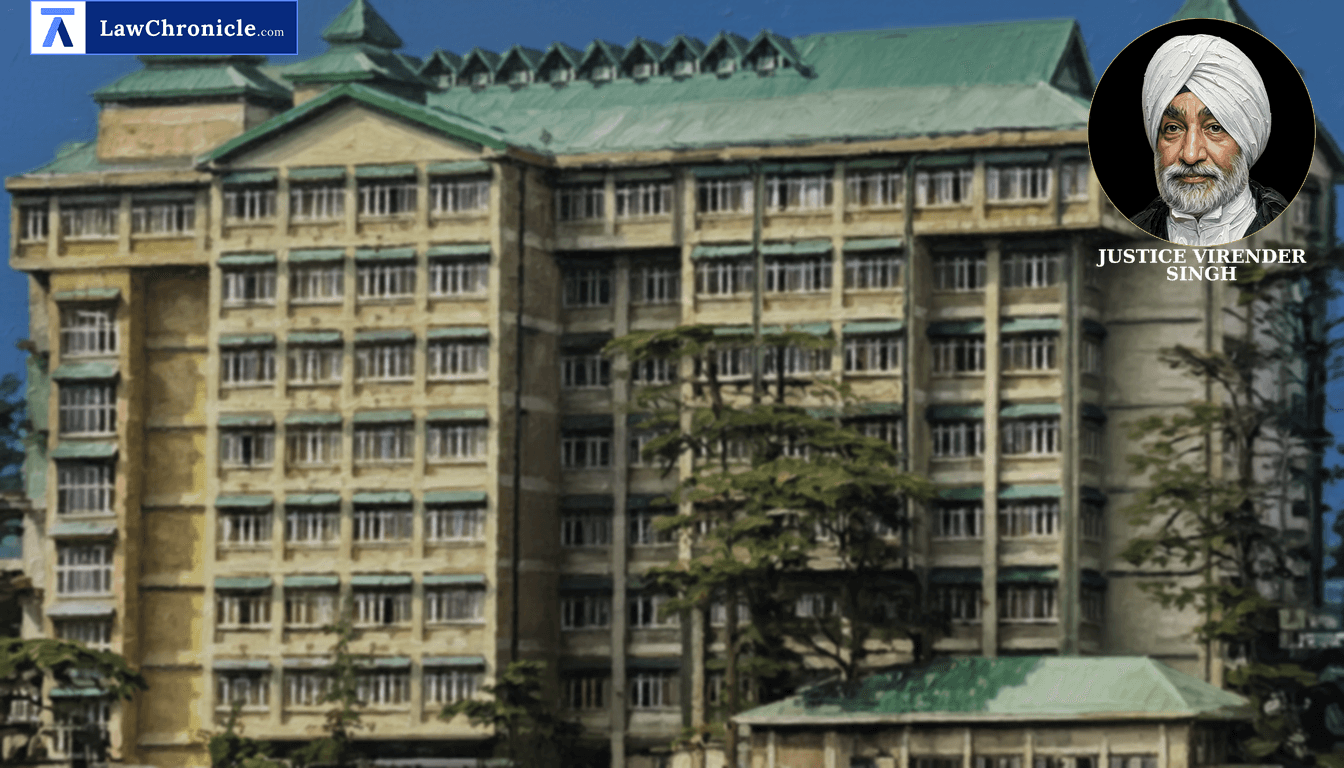
The Himachal Pradesh High Court has reaffirmed the settled legal principle that the non-payment of sale consideration does not invalidate a registered sale deed or provide a cause of action for its cancellation. Setting aside a trial court order, the High Court ruled that once title passes through a registered instrument, the vendor's remedy lies in recovering the balance price rather than seeking to annul the transfer of ownership.
In a verdict delivered by Justice Virender Singh, the Court exercised its supervisory jurisdiction under Constitution of India, 1950 to reject a plaint at the threshold. The Court held that the plaintiffs' suit, which sought to declare a sale deed null and void solely due to the alleged non-encashment of a consideration cheque, was legally untenable and lacked a valid cause of action under Code of Civil Procedure, 1908.
Key Takeaways
Title Transfer Finality
Actual payment of the full price at the time of execution is not a sine qua non for the completion of a sale; title passes to the transferee upon registration regardless of pending payments.
Remedy for Unpaid Vendors
If the sale consideration is not paid, the seller's legal recourse is limited to a suit for recovery of money rather than a suit for cancellation of the sale deed.
Drastic Power of Plaint Rejection
Courts are duty-bound to nip bogus litigation in the bud under Order 7 Rule 11 of the Code of Civil Procedure, 1908 if the averments, even when taken as true, do not disclose a right to sue.
Fraud vs. Contractual Breach
General allegations of fraud cannot override the statutory definition of 'sale' under the Transfer Of Property Act, 1882 when the primary grievance is the failure of a consideration cheque.
Court's Rationale on Cause of Action
The Court scrutinized the plaintiffs' claim that a sale deed executed for Rs. 56 Lakhs was void because the defendant requested them not to present the cheque for encashment. The Court noted that the sale deed contained a clear recital of handing over possession and receipt of consideration. Relying on the precedent in Dahiben versus Arvindbhai Kalyanji Bhanusali, the Court emphasized that 'sale' is a transfer of ownership for a price paid, promised, or part-paid.
The Court, in its reasoning, observed: "In view of the aforesaid judgment, the sale deed cannot be declared as null and void on account of alleged non-payment of the sale consideration... non-payment of the remaining part of the sale price would not invalidate it and remedy would be to recover the balance sale consideration, but not cancellation of sale deed for non-payment of balance sale consideration."
The Court further highlighted that the trial court committed a jurisdictional error by suggesting that these disputed facts required a full trial. It noted that under the principles laid down in Madanuri Sri Rama Chandra Murthy vs. Syed Jalal ( "(2017) 13 Supreme Court Cases 174": 2017 CaseBase(SC) 641) and Eldeco Housing & Industries Limited versus Ashok Vidyarthi & others, the court must only look at the plaint's averments to determine if a suit is manifestly vexatious.
The Court has the following directions:
"Consequently, impugned order, passed by learned trial Court, is set aside and the application, under Order 7 Rule 11 of the CPC is allowed, on account of the fact that the plaintiff has no cause of action to file the present suit. Consequently, the plaint is rejected. With these observations, the present petition is allowed, so also the pending application(s), if any."
Ratio
A registered sale deed is valid and complete once the parties intend to transfer ownership for a price, whether paid in praesenti or promised in the future. The non-payment of sale consideration, even if established, does not provide a legal basis for the cancellation of the deed or the annulment of the title; the transferor’s only remedy is a suit for recovery of the unpaid amount under the Specific Relief Act, 1963 and Transfer Of Property Act, 1882.
Background
The dispute originated from a suit filed by Ganesh Dutt Sharma and Ram Prabha Sharma seeking a declaration that a sale deed dated 21.03.2016 in favor of Madhu Negi was null and void. The plaintiffs alleged that the defendant, in connivance with her husband, played a fraud by providing a cheque for Rs. 56,00,000/- but requesting them not to encash it. Meanwhile, the defendant mortgaged the suit land to Baghat Urban Cooperative Bank the very next day.
The defendant filed an application for rejection of the plaint under Order 7 Rule 11 of the Code of Civil Procedure, 1908, arguing that the suit was improperly valued and, more critically, that non-payment of consideration is not a ground for cancellation. The trial court had dismissed this application, stating the issues required evidence. However, the High Court, citing Bhudev Mallick Alias Bhudeb Mallick & anr. versus Ranajit Ghoshal & ors. and Razia Begum and others versus Nafisa Begum Abdul Hamid and others ( "2026 SCC Online SC 1511": 2026 CaseBase(SC) 756), held that since the plaint failed to disclose a cause of action for cancellation, it must be rejected to save judicial time. The High Court ultimately set aside the trial court's order and rejected the plaint.
Case Details:
Case No.: CMPMO No. 435 of 2026
Neutral Citation: 2026:HHC:42167
Case Title: Madhu Negi vs. Ganesh Dutt Sharma & others
Appearances:
For the Petitioner(s): Mr. N.K. Bhalla and Ms. Chehak Bhalla, Advocates.
For the Respondent(s): Mr. Sudhir Thakur, Senior Advocate, assisted by Mr. Karun Negi, Advocate, for respondents No. 1 and 2; Mr. Narender Sharma, Ms. Minakshi Sharma and Mr. Suraj Sharma, Advocates, for respondent No. 3.
Source: 2026 CaseBase(HP) 9426
Similar Articles




 Breaking News


