


Non-Recovery Of Ticket Not Proof Of Trespass: Delhi HC Grants Relief In Railway Claim
 Copy Link
 Share
 Save
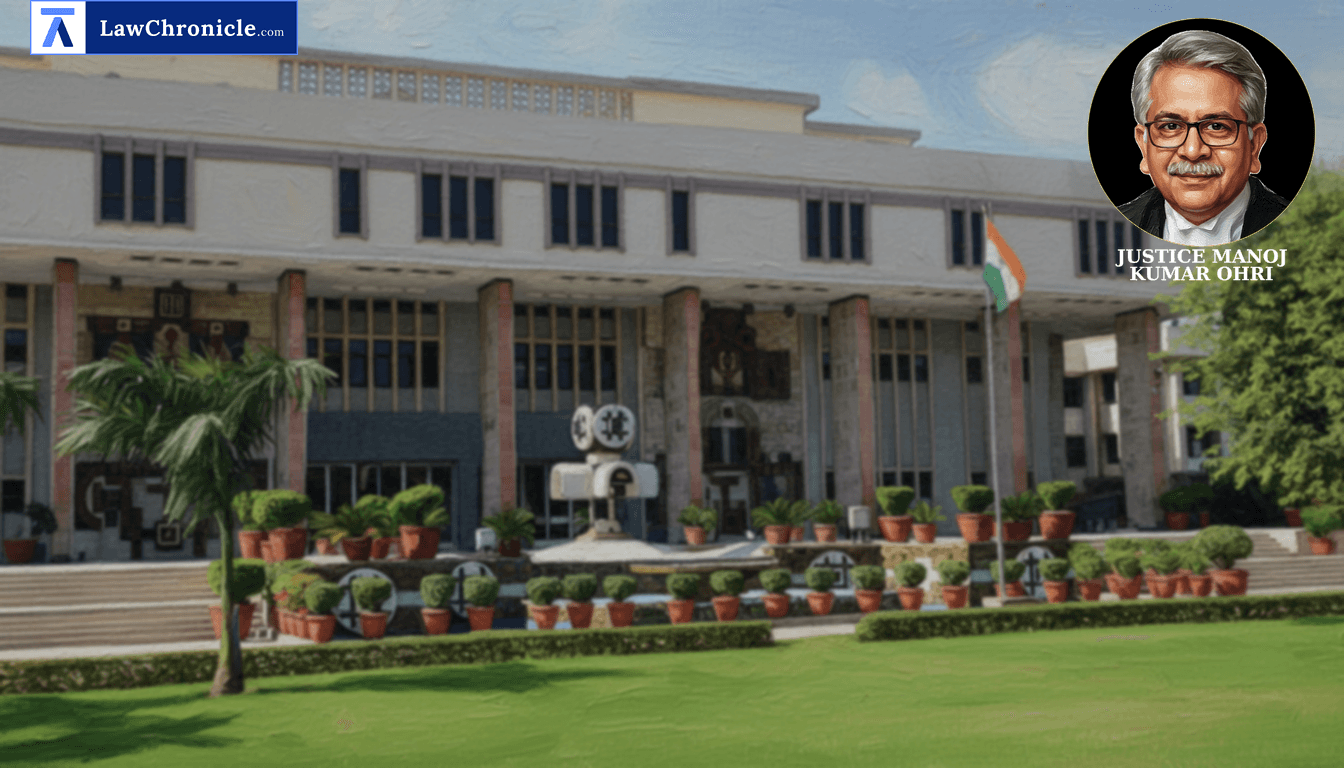
The Delhi High Court has fortified the rights of railway accident victims by ruling that the mere absence of a journey ticket or a delay in discovering a body cannot be used by the Railways to evade liability for 'untoward incidents'. This judgment reinforces the evidentiary burden-shifting principle, ensuring that families of deceased passengers are not denied compensation due to minor procedural discrepancies or the loss of physical evidence during a fatal accident.
Justice Manoj Kumar Ohri presided over the appeal challenging a Railway Claims Tribunal order that had dismissed a compensation claim. The court examined whether the deceased, found dead near Gangraul Railway Station, was a bona fide passenger and if his death resulted from an 'untoward incident' under the Railways Act, 1989.
Key Takeaways
Burden of Proof Shift
Once claimants place relevant facts and circumstances on record, the burden shifts to the Railways to prove the deceased was not a bona fide passenger.
Ticket Non-Recovery Is Not Fatal
The physical absence of a ticket post-accident is not conclusive evidence of unauthorized travel, especially when the case involves a fall from a moving train.
Minor Time Discrepancies Irrelevant
Small variations in witness accounts regarding the timing of an incident during the night do not render their testimony unreliable.
Discovery Delay Justified
A delay in locating a dead body near the tracks does not automatically exclude the possibility of an accidental fall from a train.
Court's Analysis of Bona Fide Passenger Status
The court addressed the Tribunal's finding that the appellants failed to prove the deceased was a bona fide passenger. Relying on the precedent set in Union of India v. Rina Devi ( "(2019) 3 SCC 572": 2018 CaseBase(SC) 1157), the Court noted that the initial burden on the claimant is discharged by placing relevant facts on record. The Court observed that the appellants' case remained consistent, asserting the ticket was purchased at New Delhi but lost during the fall.
Similarly, the principles in Lata v. Union of India ( "2026 SCC OnLine SC 1350": 2026 CaseBase(SC) 667) were highlighted to reiterate that the absence of a ticket does not negative a claim. The Bench found that the respondent failed to produce any evidence to rebut the appellants' claims, making the Tribunal's rejection unjustified.
Evaluation of 'Untoward Incident' and Eye-Witness Testimony
The Court scrutinized the testimony of AW-2, who witnessed a man fall from an Express train. The Tribunal had dismissed this witness due to a slight discrepancy in the time mentioned (midnight versus 22:45 hours). The High Court found this discrepancy "insignificant" given the night-time conditions.
Addressing the delay in finding the body, the Court referred to Sh. Surendra Prasad Verma & Anr. v. Union of India, which held that a delay in discovery is not sufficient to reject a case of accidental fall unless positive material proves another manner of death. The Court found no evidence to support the Railways' theory that the deceased was a trespasser run over by a train while reaching for his bicycle.
The Court has following directions:
"...the impugned judgment is set aside and the matter is remanded back to the Tribunal, which is requested to assess the amount of compensation payable to the appellant in accordance with law and direct the authorities concerned to disburse the same within two months from the receipt of a copy of this order. For this purpose, the matter be listed before the Tribunal at the first instance on 15.10.2026."
The Court, in its reasoning, observed: "On a cumulative consideration of the evidence, when considered as a whole, therefore establishes that the deceased was a bona fide passenger and that his death occurred in an accidental fall from the train, constituting an 'untoward incident' within the meaning of Sections 123(c) and 124-A of the Act."
Ratio
In railway accident claims, the mere non-recovery of a journey ticket or a delay in the discovery of the body does not negate the status of a 'bona fide passenger' or the occurrence of an 'untoward incident'. Once a claimant provides a consistent narrative supported by attending circumstances, the burden shifts to the Railway administration to provide positive evidence of trespassing or an excluded act to deny liability under Sections 123(c) and 124-A of the Railways Act, 1989.
Background
The dispute arose following the death of Shree Krishan on July 22, 2011. The appellants claimed he fell from the Gorakhdham Express near Gangraul Railway Station due to a sudden jerk and crowd jostling. The Railway Claims Tribunal rejected the claim on January 30, 2014, suggesting the deceased might have been run over while trespassing, as he lived nearby and kept his bicycle at the railway gate.
The High Court analyzed the Railway Claims Tribunal Act, 1987 and the Railways Act, 1989, finding the Tribunal's reliance on the absence of a ticket and the non-examination of a co-passenger to be flawed. The Court concluded that the evidence, including an eye-witness account and the Station Master's memo, pointed towards an accidental fall. The appeal was allowed, setting aside the Tribunal's order.
Case Details:
Case No.: FAO 151/2014
CNR No.: DLHC010005792014
Case Title: Sikander & Anr. Vs. Union Of India
Appearances:
For the Petitioner(s): Mr. N.K. Gupta, Advocate
For the Respondent(s): Ms. Pratima N. Lakra, CGSC with Mr. Shailendra Kumar Mishra, Ms. Santha Smruthi and Ms. Ashna Narang, Advocates
Source: 2026 CaseBase(DEL) 6581
Similar Articles
 Breaking News


