


Offence under Atrocity Act Not Attracted in Public Place Without Public View: Gujarat HC
 Copy Link
 Share
 Save
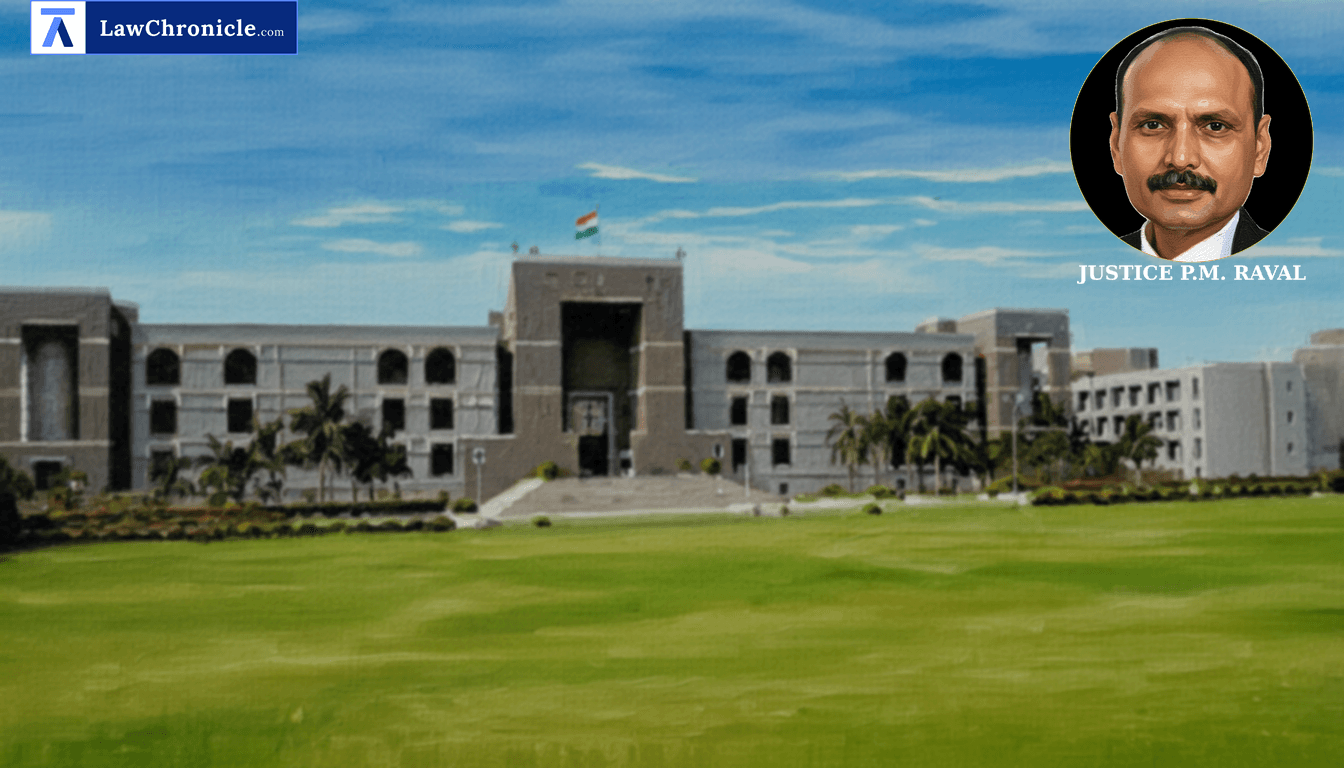
The High Court of Gujarat has sharply redefined the threshold for criminal liability under the Atrocity Act, ruling that caste-based insults occurring in a 'public place' do not constitute an offence unless they occur within 'public view' in the presence of independent witnesses.
Justice P. M. Raval, presiding over the matter, adjudicated an application filed under Section 482 of the Criminal Procedure Code, 1973. The Court was tasked with determining whether the prosecution could sustain charges under the Scheduled Castes and Scheduled Tribes (Prevention of Atrocities) Act, 1989 when the alleged incident took place near a Dargah but lacked the corroboration of independent members of the public.
Key Takeaways
Public Place vs. Public View
Establishing that a 'public place' and 'public view' are legally distinct concepts, requiring the presence of independent witnesses for Atrocity Act charges.
Evidentiary Threshold for Special Acts
Reinforcing that missing statutory ingredients, such as the accused's non-SC/ST status in the complaint, can be grounds for quashing proceedings.
Shield Against Process Abuse
Utilizing inherent powers to prevent the criminal machinery from degenerating into an engine of harassment when legal liability is absent.
Necessity of Independent Witnesses under Atrocity Act
The Court scrutinized the investigation papers and the FIR, noting that while the incident allegedly occurred near a Dargah a public place there was no evidence of any independent witness hearing the caste-related utterances. The Court emphasized that for the invocation of Section 3(1)(x) of the Scheduled Castes and Scheduled Tribes (Prevention of Atrocities) Act, 1989, the act must be committed in 'public view'. Relying on the principles in Gorige Pentaiah v. State of A.P. and Others ( "(2008) 12 SCC 531 = 2008 (0) AIJEL-SC 42194": 2008 CaseBase(SC) 62) and Hutu Ansari @ Futu Ansar v. State of Jharkhand ( "2025 (0) AIJEL-SC 75033": 2025 CaseBase(SC) 1003), the Court found that the absence of independent members of the public at the time of the incident negated the essential ingredients of the offence.
The Court, in its reasoning, observed: "...in the considered opinion of the Court, though alleged offence might have occurred in a public place but it was not within the public view and thus, ingredients of the offence alleged under the Atrocity are not satisfied."
The Court has following directions:
"FIR being C.R. No. I-228 of 2015, dated 04.12.2015, registered with Kosamba Police Station, District: Surat (Rural) and all consequential proceeding emanating pursuant thereto, so far they relate to offence under Section 3(1)(x) of the Scheduled Castes and Scheduled Tribes (Prevention of Atrocities) Act, 1989, are hereby quashed and set aside qua the present applicants. Rule is made absolute, accordingly. It goes without saying that the observations made herein above are solely for deciding this application and accordingly, trial Court shall proceed in accordance with law qua the rest offences without being influenced by the same. Direct service is permitted."
Ratio
An intentional insult or intimidation with intent to humiliate a member of a Scheduled Caste or Scheduled Tribe must occur in a place within 'public view' to attract Section 3(1)(x) of the Scheduled Castes and Scheduled Tribes (Prevention of Atrocities) Act, 1989. The mere occurrence of an incident in a public place, without the presence of independent witnesses or members of the public, does not satisfy the statutory requirements for prosecution under this special Act.
Background
The dispute originated from an FIR registered in 2015, where the de facto complainant alleged that while he was riding a motorcycle with his mother near a Dargah, the applicants stopped him, hurled caste-based abuses, and physically assaulted him. The applicants were charged under Sections 143, 323, 504, and 506(2) of the Indian Penal Code, 1860 along with Section 3(1)(x) of the Scheduled Castes and Scheduled Tribes (Prevention of Atrocities) Act, 1989.
The applicants moved the High Court seeking to quash the FIR. During the hearing, they chose not to press the application regarding the Indian Penal Code, 1860 offences, limiting the challenge to the Atrocity Act charges. The Court applied the landmark criteria established in State of Haryana v. Bhajan Lal, specifically categories (1), (3), and (7), to determine if the allegations, even if taken at face value, constituted a prima facie case. Citing the Supreme Court's decision in Hutu Ansari @ Futu Ansar v. State of Jharkhand ( "2025 (0) AIJEL-SC 75033": 2025 CaseBase(SC) 1003), the Court noted the inconsistencies and the lack of public presence, eventually allowing the application in part and quashing the specific charges under the Scheduled Castes and Scheduled Tribes (Prevention of Atrocities) Act, 1989.
Case Details:
Case No.: R/CRIMINAL MISC. APPLICATION NO. 11354 of 2017
Neutral Citation: 2026:GUJHC:61427
Case Title: Tausif Ayub Mirza & Ors. Versus State Of Gujarat & Anr.
Appearances:
For the Petitioner(s): MR VISHAL B. VINCHI for MR HARDIK H DAVE
For the Respondent(s): MR ROHAN SHAH, APP
Source: 2026 CaseBase(GUJ) 24925
Similar Articles
 Breaking News


