


OMCs Can Reallocate LPG Customers Under Market Policy: Allahabad HC
 Copy Link
 Share
 Save
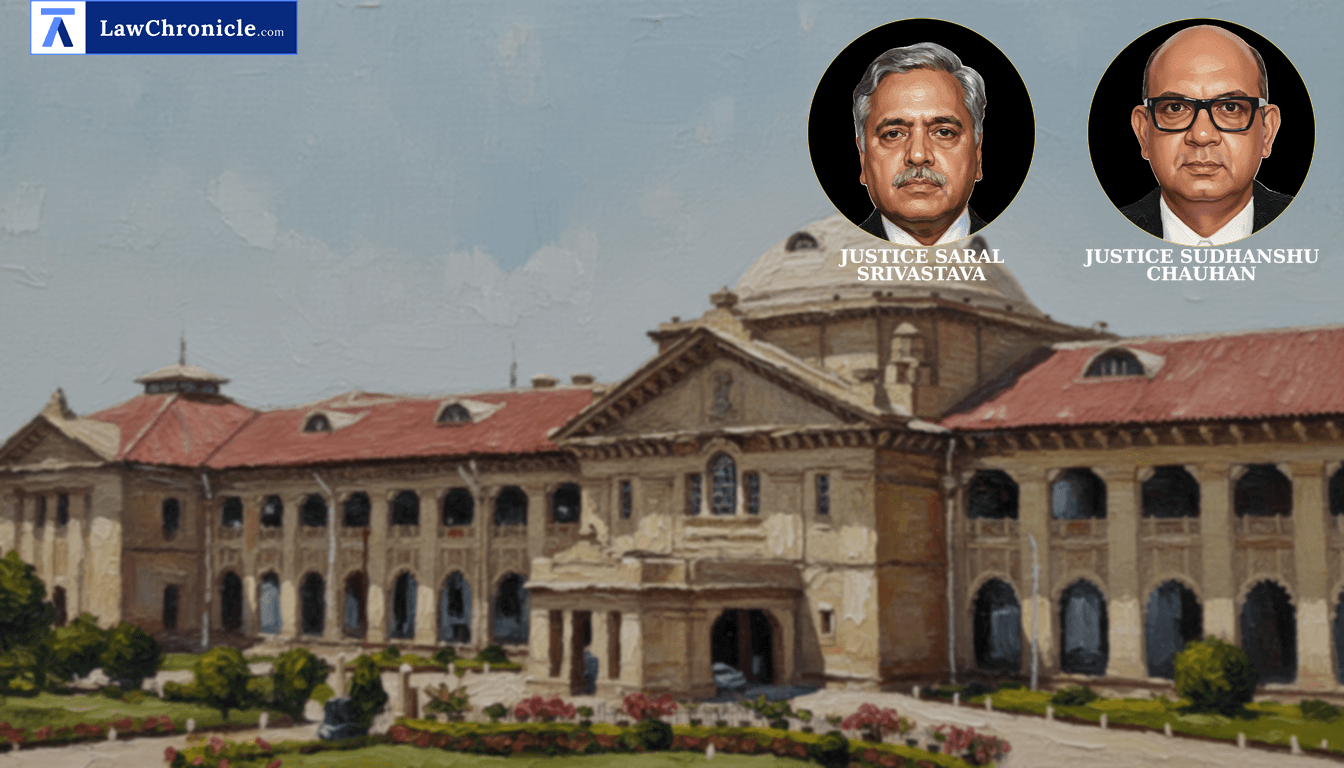
In a major decision upholding public interest and state welfare policies, the Allahabad High Court has ruled that Oil Marketing Companies retain full discretion to restructure LPG distributorship territories and reallocate customer bases. The High Court rejected a batch of writ petitions challenging the customer transfer policies, holding that distributors do not possess a vested right or legitimate expectation over customers enrolled on behalf of public oil corporations.
A Division Bench comprising Justice Saral Srivastava and Justice Sudhanshu Chauhan dismissed the petitions challenging the Policy on Customer Transfer-Market Restructuring and the Policy on Customer Transfer-Based on Area of Operation notified by Oil Marketing Companies on February 21, 2025. The petitioners had assailed the validity of these policies, contending that the unilateral transfer of customers earned through distributor efforts was arbitrary and contrary to earlier judicial rulings.
Key Takeaways
- No Proprietary Right Over Customers: Distributors enrol LPG consumers strictly on behalf of OMCs, and the customer base remains the property of the oil corporation.
- Public Interest Supersedes Commercial Rights: Policy measures aimed at expanding LPG penetration and public health under schemes like Ujjawala Yojana override distributor profit expectations.
- Contractual Bindingness: Distributors remain bound by the explicit terms in Letters of Intent, Distributorship Agreements, and the LPG Manual allowing area or customer restructuring.
- Limited Scope of Judicial Review: Policy decisions relating to economic regulation and public distribution cannot be set aside unless proven to be patently arbitrary, irrational, or mala fide.
The Court in its detailed analysis upheld the validity of the market restructuring policies designed to accommodate expanded LPG coverage across rural and urban markets. The Court in its reasoning observed: "The distributor right from the inception knew that they are bound by Clause 4.7 of LPG Manual, and if the business was not viable for them, they should not have joined venture. In such view of the fact, we are afraid that the distributor can invoke the principle of promissory estoppel. Doctrine of legitimate expectation would not attract where public interest is involved."
Addressing the argument regarding commercial efficacy and distributor investments, the Bench approved the principle laid down in Vembanad Gas Agencies Vs. Union of India and Others. The Court has following directions:
"Thus, for the reasons given above, all the writ petitions lack merit and are hereby dismissed with no order as to costs."
Ratio
Distributors appointed on a principal-to-principal basis do not hold a vested right or legitimate expectation over customers enrolled on behalf of state oil marketing companies, and regulatory policy decisions transferring customer bases in furtherance of broader public welfare and market ceiling norms are legally valid and non-arbitrary under Constitution of India, 1950.
Background
The petitioners, representing various LPG distributorships including Vikramaditya Gas Agencies, filed writ petitions under Constitution of India, 1950 challenging the OMC policies dated February 21, 2025. They argued that forced mass customer transfers violated their rights, disrupted business viability, and disregarded investments made to develop customer networks. Reliance was placed on Bombay High Court rulings that stayed similar 2018 policies.
Countering the claims, the OMCs argued that customer distribution limits were designed to increase penetration under the Ujjawala Scheme and prevent illegal reselling. The OMCs highlighted key clauses of the Distributorship Agreement, Letter of Intent, and LPG Manual, which explicitly reserve the right to alter territory and transfer customers to maintain market equilibrium.
While examining the applicability of the doctrine of legitimate expectation, the Court considered rulings in Union of India and Others Vs. Hindustan Development Corporation and Others and Ram Pravesh Singh and Others Vs. State of Bihar and Others ( "(2006) 8 SCC 381": 2006 CaseBase(SC) 29). Addressing judicial restraint in policy decisions, the Bench referred to established legal principles set out in State of M.P. and Others Vs. Nandlal Jaiswal and Others ( "(1986) 4 SCC 566": 1986 CaseBase(SC) 235), Directorate of Film Festivals & Others Vs. Gaurav Ashwin Jain & Others, and Delhi Development Authority & Another Vs. Joint Action Committee, Allottee of SFS Flats and Others, alongside public utility framework under the Essential Commodities Act, 1955. Consequently, the High Court held that the policy was neither arbitrary nor mala fide, dismissing all petitions.
Case Details:
Case No.: WRIT - C No. - 11195 of 2025
Case Title: Vikramaditya Gas Agencies v. Union of India and 3 others
Appearances:
For the Petitioner(s): Prakhar Saran Srivastava, Tarun Agrawal, Ravi Anand Agarwal, Shreya Gupta, Mohd Adnan Khan, Mohd. Imran, Syed Safdar Ali Kazmi, Anuj Datta, Shive Datta Yadav, Arvind Srivastava, Ram Milan Mishra, Satya Prakash Singh, Vipul Raj Gautam, Anshu Chaudhary, Alka Srivastava, Santosh Kumar Srivastava, Arvind Kumar Singh
For the Respondent(s): A.S.G.I., Anand Tiwari, Gaurav Kumar Chand, Nishant Mehrotra, Shrey Sharma, Yash Padia, Devi Shanker Shukla, Komal Mehrotra, Manoj Kumar Singh, Vaibhav Tripathi, Pramod Kumar Rai, Archana Singh
Source: 2026 CaseBase(ALL) 607
Similar Articles



 Breaking News


