


Onus of Proving Entitlement of Disability Pension to Armed Forces Personnel lies with Union: SC
 Copy Link
 Share
 Save
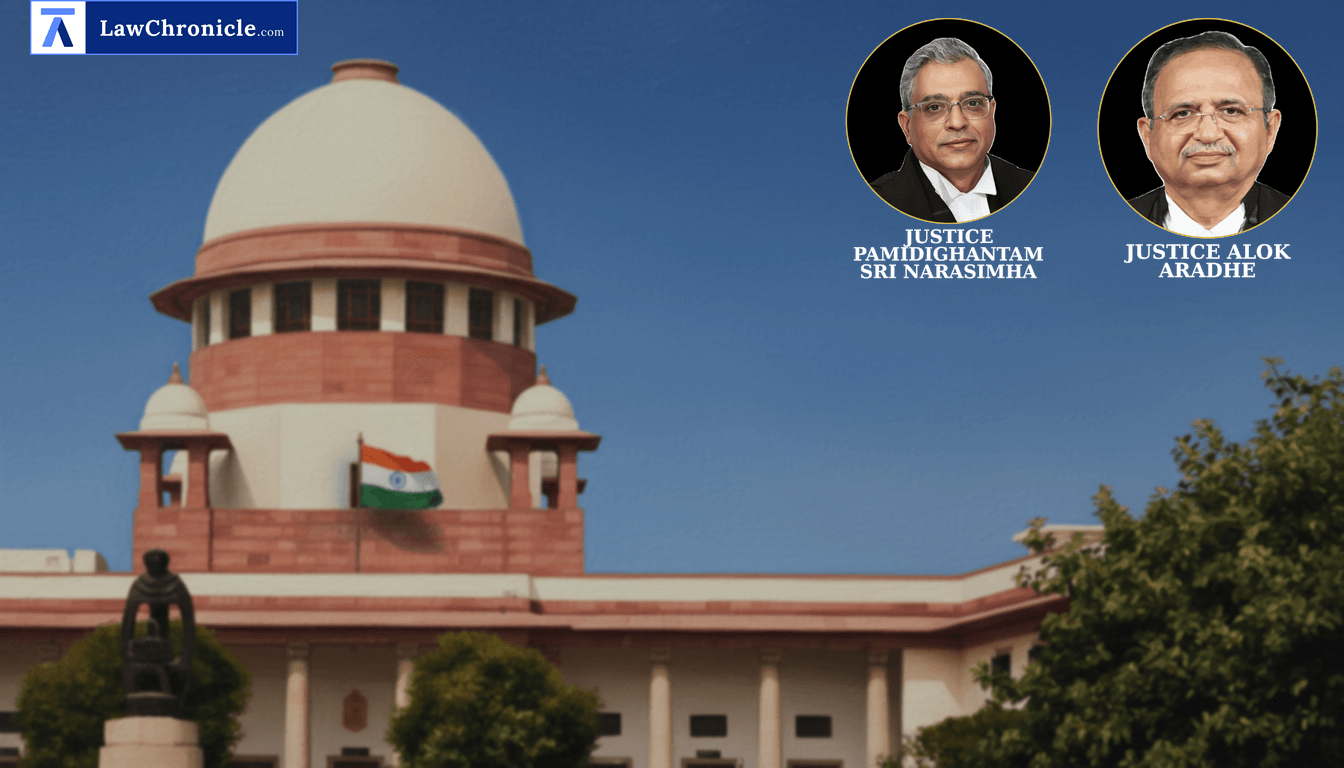
The Supreme Court has ruled that the 2008 entitlement rules do not alter the fundamental protection shifting the burden onto the military establishment to disprove claims of Disability Pension to Armed Forces Personnel.
A bench of Justice Pamidighantam Sri Narasimha and Justice Alok Aradhe dismissed a batch of over 270 appeals filed by the Union Government challenging orders of various High Courts and the Armed Forces Tribunal (AFT) that had granted disability pension to ex-servicemen.
Key Takeaways
No Core Shift in 2008 Regime: The Supreme Court held that the Entitlement Rules for Casualty Pensionary Awards, 2008 do not dismantle the beneficial framework established under the Entitlement Rules for Casualty Pensionary Awards, 1982.
Onus Remains on Employer: The primary burden of proving that a serviceman's disability is neither attributable to nor aggravated by military service remains squarely on the military establishment, unless a claim is filed after 15 years.
Medical Board Weightage: The opinion of a duly constituted Medical Board carries significant weight and should not be lightly substituted by courts without demonstrating a clear procedural or substantive defect.
Stricture Against Frivolous Appeals: The Apex Court criticized the Centre for continuing stale litigation against Disability Pension to Armed Forces Personnel despite internal policy recommendations advising the withdrawal of such appeals.
Entitlement Rules for Casualty Pensionary Awards
The Supreme Court observed that while the Entitlement Rules for Casualty Pensionary Awards, 2008 removed the automatic presumption that a soldier entering service healthy contracts any subsequent disability due to service conditions, it did not alter the core protective scheme available to armed forces personnel. The bench stressed that benefit of reasonable doubt and onus of proof continue to favour ex-servicemen.
The Court issued following directions:
"i) No case for interference in the present Special Leave Petitions/Civil Appeals is made out. They are accordingly dismissed on the grounds of delay as well as on merits.
ii) We find considerable force in the submission made by the Ld. AG that the opinion of the Medical Board deserves to be given due weight and ought not to be substituted by a Court merely because another view is possible. In pending matters, the Tribunal must scrutinize in detail the opinion and reasons expressed by the Medical Board before deciding upon the claims.
iii) If a claimant approaches the relevant forum after a period of fifteen years, the principle in Rule 7 of the Entitlement Rules 2008 applies and the burden shifts. Onus in such a case will be on the applicant to prove the conditions of entitlement."
Presumption for Battle Casualty Disability Pension
Addressing the shift from Entitlement Rules for Casualty Pensionary Awards, 1982 in 2008 Rules, the Apex Court observed that "The mere addition of a causal requirement and a removal of the presumption that when a member joins service healthy, and, if, he leaves with a disability, it ought to be attributable to the military service, does not, by itself, change the core scheme of the Entitlement Rules 2008 because the other beneficial provisions broadly remain untouched. The onus to prove that the member’s disability is not attributable to service still lies on the employer."
Ratio
The Entitlement Rules for Casualty Pensionary Awards, 2008 broadly preserve the beneficial framework of the Entitlement Rules for Casualty Pensionary Awards, 1982 and the Pension Regulations for Army, 1961. The evidentiary burden to establish that a disability is neither attributable to nor aggravated by military service remains on the employer, except where a claim is preferred after fifteen years from discharge, in which case the proviso to Rule 7 shifts the onus onto the claimant.
Background
The controversy arose from numerous cases where Release Medical Boards (RMB) routinely categorized disabilities developed by military personnel during service as Neither Attributable to nor Aggravated by military service ("NANA"). Relying on these unreasoned RMB reports, departmental appeals were rejected, forcing ex-servicemen to approach the AFT and High Courts.
Lower judicial forums routinely granted relief by relying on the landmark precedent in Dharamvir Singh v. Union of India ( "(2013) 7 SCC 316": 2013 CaseBase(SC) 992), which had interpreted the Entitlement Rules for Casualty Pensionary Awards, 1982 to lay down strong presumptions in favour of soldiers. Following Dharamvir Singh v. Union of India ( "(2013) 7 SCC 316": 2013 CaseBase(SC) 992), rulings in Union of India vs. Rajbir Singh ( "(2015) 12 SCC 264": 2015 CaseBase(SC) 260), Union of India v. Manjeet Singh ( "(2015) 12 SCC 275": 2015 CaseBase(SC) 709), Union of India vs. Angad Singh Titaria ( "(2015) 12 SCC 257": 2015 CaseBase(SC) 950), and Bijender Singh v. Union of India ( "2025 SCC OnLine SC 895": 2025 CaseBase(SC) 811) reinforced that an unreasoned Medical Board opinion cannot defeat a claim of Disability Pension to Armed Forces Personnel.
The Union Government appealed to the Supreme Court, arguing that Dharamvir Singh v. Union of India ( "(2013) 7 SCC 316": 2013 CaseBase(SC) 992) was inapplicable under the Entitlement Rules for Casualty Pensionary Awards, 2008, which required an explicit causal connection and removed the entry-level health presumption. Dismissing the Union's batch of appeals, the Supreme Court clarified that the 2008 rules introduced cosmetic modifications rather than a substantive abrogation of soldiers' rights.
Case Details:
Case No.: Civil Appeal No. 2026 (@ SLP (C) No. 3680 of 2025) with connected matters
Neutral Citation: 2026 INSC 993
Case Title: Union of India & Ors. v. Col. NC Isaac (Retd.) & Ors.
Source: 2026 CaseBase(SC) 7001
Similar Articles



 Breaking News


