


Presumption of Service-Induced Disability Prevails If Not Recorded During Enrollment: J&K High Court
 Copy Link
 Share
 Save
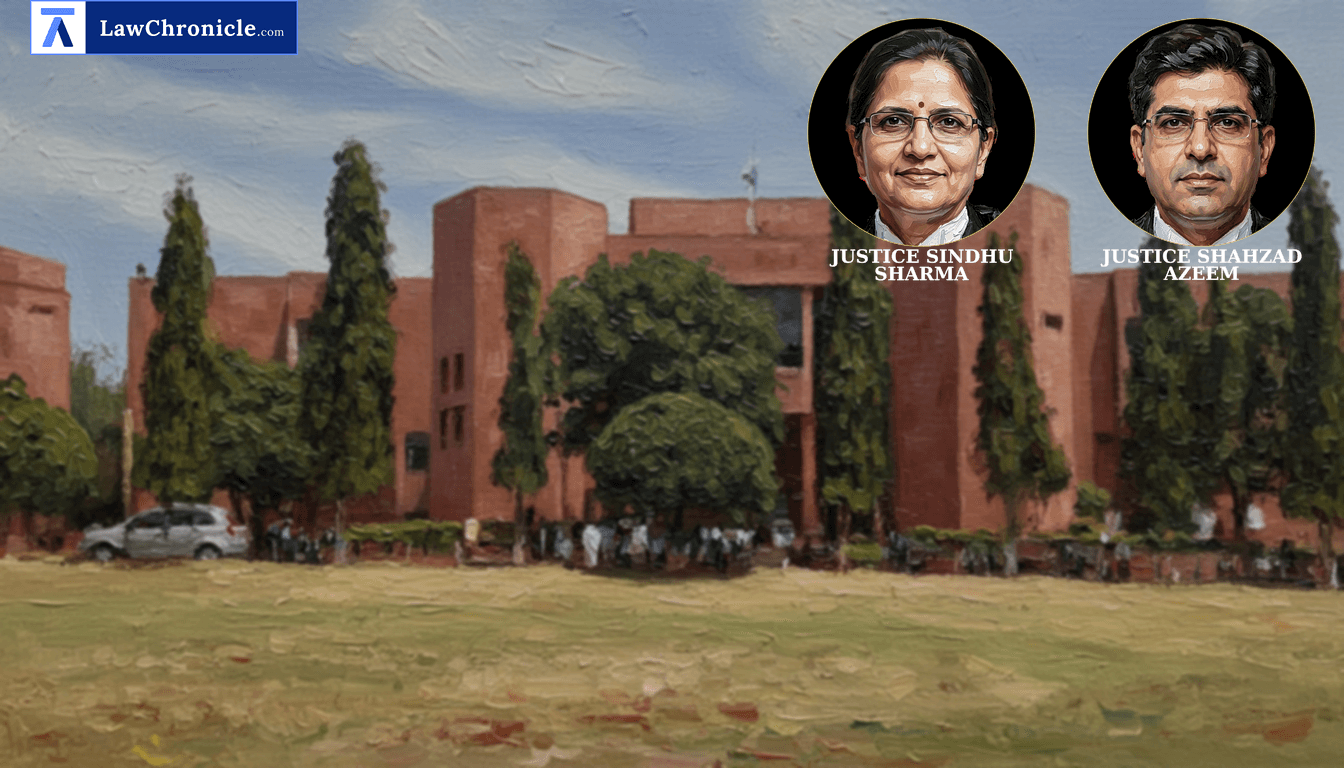
The High Court of Jammu & Kashmir and Ladakh has reinforced the legal mandate that any disability manifesting during military service must be presumed as service-related unless the Medical Board provides specific, reasoned evidence to the contrary. This ruling fortifies the protective framework for Armed Forces personnel, ensuring that the burden of rebutting the presumption of 'attributability' lies squarely on the authorities rather than the soldier.
A Division Bench comprising Justice Sindhu Sharma and Justice Shahzad Azeem heard the challenge brought by the Union of India against an Armed Forces Tribunal (AFT) order. The dispute centered on whether a soldier, re-enrolled in the Defence Security Corps, could be denied disability pension when the Release Medical Board failed to provide specific reasons for declaring his 'Bilateral Cataract' as neither attributable to nor aggravated by military service.
Key Takeaways
Burden of Proof Shift
If no disability is recorded at the time of entry into service, the legal presumption dictates that any subsequent deterioration is due to military service, shifting the onus of proof to the state.
Unreasoned Medical Opinions Subject to Scrutiny
While Medical Board opinions are expert in nature, they are not beyond judicial review and can be discarded if they lack specific reasoning or disregard statutory presumptions.
Entitlement Below 20% Disability
Following settled law, the court affirmed that once a disability is found attributable to service, the benefit of 'rounding off' applies, and pension cannot be denied solely because the disability is assessed below 20%.
Judicial Scrutiny of Expert Medical Opinions
The Court emphasized that the beneficial nature of pension regulations requires a liberal interpretation in favor of the personnel. It observed that the Release Medical Board had summarily rejected the claim without assigning any reasons, which failed to rebut the statutory presumption under the Constitution of India.
The Court has following directions:
"Consequently, the applicant, subject to verification, is held entitled to the grant of disability pension @ 50% as against 20% w.e.f. 25.06.2014 after being rounded off as per the ratio of the judgment of the Hon'ble Supreme Court in Union of India v. Ram Avtar, Civil Appeal No.418 of 2012 decided on 10.12.2014. Since the applicant has come to this Tribunal after a gap of about seven years from the date of discharge from DSC, the arrears are restricted to three years preceding the date of institution of the Original Application, i.e., 23.10.2015, and are directed to be released in favour of the applicant within a period of three months from the receipt of certified copy of this order by the learned Central Government Counsel/OIC, Legal Cell, failing which together with interest @ 8% from the date of this order."
The Court, in its reasoning, observed: "The scheme relating to disability pension is beneficial, intended to provide financial security to members of the Armed Forces who suffer disability during the course of service. Such provisions are required to be interpreted liberally in favour of the personnel, particularly when the disability has manifested during service and no note thereof existed at the time of entry."
Ratio
In the absence of a recorded disability at the time of enrollment, any disease manifesting during military service is legally presumed to be attributable to or aggravated by such service. A Medical Board's opinion to the contrary must be supported by clear reasons to rebut this presumption; otherwise, the opinion is not conclusive and is subject to judicial interference.
Background
The respondent was initially enrolled in the Indian Army in 1971 and served for 24 years. After receiving a service pension, he was re-enrolled in the Defence Security Corps (DSC) in 1998. Upon his discharge in 2008, a Release Medical Board assessed his disability (Bilateral Cataract) at 15-19% but declared it not attributable to service.
The Union of India argued that the findings of an expert Medical Board should be final and that disability below 20% does not qualify for a pension. However, the Court relied on Dharamvir Singh vs. Union of India and others ( "(2013) 7 SCC 316": 2013 CaseBase(SC) 992) and Union of India and another vs. Rajbir Singh ( "(2015) 12 SCC 264": 2015 CaseBase(SC) 260) to establish that the absence of a disability note during recruitment creates a presumption of sound health. Furthermore, Sukhvinder Singh v. Union of India and others was cited to support the principle that disability pension benefits should not be denied even if the assessment is below 20%, provided the individual was invalided out or deemed so.
Concluding that the Medical Board's conclusion was unreasoned and arbitrary, the High Court dismissed the Union's writ petition and upheld the Tribunal's order for pension and rounding-off benefits.
Case Details:
Case No.: WP(C) No. 1518/2024
Case Title: Union of India & Ors. Vs. No. 2462902 Ex. Lance Naik, Babu Ram
Appearances:
For the Petitioner(s): Mr. Vishal Sharma, DSGI with Mr. Eishaan Dadhichi, CGSC
For the Respondent(s): Mr. Rajnish Raina, Sr. Advocate with Mr. Prabhat Sangotra, Advocate and Mr. Rishu Rajeshwar, Advocate
Source: 2026 CaseBase(JK) 1067
Similar Articles

 Breaking News


