


Orissa High Court Quashes Ad-Hoc Criteria For Absorption of Court Managers
 Copy Link
 Share
 Save
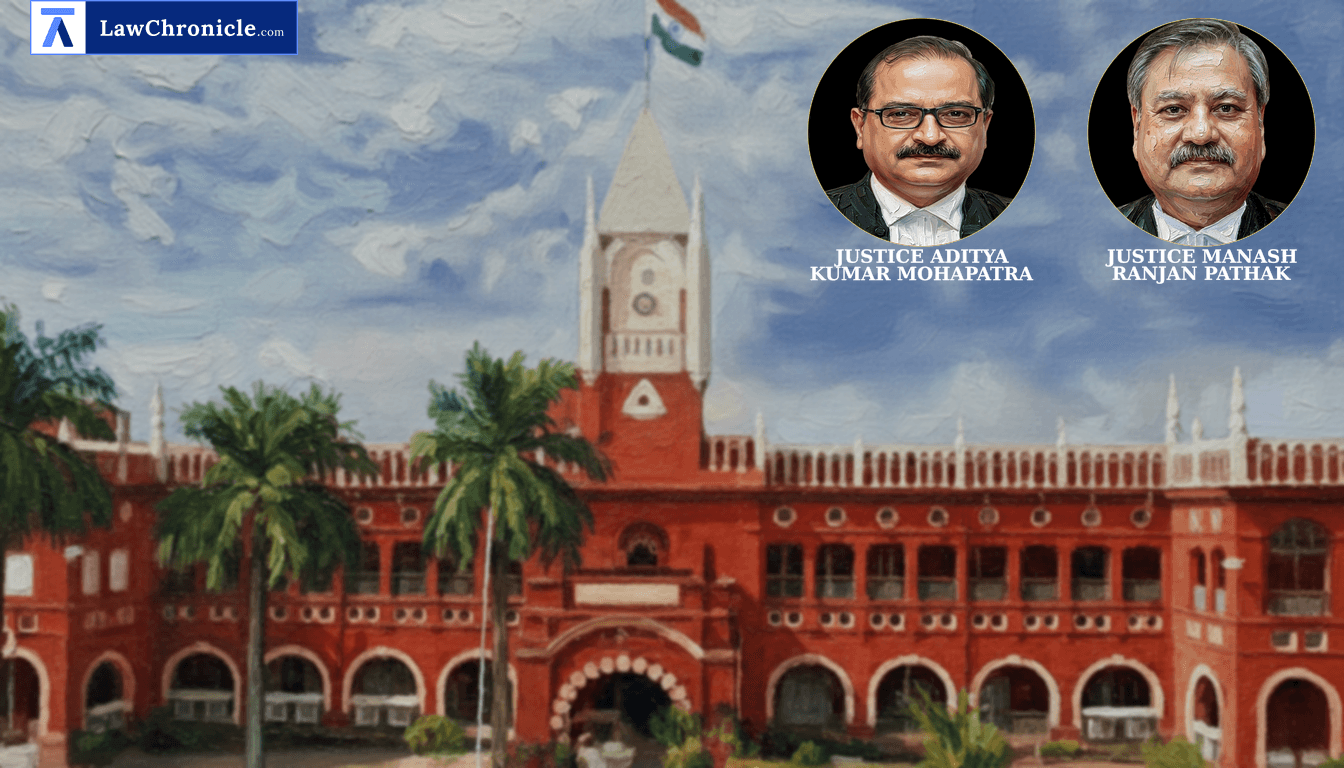
The Orissa High Court has delivered a stinging rebuke to administrative overreach, quashing the disengagement of Court Managers who were ousted following an unauthorized and arbitrary suitability test. In a comprehensive judgment, a Bench comprising Justice Manash Ranjan Pathak and Justice Aditya Kumar Mohapatra adjudicated upon a batch of writ petitions filed by Court Managers who were disengaged after failing a 100-mark suitability assessment conducted in August 2022. The petitioners, originally appointed in 2012, challenged the validity of the Odisha Senior Court Manager and Court Manager of the High Court and District Courts (Method of Recruitment and Conditions of Service) Rules, 2020 and the specific methodology of the absorption test which led to their termination.
Key Takeaways
Primacy of Statutory Rules
Administrative committees lack the inherent jurisdiction to design substantive selection criteria unless specifically authorized by the governing rules.
One-Time Absorption vs. Fresh Recruitment
Existing contractual employees who have already undergone an initial selection process cannot be treated as fresh candidates for direct recruitment under the guise of a suitability test.
Protection of Tenure
Disengagement resulting from an unauthorized assessment process is illegal, especially when the contractual term of the employees was still subsisting.
Model Rule Compliance
High Courts must align their recruitment rules with the model framework established by the Supreme Court to ensure national uniformity in the judicial administrative setup.
Invalidity of the 2022 Suitability Test
The Orissa High Court observed that while Rule 6 of the Odisha Senior Court Manager and Court Manager of the High Court and District Courts (Method of Recruitment and Conditions of Service) Rules, 2020 empowered a committee to "conduct" a suitability test, it did not authorize the committee to "design" or "originate" the marking scheme, which included project writing and personality tests. The Bench noted a sharp contrast between Rule 6 and Rule 16 of the same rules, where the latter explicitly detailed the marking structure for promotions, whereas the former was silent. This silence, the Orissa High Court held, meant the committee exceeded its jurisdiction by importing a rigorous examination regime not sanctioned by the rule-making authority.
The Bench explained that "The Committee's function under Rule 6, precisely as under Rule 16, remains confined to conducting an assessment whose content has already been ascertained by the rule-making authority... The absence thereof serves as a clear bar on the Committee to impart unto it the very power it was not conferred in the first place. Having so done, the Committee exceeded its jurisdiction prescribed under the Rules."
Judicial Precedents on Selection Norms
The Bench relied on the ratio in Umesh Chandra Shukla v. Union of India ( "(1985) 3 SCC 721": 1985 CaseBase(SC) 396) and Durgacharan Misra v. State of Orissa ( "AIR 1987 SC 2267": 1987 CaseBase(SC) 107), emphasizing that a Selection Committee cannot supplement statutory rules by introducing additional qualifying requirements like minimum marks for viva-voce or new examination components. The Court held that since the Petitioners were already selected through a module in 2012 and had rendered long years of service, the suitability test should have been a fitness assessment rather than a comparative merit examination.
Ratio
An administrative committee entrusted with conducting a 'suitability test' under statutory rules does not possess the inherent or delegated power to devise substantive marking schemes or qualifying benchmarks unless the rules explicitly provide such a framework. Any assessment that alters the rules of the game mid-course or lacks a lawful source in the governing rules is a nullity, and participation by candidates does not cure this jurisdictional defect.
Background
The dispute began with the 13th Finance Commission's recommendation to create 'Court Manager' posts. The Petitioners were engaged in 2012 on a consolidated remuneration. In All India Judges’ Association v. Union of India ( "(2018) 17 SCC 555": 2018 CaseBase(SC) 1375), the Supreme Court directed the regularization of existing Court Managers. Consequently, Odisha framed the Odisha Senior Court Manager and Court Manager of the High Court and District Courts (Method of Recruitment and Conditions of Service) Rules, 2020. However, instead of a simple fitness assessment, the Orissa High Court's committee implemented a complex 100-mark test. Those who failed were terminated on August 30, 2022.
The Orissa High Court found this termination particularly egregious as the state had already extended the petitioners' contracts until January 2023. While the Division Bench did not grant immediate regularization, it ordered the payment of arrears for the contractual period and directed the High Court to frame fresh, legally sound modalities for a new suitability test in line with the All India Judges’ Association v. Union of India ( "(2018) 17 SCC 555": 2018 CaseBase(SC) 1375) judgment.
Case Details:
Case No.: W.P.(C) No.3163 of 2022
Case Title: Sangram Keshari Jena and Others v. State of Odisha and Others
Appearances:
For the Petitioner(s): Mr. Asok Mohanty, Sr. Advocate; Mr. Prafulla Kumar Rath, Sr. Advocate
For the Respondent(s): Mr. Debaraj Mohanty, AGA; Mr. Rabi Narayan Mishra, Advocate; Mr. Prasanna Ku. Parhi, DSGI
Source: 2026 CaseBase(ORI) 1590
Similar Articles
 Breaking News


