


Awarding Grace Marks In Non-Negative Exam Does Not Alter Rules: Calcutta HC
 Copy Link
 Share
 Save
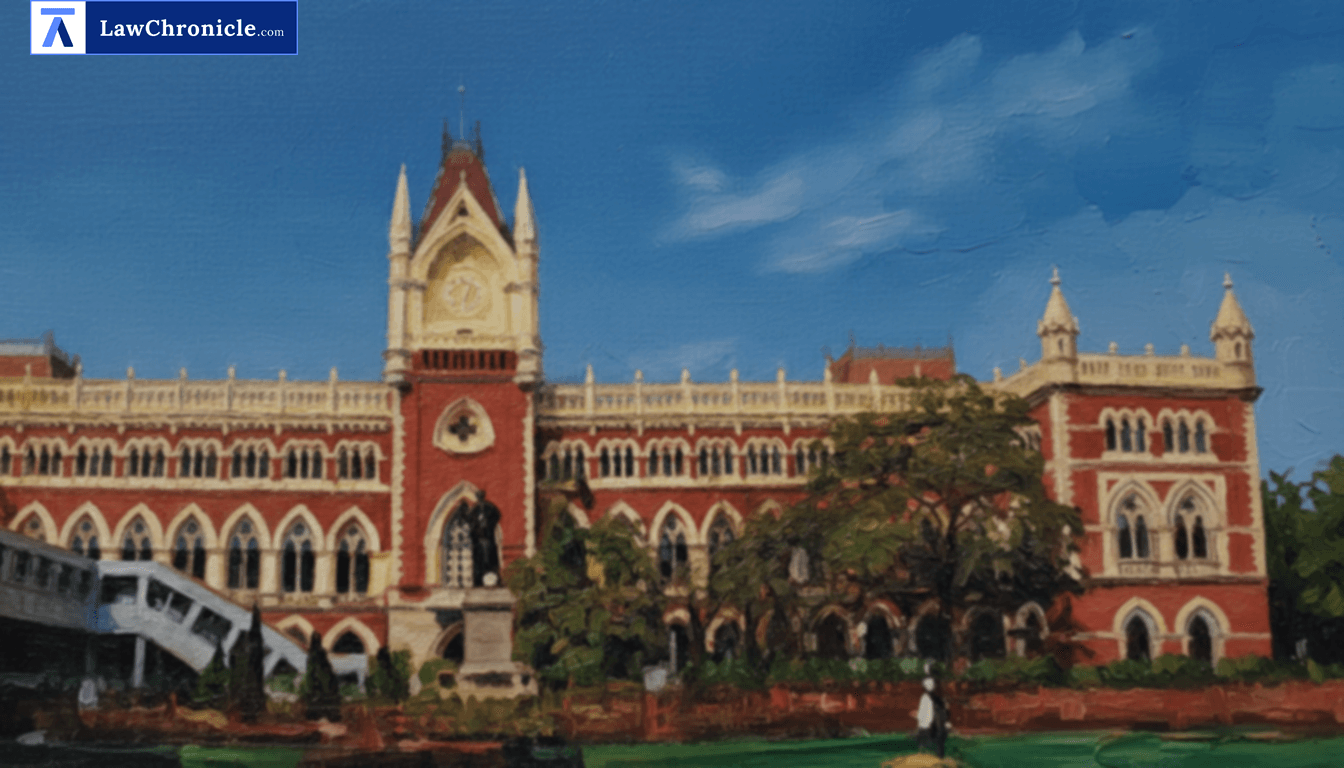
Uniformly awarding full marks for erroneous or out-of-syllabus questions in a competitive examination without negative marking does not amount to changing the rules of the game midway or violating Article 14. The Calcutta High Court has upheld the promotional selection process conducted by Coal India Limited, ruling that equal allocation of marks to all candidates neutralizes any potential prejudice and falls squarely within the domain of academic experts.
Justice Amrita Sinha delivered the judgment while dismissing a batch of writ petitions challenging the non-executive to executive cadre promotional results in Bharat Coking Coal Ltd., a subsidiary of Coal India Ltd. The Court considered whether awarding uniform marks for disputed questions to all candidates irrespective of whether they attempted them tainted the selection process.
Key Takeaways
No Negative Marking Neutralizes Class Distinctions: Awarding grace marks uniformly across all candidates in an exam without negative marking creates no disadvantage, as no candidate loses marks for attempting or omitting questions.
Domain of Subject Experts: The determination of whether a question is incorrect or out of syllabus belongs exclusively to expert examiners, restricting the scope of judicial review.
Unsuccessful Candidates Barred Post-Participation: Litigants who voluntarily participate in written tests and interviews without objection cannot turn around to challenge the process upon failing.
Failure to Implead Promotees Fatal: Challenging a concluded selection process without joining the promoted candidates violates principles of natural justice.
The Court, in its reasoning, observed: "When marks have been awarded in respect of such disputed questions to all candidates uniformly, it does not appear that any of the candidates, including the petitioners, have been prejudiced in any manner whatsoever. Had wrong answers carried negative marking, then only there would have been some difference in the competitiveness of the candidates. In that case, any candidate who had given a wrong answer would have lost mark(s); but as there was no negative marking, adding marks uniformly to all candidates hardly makes any difference."
The Court has following directions:
"The writ petitions fail and are hereby dismissed. There will, however, be no order as to costs. All parties to act on the basis of the server copy of this judgment duly downloaded from the official website of this Court."
Ratio
Uniformly awarding grace marks to all candidates for defective questions in an examination lacking negative marking does not constitute a material change to the rules of selection or violate Article 14 of the Constitution of India, provided no candidate is given an unfair advantage or subjected to prejudice.
Background
In 2015, Coal India Limited (CIL) published a notice for promotion from non-executive to executive cadres. Following the cancellation of an initial 2016 test, a fresh Computer-Based Test (CBT) was held in July 2021. After model answer keys were released, several candidates submitted objections regarding disputed questions. Subject experts reviewed the objections and determined that 19 questions were either wrong or out of syllabus. To maintain parity, CIL awarded full marks for those 19 questions to all candidates uniformly.
The petitioners, who participated in the CBT and subsequent interviews but scored below the unreserved cut-off mark of 144.88, approached the High Court seeking to quash the entire selection process. They contended that awarding marks for un-attempted questions violated the candidate admit card stipulations, changed the rules of the game midway, and infringed Article 14 of the Constitution of India by treating those who attempted and those who did not attempt the questions as equals.
CIL opposed the petitions, arguing that uniform mark allocation ensured complete parity and caused no prejudice. CIL also submitted that 109 candidates had already been promoted in 2022 and were working in their posts, yet none were impleaded as parties. Rebutting the procedural challenge, CIL relied on established precedents including State of Uttar Pradesh vs. Karunesh Kumar ( "2022 SCC Online SC 1706; 2022 INSC 1274": 2022 CaseBase(SC) 1021) and Gujrat Public Service Commission vs. Gnaneshwary Dushyantkumar Shah & Ors. ( "2026 INSC 70": 2026 CaseBase(SC) 65) to show that unsuccessful candidates cannot challenge selection rules after participation. They further cited State of UP through Principal Secretary (Basic Education) Lko & Ors. vs. Mohd. Riswan & Ors., Prem Ranjan & Ors. vs. Jharkhand State Staff Selection Commission & Ors., and Md. Abdul Wahid Sekh & Ors. vs. State of West Bengal & Ors. to justify awarding full marks for disputed questions, as well as Ramesh Chandra Saha & Ors. vs. Anil Joshi & Ors. ( "(2013) 11 SCC 309": 2013 CaseBase(SC) 125), Union of India & Ors. vs. S. Vinodh Kumar & Ors. ( "(2007) 8 SCC 100": 2007 CaseBase(SC) 276), Poonam vs. State of UP & Ors. ( "(2016) 2 SCC 779": 2015 CaseBase(SC) 556), Dhananjay Malik & Ors. vs. State of Uttaranchal & Ors. ( "(2008) 4 SCC 171": 2008 CaseBase(SC) 837), and Ashok Kumar & Ors. vs. State of Bihar & Ors. ( "(2017) 4 SCC 357": 2016 CaseBase(SC) 922) on the estoppel of failed candidates, alongside Asit Kumar Kar vs. State of West Bengal & Ors. ( "(2009) 2 SCC 703": 2009 CaseBase(SC) 684) regarding the necessity of joining affected promotees.
Conversely, the petitioners relied on Tej Prakash Pathak & Ors. vs. Rajasthan High Court & Ors. ( "(2025) 2 SCC 1": 2024 CaseBase(SC) 948), K. Manjusree vs. State of Andhra Pradesh & Anr. ( "(2008) 3 SCC 512": 2008 CaseBase(SC) 228), and Director General, Indian Council for Agricultural Research & Ors. vs. D. Sundara Raju ( "(2011) 6 SCC 605": 2011 CaseBase(SC) 582) to argue that selection criteria cannot be altered midway, Kanpur University, through Vice Chancellor & Ors. vs. Samir Gupta & Ors. ( "(1983) 4 SCC 309": 1983 CaseBase(SC) 66) regarding deletion of defective questions in exams with negative marking, and Rajesh Kumar Gupta & Ors. vs. State of UP & Ors. regarding maintainability without selected candidates.
Rejecting the petitioners' contentions, the High Court distinguished Kanpur University, through Vice Chancellor & Ors. vs. Samir Gupta & Ors. ( "(1983) 4 SCC 309": 1983 CaseBase(SC) 66) on the ground that the present examination contained no negative marking. Relying on State of Uttar Pradesh vs. Karunesh Kumar ( "2022 SCC Online SC 1706; 2022 INSC 1274": 2022 CaseBase(SC) 1021), the Court reiterated that employers retain flexibility in selection provided the process is non-arbitrary. Finding no illegality or prejudice, the High Court dismissed both writ petitions.
Case Details:
Case No.: WPO No. 3171 of 2022 With WPO No. 1386 of 2023
Neutral Citation: 2026:CHC-OS:348
Case Title: Ganesh Tiwari & Anr. Vs. The Coal India Limited & Ors.
Appearances:
For the Petitioner(s): Mr. Arjun Ray Mukherjee, Adv., Ms. Debapriya Mitra, Adv., Mr. Joyjeev Medhi, Adv.
For the Respondent(s): Mr. Pradip Kumar Roy, Sr. Adv., Mr. Varun Kedia, Adv., Ms. Avee Jaiswal, Adv.
Source: 2026 CaseBase(CAL) 1623
Similar Articles
 Breaking News


