


Patna HC: New Procedures Do Not Override Prior Contractual Termination Terms
 Copy Link
 Share
 Save
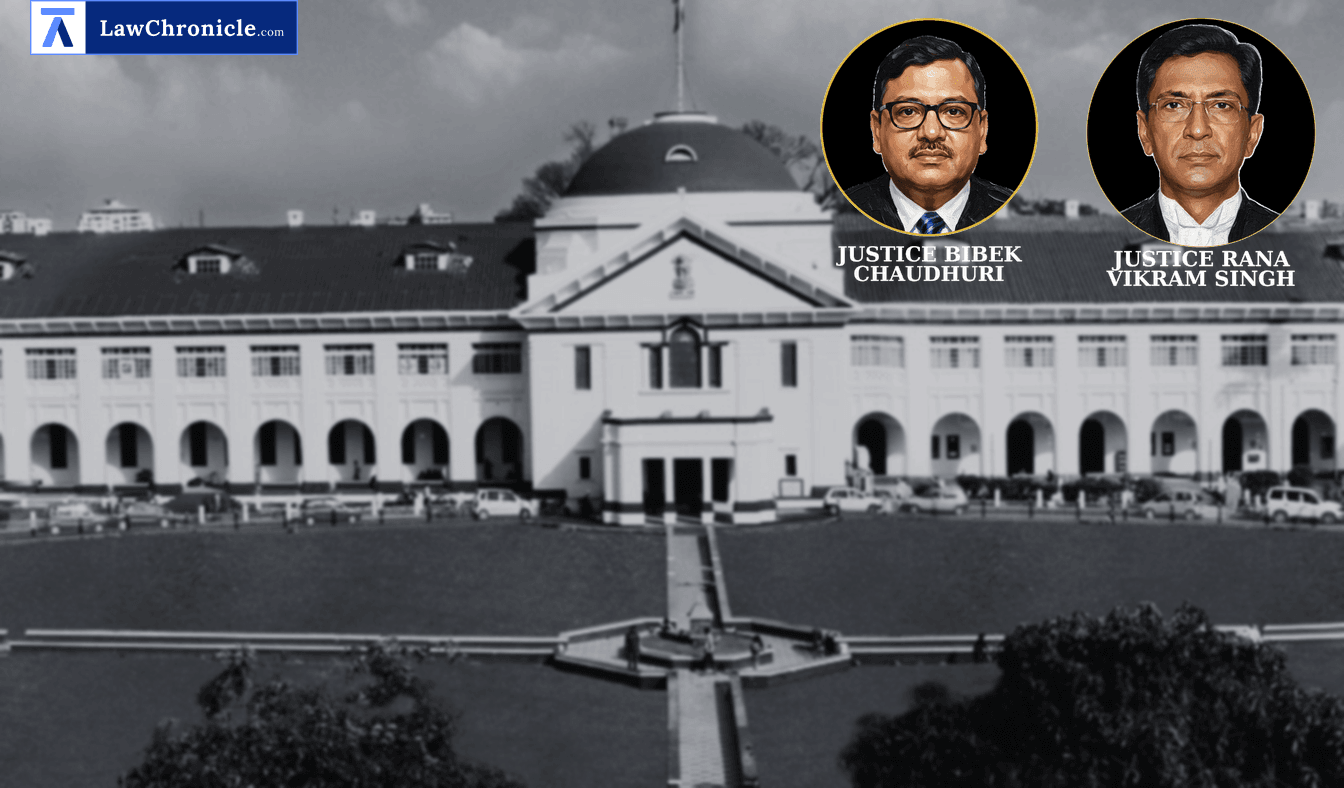
In a significant clarification of administrative law, the Patna High Court has ruled that subsequent departmental instructions do not automatically retrospectively alter the termination procedures for existing contractual employees unless explicitly stated. The decision reinforces the principle that the appointing authority defined at the commencement of a contract retains the legal competence to dispense with services, even if later circulars delegate that power elsewhere.
A division bench of Justice Bibek Chaudhuri and Justice Rana Vikram Singh heard the Letters Patent Appeal challenging a Single Judge's decision which upheld the termination of a Rural Housing Assistant. The appellant contested that his termination by a Deputy Development Commissioner was void in light of later departmental memos that purportedly shifted such powers to the District Magistrate.
Key Takeaways
Non-Retrospectivity of Administrative Memos
Subsequent administrative instructions do not retrospectively alter the conditions governing an existing contractual engagement unless they contain an express provision to that effect.
Clarification vs. Supersession
Calling a new departmental communication 'clarificatory' is not enough; its operative provisions must be examined to see if it actually intends to displace earlier terms of service.
Contractual Competence Upheld
In contractual appointments, the authority vested with the power of appointment at the time of the agreement remains the competent authority for termination, regardless of later shifts in general policy.
Motive vs. Foundation in Termination
There is a sharp legal distinction between misconduct that merely provides a motive for ending a contract and misconduct that forms the punitive foundation of a dismissal order.
Contractual Nature of Appointment and Jurisdictional Validity
The Court examined whether Memo No. 165209 of 2013 or the subsequent Memo No. 205985 of 2014 governed the appellant's service. The appellant argued that the latter memo required the District Magistrate to conduct a personal hearing before termination. However, the Court found that since the appellant was appointed in March 2014 under the 2013 memo, the Deputy Development Commissioner remained the competent authority.
The Court, in its reasoning, observed: "The mere fact that a subsequent communication deals with the same subject does not, by itself, establish that it supersedes the earlier instructions or retrospectively alters the conditions governing an existing contractual engagement. Equally, the description of a communication as clarificatory cannot be conclusive if its operative provisions disclose a substantive alteration of the earlier procedure."
Regarding the protection under Constitution of India, the bench noted that while it protects against dismissal by subordinate authorities, its applicability depends on the nature of the post. For contractual roles, the departmental instructions and the specific terms of engagement primarily dictate the procedure.
Distinction Between Motive and Foundation
The appellant further contended that while financial irregularities were initially alleged, the real reason for his termination was a video showing him expressing political support during the 2019 Lok Sabha elections. Referring to Radhey Shyam Gupta v. U.P. State Agro Industries Corporation Ltd. ( "(1999) 2 SCC 21": 1998 CaseBase(SC) 797), the Court noted that if a finding of misconduct forms the foundation of termination, the safeguards are different from cases where allegations are merely the motive for not continuing a contract.
The Court has following directions:
"The Letters Patent Appeal is, accordingly, dismissed. The judgment and order dated 17.10.2024 passed by the learned Single Judge are affirmed. There shall be no order as to costs."
Ratio
An administrative instruction or departmental memo issued after the commencement of a contractual appointment does not retrospectively substitute the competent authority or the termination procedure unless the new instruction expressly mandates such a retrospective shift. In the absence of such a provision, the terms and conditions prevailing at the time of the appointment continue to govern the contractual relationship.
Background
The appellant was appointed as a Rural Housing Assistant on March 19, 2014, to implement the Indira Gandhi Awas Yojana. In 2019, he was issued show-cause notices regarding financial irregularities and alleged political campaigning during the Lok Sabha elections. On September 6, 2019, the Deputy Development Commissioner dispensed with his services.
The appellant's challenges before the District Magistrate and the Secretary of the Rural Development Department were unsuccessful. He then filed a writ petition, which was dismissed by a Single Judge who held that the later 2014 memo was merely in continuation of the 2013 memo and did not strip the Deputy Development Commissioner of his authority. The Division Bench affirmed this view, holding that the appellant failed to prove a jurisdictional or procedural error.
Case Details:
Case No.: Letters Patent Appeal No.1182 of 2024
Case Title: Mithun Kumar v. The State of Bihar and Others
Appearances:
For the Petitioner(s): Mr. Pushkar Bharadwaj, Advocate; Mr. Chinmay Harsh Karn, Advocate
For the Respondent(s): Mr. Anjani Kumar, AAG (4); Ms. Roona, Advocate
Source: 2026 CaseBase(PAT) 3960
Similar Articles


 Breaking News


