


17-Year Contractual Service On Sanctioned Post Warrants Regularization: Himachal Pradesh HC
 Copy Link
 Share
 Save
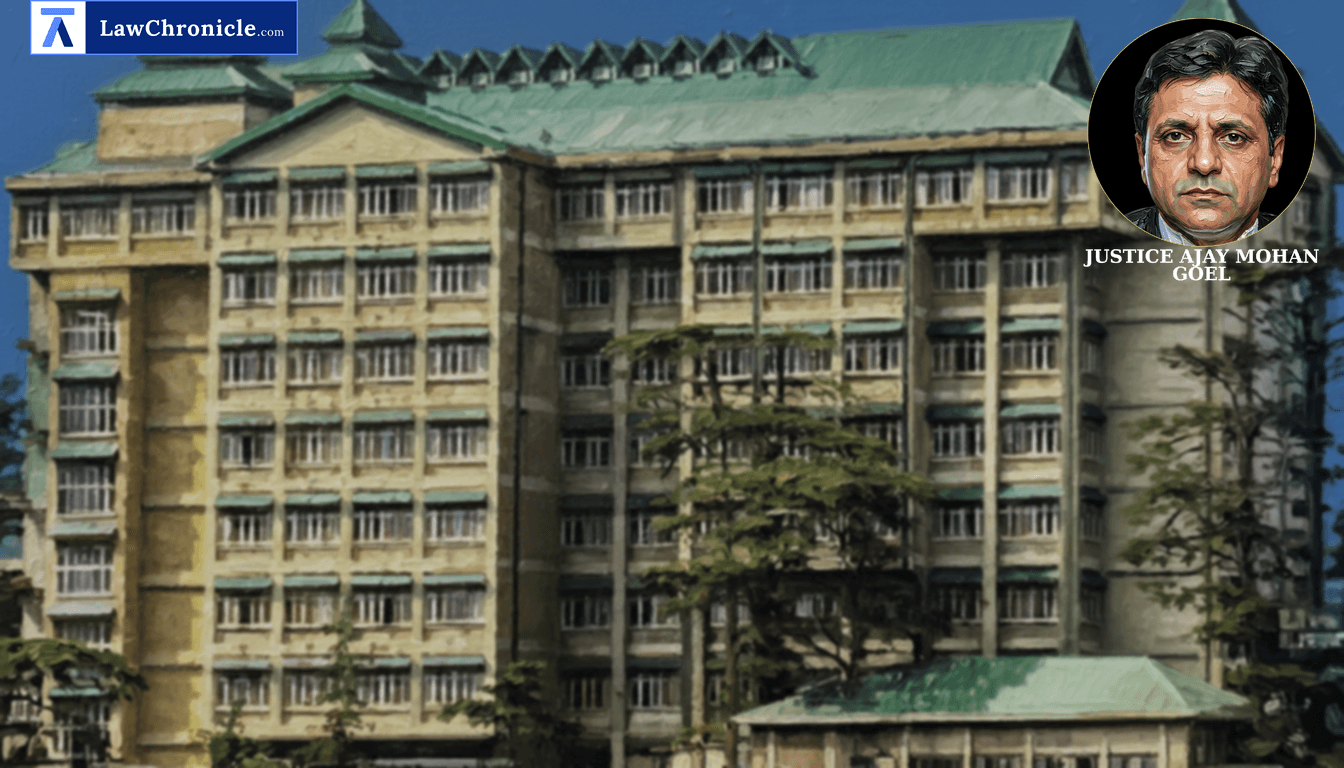
In a stern rebuke to state authorities engaging in perpetual ad-hocism, the High Court of Himachal Pradesh has ruled that contractual employees selected through open competition and retained on sanctioned posts for decades cannot be arbitrarily terminated under the guise of temporary contracts.
Justice Ajay Mohan Goel delivered the judgment while adjudicating a writ petition challenging a non-speaking termination order issued after 17 years of unblemished service. The Court underscored that continuing employees indefinitely on contract against posts with inherent permanency defeats the constitutional mandate of fair play and public employment.
Arbitrary Termination of Long-Serving Contractual Employee Unsustainable
The High Court observed that the petitioner was recruited through an open selection process against a sanctioned post at the Composite Regional Centre for Persons with Disabilities, established under the Persons with Disabilities (Equal Opportunities, Protection of Rights and Full Participation) Act, 1995. Despite serving continuously for 17 years with regular pay revisions, annual increments, and Modified Assured Career Progression (MACP) benefits, his services were abruptly terminated without assigning any reasons or alleging misconduct.
The Court, in its reasoning, observed: "The very fact that the petitioner was serving against the post from 2005 upto 2022, when the impugned order was passed is demonstrative of the fact that there was permanency attached with the post in issue... Therefore, in these circumstances, the issuance of the impugned order by mentioning that his services are no longer required and therefore, were being terminated, is not sustainable in law."
Highlighting the constitutional discipline imposed on state organs by Article 14, Article 16, and Article 21 of the Constitution of India, the Court relied on recent Supreme Court rulings including Jaggo versus Union of India and others ( "2024 SCC Online SC 3826": 2024 CaseBase(SC) 715), Dharam Singh & Ors. Versus State of H.P. & Anr., and Bhola Nath Versus the State of Jharkhand & Ors. ( "2026 SCC Online SC 129 (2026 INSC 99)": 2026 CaseBase(SC) 79). These precedents firmly deprecate the practice of engaging workers under nominal labels of temporary or contractual employment in perpetuity when the underlying duties are integral to the organization's functioning.
The Court also acknowledged the principles laid down in Secretary of State versus Uma Devi ( "(2006) 4 SCC 1": 2006 CaseBase(SC) 148), noting that the bar on legitimate expectation does not apply to contractual employees who entered service through a transparent and lawful selection procedure. The Court further noted the doctrine of legitimate expectation discussed in Army Welfare Education Society v. Sunil Kumar Sharma ( "(2024) 16 SCC 598": 2024 CaseBase(SC) 608), Shripal v. Nagar Nigam, and Vinod Kumar v. Union of India.
The Court has the following directions:
"Accordingly, in light of the above observations, this writ petition is allowed. Impugned Annexure P-10 dated 20.09.2022 is quashed and set aside. Respondents are directed to allow the petitioner to discharge his duties as Orientation and Mobility Instructor at Composite Regional Centre for Persons with Disabilities at Sundernagar. Respondents are further directed to regularize the services of the petitioner against the said post as from the date of this judgment prospectively with all consequential benefits."
Key Takeaways
- End to Perpetual Ad-Hocism: State instrumentalities cannot rely on formal contractual labels to deny job security when employment is continuous and regular.
- Legitimate Expectation Validated: Employees selected through open competition on sanctioned posts build a legitimate expectation of regularization over extended service periods.
- Model Employer Obligation: State bodies must abide by public law standards and provide fair, stable employment rather than arbitrarily ending long-standing service.
Ratio
When a contractual appointment is made against a sanctioned post following an open and competitive selection process, and the employee renders long, uninterrupted service with regular financial benefits, the employer-State cannot abruptly terminate the engagement without cogent reasons. In such circumstances, the continuation of work demonstrates permanent need, entitling the employee to regularization rather than arbitrary termination under Article 14 of the Constitution.
Background:
The dispute arose when the petitioner, Priyavart Nawani, was appointed in 2005 as an Orientation and Mobility Instructor at the Composite Regional Centre for Persons with Disabilities, Sundernagar, following an open advertisement. Although initially appointed on a two-year contract, his engagement was extended continuously for 17 years. During this period, he was granted annual increments, pay scale revisions, and MACP benefits. Information submitted to the Prime Minister's Office in 2020 also reflected his post as part of the sanctioned regular establishment.
However, on September 20, 2022, respondent authorities issued an order terminating his services without specifying any misconduct or rationale. The petitioner approached the High Court seeking quashing of the termination order and regularization of his services. An interim stay was granted in 2022, allowing him to continue in service.
The High Court held that the non-speaking termination order was arbitrary, set it aside, and directed the respondents to regularize the petitioner's services prospectively from the date of the judgment.
Case Details:
Case No.: CWP No.6817 of 2022
Case Title: Priyavart Nawani v. Union of India and others
Appearances:
For the Petitioner(s): Mr. Surinder Sharma, Senior Advocate, with Mr. Neeraj Sharma, Advocate.
For the Respondent(s): Mr. Balram Sharma, Deputy Solicitor General of India with Mr. Rajeev Sharma, Advocate.
Source: 2026 CaseBase(HP) 1808
Similar Articles
 Breaking News


