


Patna HC: Remarriage During Appeal Does Not Render Divorce Challenge Infructuous
 Copy Link
 Share
 Save
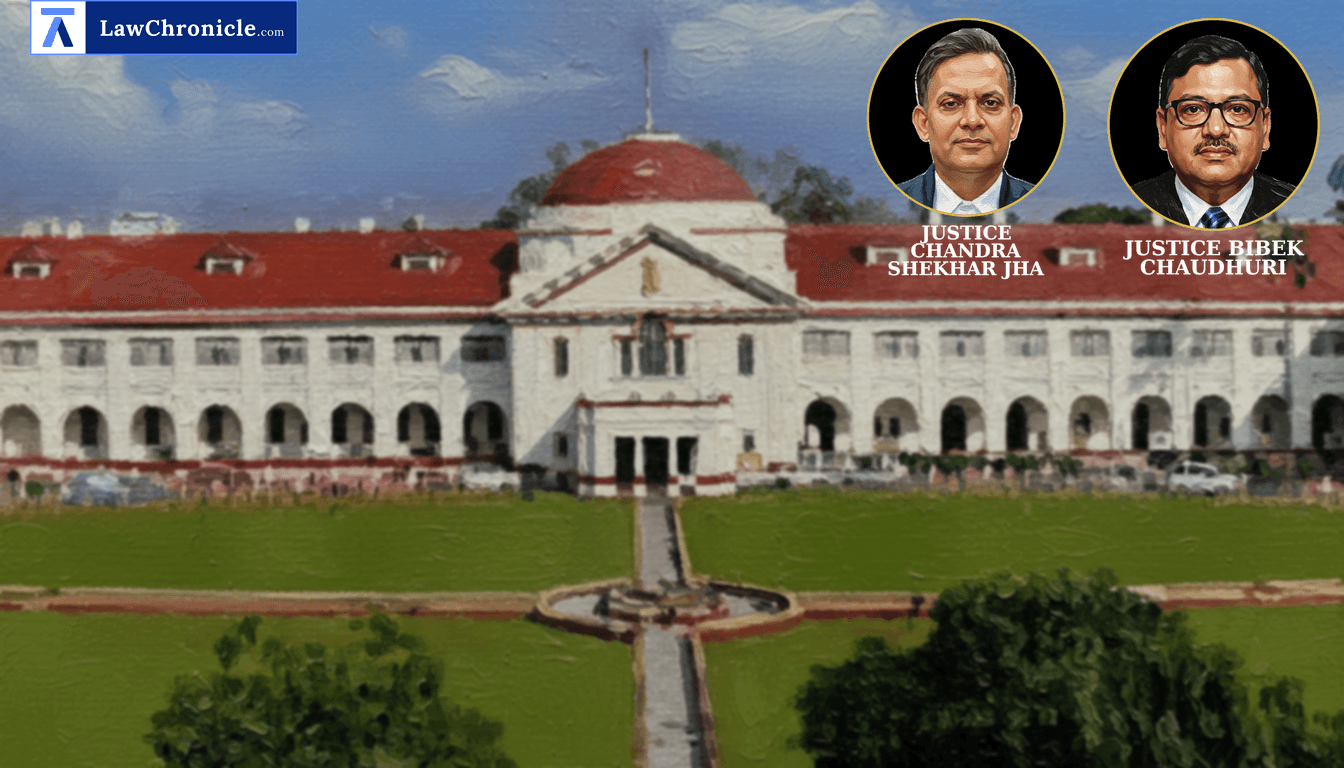
The Patna High Court has clarified that a spouse contracting a second marriage during the pendency of an appeal does so at their own peril, as such remarriage cannot defeat the statutory right of appeal or render the proceedings infructuous. While upholding a divorce decree on the grounds of mental cruelty arising from serious unsubstantiated criminal allegations, the Court simultaneously ordered a substantial permanent alimony of ₹34.76 lakhs to ensure the financial security of the wife.
A Division Bench of Justice Bibek Chaudhuri and Justice Chandra Shekhar Jha heard the appeal filed by the wife challenging a Family Court decree that dissolved her marriage on grounds of cruelty and desertion. The Court navigated the complex intersection of matrimonial discord, infertility-related stress, and the legal consequences of acquittal in criminal cases involving matrimonial offences.
The Impact of Unsubstantiated Criminal Allegations
The Court observed that while the standard of proof in criminal trials and matrimonial cases differs, the institution of serious criminal cases that end in acquittal is a significant factor in determining mental cruelty. The respondent-husband and his family were subjected to prosecution under Sections 307, 498A, and 120B of the Indian Penal Code, 1860, which eventually resulted in an acquittal affirmed by the High Court.
The Court, in its reasoning, observed: "The respondent and his family members were required to face prosecution under serious penal provisions. The litigation continued over several years. Ultimately, the criminal prosecution failed. The Court cannot ignore the mental agony, social consequences and prolonged litigation inevitably suffered by the respondent and his family members. Viewed cumulatively with the admitted long separation, complete collapse of mutual confidence and repeated unsuccessful attempts at reconciliation, the evidence indicates that the matrimonial relationship had broken down beyond repair long before the decree came to be passed."
Remarriage and Section 15 of the Hindu Marriage Act
A critical issue arose regarding the husband's second marriage during the pendency of the appeal. The Court held that according to Section 15 of the Hindu Marriage Act, 1955, the right to remarry is restricted until the appeal period expires or the appeal is dismissed. Citing Anurag Mittal v. Shaily Mishra Mittal ( "(2018) 9 SCC 691": 2018 CaseBase(SC) 1226) and Rakhi Sadhukhan v. Raja Sadhukhan ( "2025 INSC 789": 2025 CaseBase(SC) 985), the bench noted that such a marriage remains subject to the outcome of the appeal and does not create an equitable advantage for the husband.
Court Directions on Permanent Alimony
Recognizing the need for a just financial arrangement post-divorce, the Court exercised its jurisdiction under Section 25 of the Hindu Marriage Act, 1955. Based on the husband's monthly salary of ₹86,900 and his assets in Prayagraj and Mughalsarai, the Court quantified the alimony.
The Court has the following directions: "...we direct the respondent husband to pay permanent alimony of Rs. 34,76,000/- (thirty-four lakh seventy-six thousand) only in two equal installments. First installment shall be paid within 15 days from the date of communication of this order to the Lower Court and the second installment shall be paid exactly after 60 days from the date of payment of first installment by issuing demand draft in the name of the wife in Court below."
Key Takeaways:
Statutory Right of Appeal Preservation
Remarriage by a successful party before the expiry of the limitation period for an appeal or during the pendency of an appeal does not render the challenge infructuous; the legality of the divorce decree must still be tested on merits.
Cruelty via False Litigation
Initiating serious criminal proceedings (such as attempt to murder) against a spouse and their family, which subsequently end in acquittal due to inconsistencies, constitutes a valid ground for mental cruelty under personal laws.
Alimony Calculation Standards
EMI payments for housing or personal loans cannot be deducted from a spouse's salary when calculating their financial capacity for permanent alimony; only GPF and income tax are permissible deductions.
Continuing Jurisdiction for Maintenance
Courts possess a wide and continuing discretion under Section 25 of the Hindu Marriage Act, 1955 to award alimony even at the appellate stage to ensure the spouse maintains a standard of living consistent with what they enjoyed during the marriage.
Ratio Decidendi:
A subsequent marriage contracted in disregard of the statutory restrictions under Section 15 of the Hindu Marriage Act, 1955 neither defeats the maintainability of an appeal nor creates any equity in favor of the remarrying spouse. Furthermore, the cumulative effect of long separation, failed reconciliation, and the mental agony caused by unsubstantiated serious criminal prosecution justifies a decree of divorce on the ground of mental cruelty under Section 13(1)(ia).
Background:
The parties married in 2010 but faced significant discord, partly attributed to prolonged infertility and failed IVF treatments. The husband alleged that the wife humiliated him regarding his inability to father a child and eventually deserted him. Conversely, the wife alleged dowry demands for land and a vehicle, leading her to file a criminal case. The Family Court at Rohtas granted the husband a divorce in 2021. In the appeal, the High Court re-evaluated the evidence, noting that the wife's criminal allegations were found unsupported in a full trial. While the Court found the ground of desertion under Section 13(1)(ib) not conclusively proven as a unilateral act, it affirmed the dissolution of marriage solely on the ground of cruelty, while awarding ₹34,76,000 as permanent alimony to the wife.
Case Details:
Case No.: Miscellaneous Appeal No.367 of 2021
Case Title: Sunita Panday vs. Binod Kumar Panday
Appearances:
For the Petitioner(s): Mr. Raghunandan Kumar Singh, Advocate
For the Respondent(s): Ms. Mayuri, Advocate
Source: 2026 CaseBase(PAT) 27
Similar Articles
 Breaking News


