


Unsubstantiated Allegations And Forced Separation From Mother Constitute Cruelty: Calcutta HC
 Copy Link
 Share
 Save
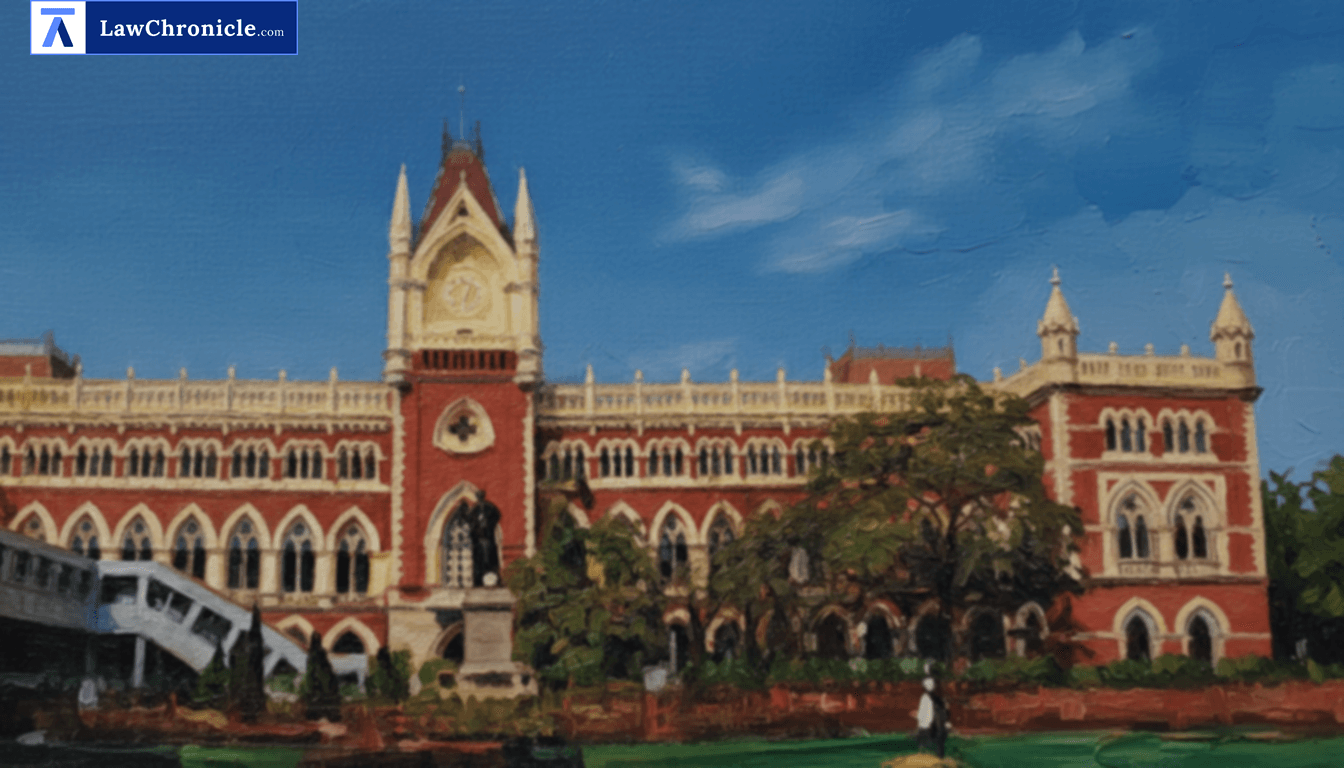
Elevating the legal standard on mental cruelty, the Calcutta High Court has affirmed a divorce decree, holding that leveling unsubstantiated, grave allegations against a spouse and persistently pressuring them to abandon a dependent widowed mother amounts to severe mental cruelty.
A Division Bench comprising Justice Sabyasachi Bhattacharyya and Justice Supratim Bhattacharya upheld the trial court decision granting a divorce decree in favor of the husband under the Special Marriage Act. The appeal, filed by the wife, challenged the lower court’s finding of mental cruelty and irretrievable breakdown of marriage while seeking restitution of conjugal rights.
Key Takeaways
Baseless Allegations as Cruelty: Raising unproven, severe allegations that demean a spouse’s character or publicly humiliate them constitutes severe mental cruelty in matrimonial law.
Duty Towards Dependent Parents: Unjustified insistence on forcing a spouse to abandon an elderly, dependent widowed mother severely disrupts marital harmony and amounts to cruelty.
Stray Cohabitation Is Not Condonation: Isolated or stray instances of cohabitation post-separation do not automatically wipe out prior cruelty or imply condonation.
Irretrievable Breakdown Spells Cruelty: A marriage broken down beyond repair over a long period inflicts mutual cruelty, justifying dissolution.
Evaluating Cruelty and Condonation in Matrimonial Disputes
The High Court carefully evaluated the facts, noting that the wife made several grave but completely uncorroborated allegations, including child molestation by the mother-in-law, swindling of parental property, and forced abortion. The Court noted that such unsubstantiated accusations inflict immense mental agony. Referring to Narendra vs. K. Meena ( "(2016) 9 SCC 455": 2016 CaseBase(SC) 184), the Court affirmed that pressuring a husband to abandon his dependent widowed mother without valid justification constitutes torturous behavior amounting to mental cruelty.
Addressing the argument regarding condonation of cruelty through intermittent cohabitation, the Bench cited Dr. N. G. Dastane vs. Mrs. S. Dastane ( "(1975) 2 SCC 326": 1975 CaseBase(SC) 376) and observed that stray acts of living together post-separation do not constitute absolute condonation. Condonation remains impliedly conditional upon non-repetition of further acts of cruelty.
The Court, in its reasoning, observed: "A marital relationship which has only become more bitter and acrimonious over the years, does nothing but inflict cruelty on both the sides. To keep the façade of this broken marriage alive would be doing injustice to both the parties. A marriage which has broken down irretrievably, in our opinion spells cruelty to both the parties, as in such a relationship each party is treating the other with cruelty."
On procedural aspects, the Court dismissed the wife's application for additional evidence under Order XLI Rule 27 of the Code of Civil Procedure, relying on principles discussed in Sathyanath and Another Vs. Sarojamani ( "(2022) 7 SCC 644": 2022 CaseBase(SC) 861) and Union of India Vs. Ibrahim Uddin and Another ( "(2012) 8 SCC 148": 2012 CaseBase(SC) 844). The Court issued no specific directions other than confirming the decree of divorce and clarifying that the wife retains liberty to seek permanent alimony.
Ratio
Making uncorroborated, severe character-assassinating allegations against a spouse, combined with persistent efforts to separate them from a dependent widowed mother without justification, amounts to mental cruelty. Furthermore, a long-standing, acrimonious separation leading to an irretrievable breakdown of marriage inherently inflicts mental cruelty on both spouses, justifying dissolution under matrimonial laws.
Background
The parties married under the Special Marriage Act in June 2009, and a child was born in 2013. Disputes arose, leading to separate living from December 2014. The wife filed criminal complaints under Section 324 of the Indian Penal Code and proceedings under the Protection of Women from Domestic Violence Act, 2005, alleging assault, forced abortion, and retention of marriage articles. However, the husband was acquitted in the criminal case, and receipts proved the return of ornaments.
In the matrimonial proceedings, the trial court granted divorce to the husband on grounds of cruelty and irretrievable breakdown, while implicitly rejecting the wife's counter-claim for restitution of conjugal rights under Section 22 of the Special Marriage Act. The wife appealed before the High Court, relying on precedents such as Samar Ghosh Vs. Jaya Ghosh ( "(2007) 4 SCC 511": 2006 CaseBase(SC) 1119), Savitri Pandey Vs. Prem Chandra Pandey ( "(2002) 2 SCC 73": 2002 CaseBase(SC) 597), A. Jayachandra Vs. Aneel Kaur ( "(2005) 2 SCC 22": 2004 CaseBase(SC) 802), Rakesh Raman Vs. Kavita ( "(2023) 17 SCC 433": 2023 CaseBase(SC) 890), and V. Bhagat v. D. Bhagat ( "(1994) 1 SCC 337": 1993 CaseBase(SC) 968) to argue that mental cruelty was not established and that the trial court failed to adjudicate her counter-claim. The High Court rejected these contentions, holding that the marriage had irretrievably broken down after 11 years of separation and affirming the divorce decree.
Case Details:
Case No.: F.A.T. No. 100 of 2022 + CAN 5 of 2026
Case Title: Munmun Karmakar nee Ghosh Versus Abhishek Karmakar
Appearances:
For the Petitioner(s): Mr. Sanjay Mukherjee, Mr. Purnendu Das, Mr. Kinjal Kr. Barai, Advocates
For the Respondent(s): Mr. Shyamal Chakraborty, Mr. Rajib Ray, Ms. Suparna Deb, Mr. Sumit Roy, Advocates
Source: 2026 CaseBase(CAL) 1657
Similar Articles

 Breaking News


