


Pedestrian Struck While Standing on Road: Gujarat HC Rejects Contributory Negligence
 Copy Link
 Share
 Save
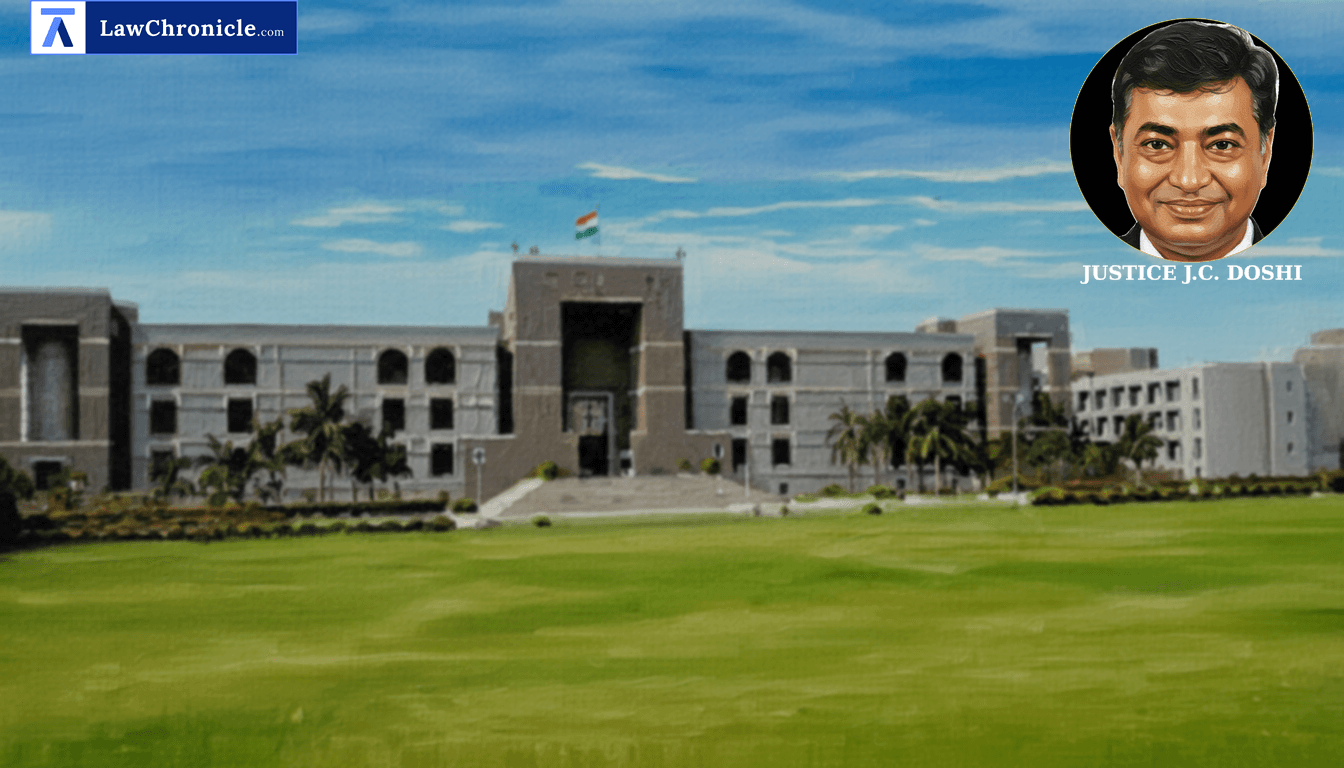
The High Court of Gujarat has quashed a Motor Accident Claims Tribunal's finding of contributory negligence against a pedestrian, ruling that attributing fault to a person merely standing on the side of the road is a 'niggardly' approach that undermines the principle of just compensation. This decision reinforces the status of motor accident law as beneficial legislation intended to restore victims to their pre-accident state through realistic approximations of loss rather than perfect arithmetical calculations.
Justice J. C. Doshi, presiding over the appeal, addressed the dissatisfaction of the claimant regarding the quantum of compensation and the attribution of negligence. The court scrutinized the lower tribunal's decision to hold a pedestrian 10% liable for being dashed by a truck while standing on the road, characterizing such a finding as an 'ostrich approach' that contradicts the fundamental tenets of equity and fairness in motor accident claims.
Key Takeaways
Repudiation of Automatic Contributory Negligence
The court established that standing on the side of a road does not automatically invite a finding of negligence against a pedestrian, even if a larger vehicle is involved.
Mandate for Liberal Compensation
Judicial bodies are directed to adopt a liberal, rather than a parsimonious, scale when valuing life and limb, ensuring compensation is generous and fair.
Restoration Principle
While money cannot renew a shattered physical frame, the primary goal of the Tribunal must be to bring the victim back to their pre-accident position as far as possible.
Judicial Duty Over Claims
Tribunals are bestowed with a duty to award just compensation regardless of the specific amount claimed by the parties, emphasizing a holistic and pragmatic view.
Court's Rationale on 'Just and Fair' Compensation
The Bench emphasized that the Motor Vehicles Act, 1988 is a beneficial piece of legislation where the concepts of fairness and reasonableness are seminal. The court observed that while mental turbulence or physical loss cannot be perfectly calculated, the computation must reside in the realm of realistic approximation.
The Court, in its reasoning, observed: "The determination of the quantum of compensation therefore, must be liberal and not niggardly since the law values life and limb in a free country in generous scale. Needless to state that money may be awarded, so that something tangible may be procured to reach something else of the like nature, which has been destroyed or lost, but money cannot renew physical frame that has been battered and shattered being a result of the road accident. Yet Tribunal should endeavour to bring back victim to stage of pre-road accident as far as possible."
Rejection of the 'Ostrich Approach'
Critiquing the Tribunal's decision to attribute 10% negligence to the claimant, the Court noted: "I find that learned Tribunal has taken ostrich approach to attribute 10% negligence to claimant who was standing on road at the time of accident. One cannot see any better example of applying parsimonious approach to attribute 10% negligence to person who was standing on side of the road."
The Court has following directions:
"8.1 The present appeal is partly allowed.
8.2 The Insurance Company is directed to deposit the enhanced amount with interest as stated herein above within a period of eight weeks from the date of receipt of this order. Rest of the direction(s) of the Tribunal remain same.
8.3 The Tribunal shall disburse the entire awarded amount including amount lying in the FDR and/or with the Tribunal, with accrued interest thereon, if any, to the claimants, by account payee cheque / NEFT / RTGS, after proper verification and after following due procedure. While making the payment, the Tribunal shall deduct the courts fees, if not paid, in accordance with rules/law."
Ratio
In claims arising under the Motor Vehicles Act, 1988, a pedestrian standing on the side of the road cannot be attributed contributory negligence for being struck by a vehicle. Compensation must be determined on a liberal and equitable scale, adhering to the principle of 'just and fair' compensation, prioritizing the victim's restoration over moderate or arithmetical calculations.
Background
The dispute originated from a motor accident where the claimant, while standing on the road, was dashed by a truck. The Motor Accident Claims Tribunal, Kheda at Nadiad, in petition No.987 of 2014, had relied on Sarla Verma v/s. Delhi Transport Corporation ( "2009 ACJ 1298": 2009 CaseBase(SC) 380) to assess the situation. The Tribunal originally attributed 90% negligence to the truck driver and 10% to the claimant, awarding a compensation of Rs.1,66,439/- for a 32% disability in the left lower limb.
Upon review, the High Court found the 10% negligence attribution to be legally unsustainable and against the principles of the Motor Vehicles Act, 1988. The Court enhanced the compensation to a global figure of Rs.2,35,000/-, resulting in an additional entitlement of Rs.68,561/- with 9% interest per annum. The appeal was partly allowed, setting aside the finding of contributory negligence.
Case Details:
Case No.: R/FIRST APPEAL NO. 3905 of 2019
Neutral Citation: 2026:GUJHC:61071
Case Title: Shaileshbhai Babubhai Chaudhari Versus Rameshbhai Devjibhai Rathod & Anr.
Appearances:
For the Petitioner(s): NISHIT A BHALODI(9597) for the Appellant(s) No. 1
For the Respondent(s): MR TANMAY B KARIA(6833) for the Defendant(s) No. 2
Source: 2026 CaseBase(GUJ) 24765
Similar Articles

 Breaking News


