


Presumption of Debt Under NI Act Obviates Proof of Loan Advancing: Himachal Pradesh HC
 Copy Link
 Share
 Save
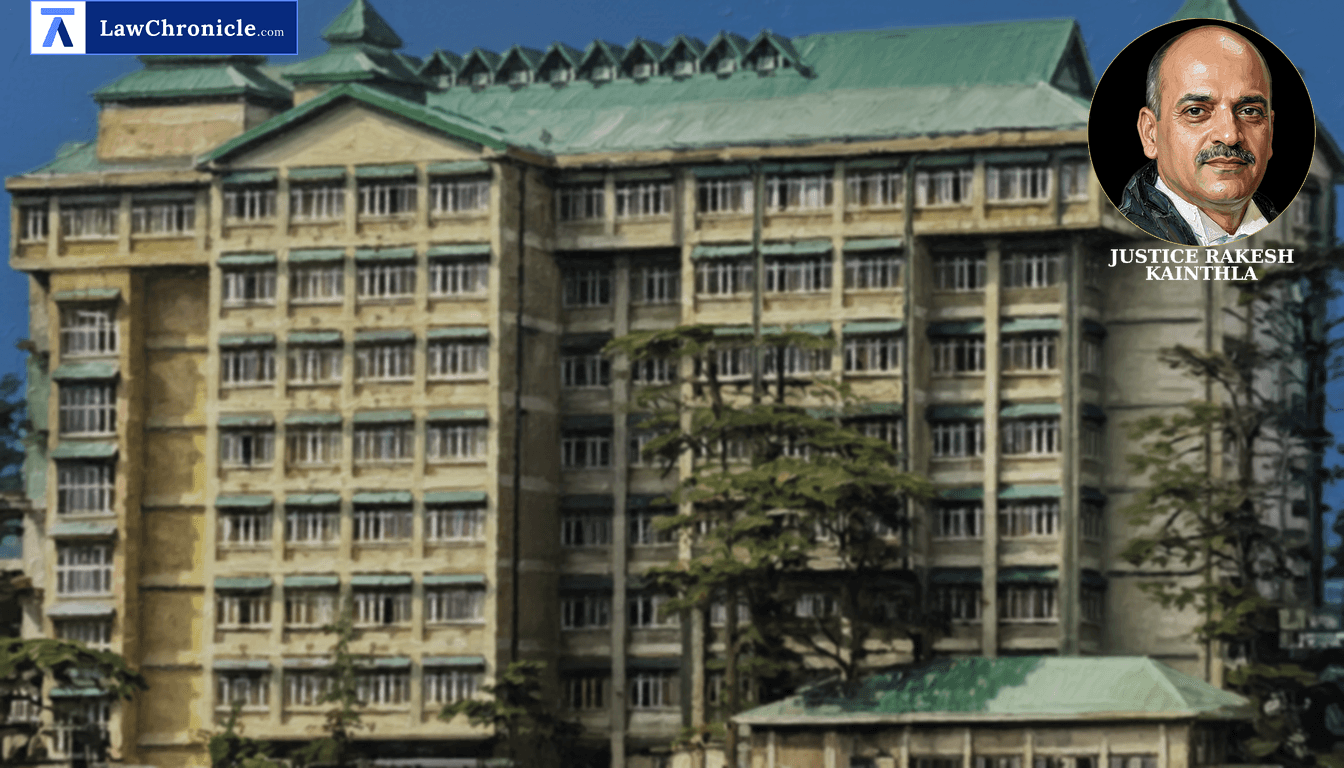
In a decisive reinforcement of the reverse onus clause, the Himachal Pradesh High Court has ruled that once the execution of a cheque is admitted, the statutory presumption under Section 138 of the Negotiable Instruments Act, 1881 renders it unnecessary for the complainant to independently prove the advancing of a loan. The Court held that lower courts cannot treat cheque dishonour proceedings as civil recovery suits, emphasizing that the burden lies solely on the accused to demonstrate a probable defense through evidence rather than mere denials.
Hon’ble Mr. Justice Rakesh Kainthla presided over the appeal, which challenged a judgment of acquittal passed by the Sessions Judge, Kullu. The High Court analyzed the interplay between the Negotiable Instruments Act, 1881 and evidentiary standards, ultimately setting aside the acquittal and restoring the conviction of the accused for failing to honour a debt of ₹5,00,000.
Key Takeaways
Presumption Overrides Proof
Complainants are not required to prove the source of funds or the act of advancing a loan once the signature and issuance of the cheque are admitted by the drawer.
Deterrent Nature of NI Act
The penal provisions of Section 138 are intended to infuse credibility into commercial transactions, and technical violations like cash payments above ₹20,000 do not invalidate the debt.
Burden of Rebuttal
To rebut the statutory presumption, the accused must lead substantive evidence; a statement recorded under Section 313 of the Code Of Criminal Procedure, 1973 is not considered substantive evidence.
Compensation vs Fine
Courts cannot simultaneously impose a fine and award separate compensation under Section 357 of the Code of Criminal Procedure, 1973 if the fine already forms a part of the sentence.
Court's Analysis of Section 138 and Presumptions
The Court observed that the learned Appellate Court erred by shifting the burden of proof back to the complainant. Relying on Rohitbhai Jivanlal Patel v. State of Gujarat ( "(2019) 18 SCC 106": 2019 CaseBase(SC) 3177) and Kuntegowda v. Thurubaiah ( "2026 SCC OnLine SC 1485": 2026 CaseBase(SC) 721), Justice Kainthla noted that the Negotiable Instruments Act, 1881 creates a legal fiction where the holder is presumed to have received the cheque for the discharge of a liability.
The Court, in its reasoning, observed: "A conjoint and harmonious reading of the aforesaid provisions clearly indicates towards the statutory presumption that every negotiable instrument was made or drawn for consideration and that it was executed for discharge of debt or liability once the execution of the negotiable instrument is either proved or admitted. As soon as the complainant discharges the burden to prove that the instrument was executed by the drawer, the rules of presumption under Sections 118 and 139 of the NI Act help him and shift the burden of rebutting the said presumptions upon the said drawer."
Regarding the defense of a lost cheque book, the Court found the evidence provided by the accused (DW1 and DW2) to be misread by the lower appellate court, as the police reports cited did not even mention the accused's name. Furthermore, the Court clarified that any breach of Section 269SS of the Income Tax Act, 1961 only attracts penalties under that Act and does not render a transaction unenforceable under Section 138 of the Negotiable Instruments Act, 1881, effectively overruling the logic in P.C. Hari v. Shine Varghese.
The Court has following directions:
"The present appeal is partly allowed; the judgment passed by learned Appellate Court is ordered to be set aside while the judgment of conviction and order of sentence of imprisonment and payment of compensation awarded by learned Trial Court are ordered to be restored. The order of payment of fine imposed by the learned Trial Court is set aside and the fine amount, if deposited, be adjusted towards the compensation awarded by the learned Trial Court."
Ratio
The statutory presumption under Sections 118 and 139 of the Negotiable Instruments Act, 1881 shifts the burden of proof to the accused once the execution of the cheque is admitted. This presumption is not rebutted by a mere denial in a Section 313 Code Of Criminal Procedure, 1973 statement or by the complainant's failure to produce evidence of the loan's advancement. Furthermore, a transaction in violation of Section 269SS of the Income Tax Act, 1961 remains a 'legally enforceable debt' for the purposes of the Negotiable Instruments Act, 1881.
Background
The dispute began when the complainant alleged he advanced ₹5,00,000 in cash to the accused for an apple orchard lease. The accused issued a post-dated cheque which was returned for "insufficient funds." The Trial Court convicted the accused, but the Appellate Court reversed this, citing the complainant's failure to prove his financial capacity and the absence of a witness (Vishwajeet) during the loan advancement.
The High Court, however, found that the accused had taken contradictory pleas suggesting in cross-examination that the cheque was given to a third party while claiming in his defense that it was stolen. Referencing Balu Sudam Khalde v. State of Maharashtra ( "(2023) 13 SCC 365: 2023 SCC OnLine SC 355": 2023 CaseBase(SC) 460), the Court held that incriminating suggestions made by defense counsel bind the accused. The High Court also relied on Sanjay Kumar v. State of Bihar ( "2026 SCC OnLine SC 1373": 2026 CaseBase(SC) 681) to define the limited scope of interference in acquittals, noting that the Appellate Court's view was "perverse" as it ignored binding statutory presumptions established in APS Forex Services (P) Ltd. v. Shakti International Fashion Linkers, N. Vijay Kumar v. Vishwanath Rao N. ( "2025 SCC OnLine SC 873": 2025 CaseBase(SC) 907), and Sanjabij Tari v. Kishore S. Borcar ( "2025 SCC OnLine SC 2069": 2025 CaseBase(SC) 746). The appeal was partly allowed, restoring the conviction and the ₹5,00,000 compensation but setting aside the additional fine.
Case Details:
Case No.: Cr. Appeal No. 4171 of 2013
Neutral Citation: 2026:HHC:38126
Case Title: Naresh Kumar v. Anil Kumar
Appearances:
For the Petitioner(s): Mr Rajesh Kashyap, Advocate.
For the Respondent(s): Mr Vishwas Kaushal, Advocate.
Source: 2026 CaseBase(HP) 7994
Similar Articles

 Breaking News


