


Revisional Court Cannot Re-Appreciate Evidence In Cheque Dishonour Cases: Himachal Pradesh HC
 Copy Link
 Share
 Save
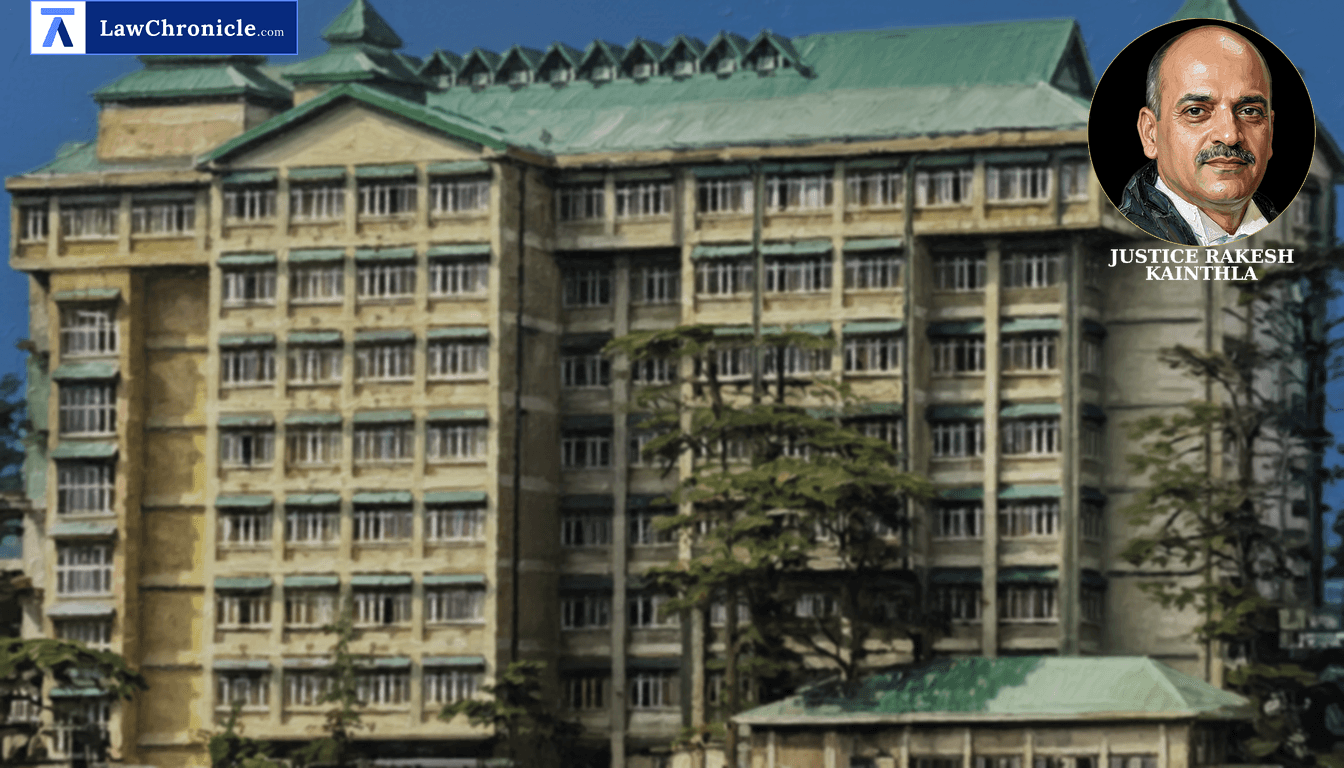
The High Court of Himachal Pradesh has reinforced the strict limits of revisional jurisdiction, ruling that unless a finding is perverse or legally untenable, superior courts cannot act as appellate bodies to re-weigh evidence in Section 138 Negotiable Instruments Act, 1881 cases. This decision effectively closes the door on litigants seeking to overturn concurrent findings of conviction by merely proposing alternative interpretations of facts.
Justice Rakesh Kainthla, sitting as a single-judge bench, delivered the judgment while dismissing a criminal revision petition that challenged the concurrent orders of conviction passed by the Trial Court and the Sessions Court. The bench emphasized that the supervisory nature of revision is intended to correct miscarriages of justice, not to conduct a second-layer factual analysis.
Key Takeaways
Limits of Revision
High Courts cannot re-examine oral or medical evidence to reach a conclusion contrary to concurrent findings unless there is a glaring contradiction.
Presumption Burden
Once the execution of a cheque is admitted, the statutory presumption under Section 139 of Negotiable Instruments Act, 1881 shifts the entire burden to the accused to prove the non-existence of a debt.
Financial Capacity Challenges
An accused cannot challenge a complainant's financial capacity at the trial stage if they failed to raise such a defense in their initial reply to the statutory demand notice.
Deemed Service of Notice
A notice returned with the endorsement 'refused' constitutes valid service, preventing drawers from evading liability by simply rejecting registered post.
Strict Bounds of Revisional Jurisdiction
The Court observed that the power under Section 397 of the Code of Criminal Procedure, 1973 (now Section 438 of Bharatiya Nagarik Suraksha Sanhita, 2023) is supervisory. Relying on the precedent in Kuntegowda v. Thurubaiah ( "2026 SCC OnLine SC 1485": 2026 CaseBase(SC) 721), the Court noted that a revisional court should refrain from substituting its conclusion on an elaborate consideration of evidence.
The Court, in its reasoning, observed: "...while considering the legality, propriety or the correctness of a finding or a conclusion, the revisional court does not and should not dwell upon the facts and the evidence of the case as an appellate Court. The court, in revision, considers the material only to satisfy itself about the correctness, legality and propriety of the findings, sentence and order recorded by the lower court, and should refrain from substituting its conclusion on an elaborate consideration of evidence..."
Presumption Under Section 138 of NI Act
Addressing the merits of the case, the Court highlighted that the accused failed to rebut the statutory presumptions under Sections 118 and 139 of the Negotiable Instruments Act, 1881. The petitioner’s defense that he had misplaced his cheque book was rejected because the cheque number in question did not match the records of the lost cheque book reported to the police.
Citing Tedhi Singh v. Narayan Dass Mahant ( "(2022) 6 SCC 735": 2022 CaseBase(SC) 87), the Court held that the complainant is not required to show financial capacity in the first instance unless it is challenged in the reply to the statutory notice. Since the accused did not reply to the notice, his challenge to the complainant's capacity "falls flat."
Final Directions
The Court upheld the sentence of six months' simple imprisonment and a fine of ₹2,20,000. It noted that the objects of Chapter XVII of Negotiable Instruments Act, 1881 are both punitive and compensatory, and the awarded fine was not excessive. The Court has following directions:
"In view of the above, the present revision fails, and it is dismissed. All the pending applications, if any, also stand disposed of. A copy of the judgment, along with records of the learned Courts below, be sent back forthwith."
Ratio
The High Court held that in the absence of perversity, a revisional court cannot upset concurrent factual findings or re-analyze evidence. Furthermore, under the Negotiable Instruments Act, 1881, if an accused fails to reply to the statutory demand notice or admit the execution of the cheque, the statutory presumption of a legally enforceable debt remains unrebutted unless probable evidence to the contrary is produced.
Background
The dispute arose when the complainant alleged that the accused borrowed ₹2,00,000 for personal needs and issued a post-dated cheque which was dishonored due to "insufficient funds." Despite a notice of demand, which was returned as "refused," the accused failed to repay the amount.
The Trial Court convicted the accused, a decision later upheld by the Sessions Judge, Sirmaur. The accused moved the High Court in revision, arguing that the complainant lacked the financial capacity to lend such a sum and that the cheque was part of a lost cheque book. The High Court, however, found no infirmity in the lower courts' findings, noting that the accused admitted in his Section 313 Code of Criminal Procedure, 1973 statement that he lacked sufficient funds in his account to honor the cheque.
Case Details:
Case No.: Cr. Revision No. 186 of 2014
Neutral Citation: 2026:HHC:42505
Case Title: Jai Prakash Sharma v. Jagat Ram
Appearances:
For the Petitioner(s): Mr. N.K. Tomar, Advocate and Mr. Pranshul, Advocate
For the Respondent(s): Ms. Megha, Advocate vice Mr. C.S. Thakur, Advocate
Source: 2026 CaseBase(HP) 9420
Similar Articles

 Breaking News


