


Presumption of Dowry Death Inadmissible Without Cogent Proof of Harassment: Gujarat HC
 Copy Link
 Share
 Save
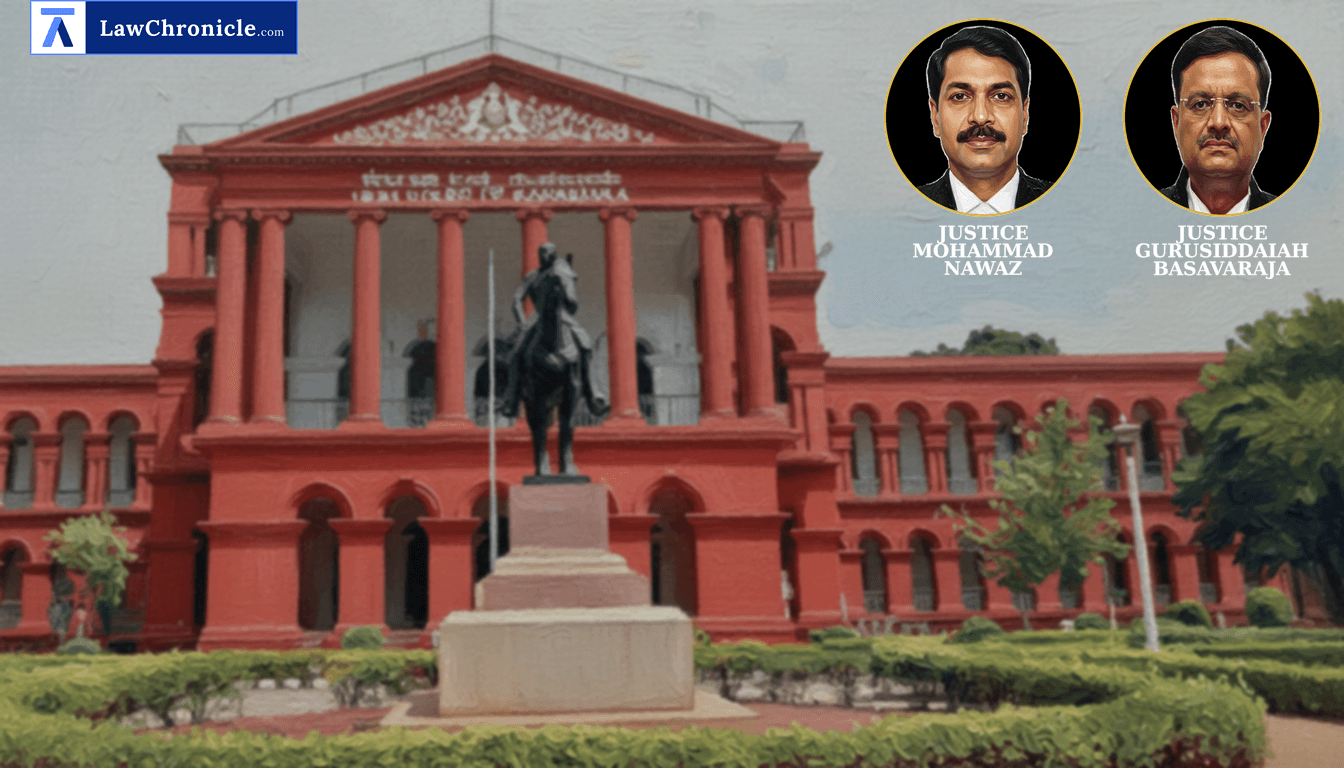
Criminal proceedings involving allegations of forgery and document fabrication cannot be derailed at the discharge stage simply by labelling them as civil disputes when prima facie evidence of criminality exists. The Karnataka High Court has overturned a revisional order that discharged an accused, emphasizing that the probative value of prosecution materials must be accepted as true during the framing of charges under the Code of Criminal Procedure, 1973.
Justice H.P. Sandesh, presiding over the matter, heard an appeal challenging the discharge of a former director accused of siphoning clients by creating fraudulent company resolutions. The Court addressed whether the existence of a prior civil suit on similar facts automatically necessitates the discharge of an accused in a criminal case involving allegations of Indian Penal Code, 1860 violations.
Key Takeaways
Prima Facie Case Suffices
At the stage of discharge, courts must only evaluate if a prima facie case exists based on the charge sheet, rather than conducting a mini-trial or evaluating the defense.
Civil Remedy No Bar to Prosecution
The pendency or dismissal of a civil suit does not preclude criminal prosecution if the allegations disclose distinct criminal acts like forgery and fabrication.
Limited Revisional Scope
Revisional courts cannot exceed their jurisdiction by appreciating evidentiary value or accepting defense arguments that are subjects of trial.
Locus Standi of Complainants
De-facto complainants have a right to be heard in revision petitions, especially when the State's failure to challenge a discharge order affects their legal interests.
Court's Rationale on Section 239 CrPC
The High Court observed that the Trial Court had correctly identified specific allegations in both the original and additional charge sheets regarding the unauthorized use of letterheads and the fabrication of board minutes. The Court, in its reasoning, observed: "The Court has to look into the material available on record as well as the accusation made in the complaint and when the criminal act is attributed for creation of document and the accused made use of the said letter head and created minutes of the meeting for passing resolution, the same has to be adjudicated only during the course of trial and not at the stage of considering the application under Section 239 of Cr.P.C."
Addressing the scope of revisional jurisdiction, the Court noted that the Revisional Court erred by focusing on the terms of a transfer agreement, which constituted a defense rather than a ground for discharge. It relied on STATE BY KARNATAKA LOKAYUKTA, POLICE STATION, BENGALURU vs. M.R. HIREMATH ( "(2019) 7 SCC 515": 2019 CaseBase(SC) 97) to reiterate that evidentiary value cannot be weighed at this juncture.
The Court's Directions
The Court has the following directions:
"(i) The criminal petition is allowed.
(ii) The order passed by the Revisional Court in Crl.RP.No.313/2018 dated 21.03.2019 passed by the VII Additional Sessions Judge, Mysuru, is hereby set aside. Consequently, order passed by the Trial Court in C.C.No.126/2014 dated 23.12.2017 passed by the I Additional Senior Civil Judge and CJM, Mysuru rejecting the application filed under Section 239 of Cr.P.C. is restored.
(iii) The observations made by this Court while considering this petition shall not influence the Trial Court while considering the matter on merits."
Ratio
The High Court declared that while considering an application for discharge under Section 239 of the Code of Criminal Procedure, 1973, the court must strictly confine its scrutiny to the charge sheet and accompanying documents to determine if the charges are groundless. A criminal prosecution involving specific allegations of document fabrication and forgery cannot be quashed at the threshold merely because the dispute also possesses the traits of a civil 'passing-off' action or because a civil suit was previously filed on the same facts.
Background
The dispute originated from a private complaint alleging that the accused, a former director of M/s. Varsha Cables Private Ltd., fraudulently misrepresented to clients that the company had been restructured as M/s. Varsha Industries. The prosecution alleged that the accused used fabricated minutes of a board meeting dated 12.10.2009 to transfer licenses and siphoned clients in violation of the Trade Marks Act, 1999.
While the Trial Court rejected the discharge application, the Revisional Court set it aside, viewing the matter as a civil dispute. The High Court, however, distinguished between civil remedies and criminal liabilities, citing SUNDEEP KUMAR BAFNA vs. STATE OF MAHARASHTRA AND ANOTHER ( "(2014) 16 SCC 623": 2014 CaseBase(SC) 209) and J.K. INTERNATIONAL vs. STATE (GOVT. OF NCT OF DELHI) ( "(2001) 3 SCC 462": 2001 CaseBase(SC) 611) to affirm that the informant's right to be heard is vital when criminal proceedings are sought to be quashed.
Case Details:
Case No.: CRIMINAL PETITION NO.3673 OF 2019
Case Title: M/S. Varsha Cablesl Private Ltd. And Anr. Vs. The State Of Karnataka And Anr.
Appearances:
For the Petitioner(s): Sri. Venkatesh R. Bhagat, Advocate
For the Respondent(s): Sri. Mohammed Aybu Ali, Addl. SPP for R1; Sri. Aditya Sondhi, Senior Counsel with Sri. A. Abhishek and Sri. Sridhar Chakke, Advocates for R2
Source: 2026 CaseBase(KAR) 21831
Similar Articles

 Breaking News


