


Procedural Defects Do Not Render Suit Non-Est: Delhi HC Reverses Dismissal of AAI Refund Claim
 Copy Link
 Share
 Save
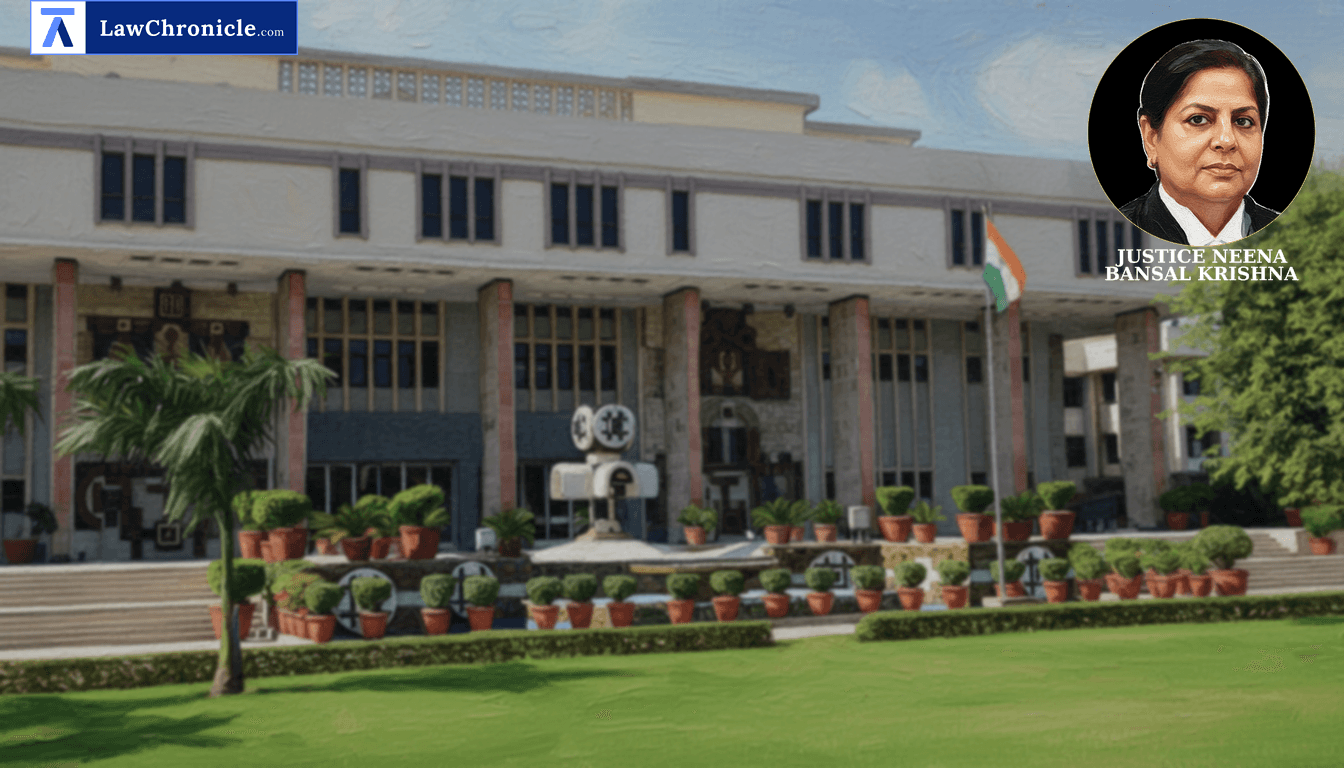
The Delhi High Court has fortified the principle that procedural technicalities cannot be used to stifle substantive justice, ruling that defects like deficient court fees or missing vakalatnamas in an initial filing are curable and relate back to the original date of presentation. This landmark clarification prevents legitimate claims from being extinguished by the law of limitation due to mere administrative objections by court registries.
In a verdict delivered by Justice Neena Bansal Krishna, the High Court set aside a trial court order that had dismissed a multi-million rupee recovery suit against the Airports Authority of India (AAI) as time-barred. The court held that the act of presenting a plaint within the limitation period satisfies the law, even if formal registration occurs later after the removal of technical defects.
Key Takeaways
Substance Over Form
Procedural omissions such as missing signatures on every page or defective affidavits are directory in nature and do not automatically render a suit non-est.
Relation Back Doctrine
Once procedural defects are cured, the institution of the suit relates back to the date of original presentation for the purpose of limitation under the Limitation Act, 1963.
Narrow Interpretation of Non-Est Filing
A filing is considered non-est only if it is a mere 'bunch of papers' filed with mala fide intent to arrest limitation without a genuine desire to prosecute.
Interest on Unjust Enrichment
Statutory bodies cannot unilaterally impose interest without agreements, but courts may award reasonable interest on admitted amounts wrongfully retained.
Registry Objections vs. Statutory Institution
The dispute involved the Limitation Act, 1963 and Order IV of the Code of Civil Procedure, 1908. The trial court had previously ruled that because the plaintiff removed registry objections including non-payment of court fees and a missing vakalatnama after the three-year limitation period had expired, the suit was barred. However, the High Court observed that these requirements are procedural. Relying on Vidyawati Gupta & Ors. v. Bhakti Hari Nayak & Ors. ( "(2006) 2 SCC 777": 2006 CaseBase(SC) 360) and Pragati Construction Consultants v. Union of India ( "2025:DHC:717-FB": 2024 CaseBase(DEL) 3199), the Court noted that rules of procedure are the 'handmaiden to justice' and should not be used as a tool to deny it.
Court Observations on Limitation and Technical Defects
The Court emphasized that Section 149 of the Code of Civil Procedure, 1908 expressly allows for the making up of deficient court fees at any stage, which then gives the document retrospective effect. The Bench remarked:
"The requirements of Section 26, Order IV and Order VI CPC, are procedural and directory. Their non-compliance is a curable irregularity, and does not result in the plaint being treated as never having been presented and, upon being cured, dates back to the presentation of the plaint."
On the issue of the missing vakalatnama, the Court cited Uday Shankar Triyar v. Ram Kalewar Prasad Singh & Anr. ( "(2006) 1 SCC 75": 2005 CaseBase(SC) 294), noting that a vakalatnama concerns the authority of the counsel and does not determine whether the party has presented its claim before the Court.
Admitted Liability and Unjustified Adjustments
Regarding the merits, the plaintiff, a German airline, had inadvertently paid AAI in US Dollars instead of Indian Rupees, resulting in a significant overpayment. AAI had acknowledged a credit of over ₹1.46 Crores but withheld ₹68.24 Lakhs, claiming adjustments against old dues. The Court found AAI's evidence for these 'adjustments' lacking, noting the absence of ledger records and the lack of an agreement for charging interest. The Court followed Vijay Mittal v. M/s Bajaj Products & Anr. to hold that interest cannot be unilaterally imposed.
The Court has the following directions:
"The Appeal is allowed. The impugned Judgment and Decree dated 20.12.2021, insofar as it dismissed the Suit as barred by limitation, is set aside. The Suit is decreed in favour of the Appellant/Plaintiff and against the Respondent/Defendant for Rs. 68,24,653.71/-, along with simple interest @ 6% per annum from 05.07.2007 till realisation."
Ratio
Procedural defects in a plaint, such as deficiency in court fees, defects in a vakalatnama, or failure to file a duplicate set, are curable irregularities that do not render the initial presentation of the suit 'non-est'. Upon the removal of such defects, the institution of the suit relates back to the original date of filing for the purposes of the Limitation Act, 1963, provided the initial filing disclosed a clear intention to prosecute the claim.
Background
The appellant, LTU Lufttransport Unternehmen GmbH (merged into Air Berlin), used Indian airspace and paid navigation charges to AAI. In 2006, due to a currency error, it remitted USD 4,35,540 instead of INR 4,35,540. AAI acknowledged the excess in an email dated 05.07.2007 but only refunded a portion, adjusting the rest against alleged dues from 1996-2003. The plaintiff sued for recovery in 2010. While the trial court found the claim meritorious, it dismissed the suit on limitation grounds. The High Court, citing United Bank of India v. Naresh Kumar, Alka Kasana v. Indian Institute of Technology ( "222 (2015) DLT 473": 2015 CaseBase(DEL) 1831), D.C. Sankhla v. Ashok Kumar Parmar & Ors., and Mannan Lal v. Mst. Chhotaka Bibi ( "(1970) 1 SCC 769": 1970 CaseBase(SC) 391), concluded that since the suit was presented on 06.10.2010 (within three years of the part-payment on 08.10.2007), it was within time.
Case Details:
Case No.: RFA 277/2022
Case Title: LTU Lufttransport Unternehmen Gmbh V. Airports Authority Of India
Appearances:
For the Respondent(s): Mr. Vaibhav Kalra, Ms. Neha Bhatnagar and Mr. Deepankar Singh, Advocates.
Source: 2026 CaseBase(DEL) 7513
Similar Articles



 Breaking News


