


Prolonged Incarceration Trumps Criminal Antecedents For Bail: Himachal Pradesh HC
 Copy Link
 Share
 Save
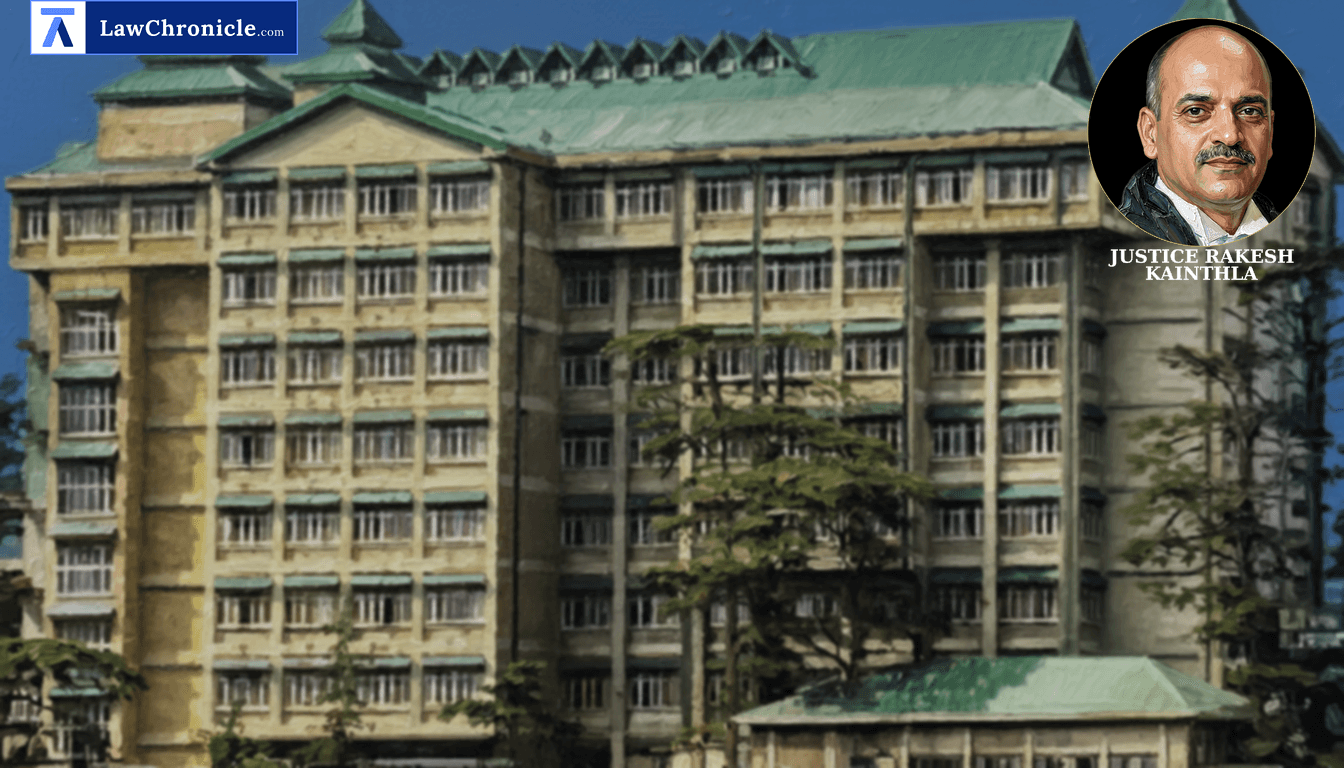
The Himachal Pradesh High Court has reinforced the sanctity of the right to a speedy trial, ruling that even in serious narcotics cases, an accused cannot be detained indefinitely due to criminal antecedents if the trial shows no prospect of early conclusion. This decision underscores that the principle of proportionality must prevail over the state's objections when incarceration exceeds a substantial portion of the potential sentence.
A Single-Judge Bench of Justice Rakesh Kainthla adjudicated upon two petitions seeking regular bail for offences registered under Sections 21 and 29 of the Narcotic Drugs and Psychotropic Substances Act, 1985. The Court was tasked with balancing the rigors of the Narcotic Drugs and Psychotropic Substances Act, 1985 and the impact of the petitioners' criminal history against their fundamental right to a timely trial under the Constitution of India.
Key Takeaways
Primacy of Speedy Trial
The Court establishes that the fundamental right to a speedy trial overrides the severity of charges and criminal history when judicial delay becomes unreasonable.
Proportionality in Detention
Judges must apply the principle of proportionality, comparing the time already served by the accused against the maximum possible sentence for the quantity of contraband seized.
Limits of Criminal Antecedents
While criminal history is a valid consideration, it cannot serve as a solitary ground to deny bail if the trial is stagnant and the period of incarceration is significant.
Successive Bail Criteria
The ruling clarifies that while successive bail applications are maintainable, they must be founded on a substantial change in facts or law, not merely cosmetic changes.
Change in Circumstances and Judicial Propriety
The Court noted that the petitioners had previously approached the High Court for bail, which was rejected. Referencing State of Maharashtra v. Captain Buddhikota Subha Rao ( "(1989) Suppl (2) SCC 605": 1989 CaseBase(SC) 622), the Bench emphasized that judicial discipline requires a substantial change in the fact situation to entertain a subsequent bail plea. It further noted, as held in Kalyan Chandra Sarkar v. Rajesh Ranjan @ Pappu Yadav ( "(2004) 7 SCC 528": 2004 CaseBase(SC) 77), that the Court must record specific reasons for granting bail after a prior rejection. The Bench also relied on State of T.N. v. S.A. Raja and Prasad Shrikant Purohit v. State of Maharashtra to reiterate that repeated filings without change in circumstances lead to bad precedents.
However, the Court observed that in the present case, a material change existed: the petitioners had spent over 14 months in custody for the recovery of 6.02 grams of heroin, which is significantly less than the 250 grams commercial quantity threshold.
Court's Rationale on Antecedents and Delay
The Court, in its reasoning, observed: "The status report shows that the petitioners were found in possession of 6.02 grams of heroin. The Central Government has specified 250 grams of heroin as the commercial quantity. If the principle of proportionality is applied, the petitioners have undergone a substantial part of the imprisonment that can be awarded to them. However, the prosecution has not completed the evidence, and there is no reasonable prospect of the early conclusion of the trial. Therefore, the petitioners are entitled to bail because of the violation of their right to a speedy trial."
Addressing the State's concern regarding the petitioners' past criminal records, the Court applied the ratio from Ayub Khan v. State of Rajasthan ( "2024 SCC OnLine SC 3763: 2024:INSC:994": 2024 CaseBase(SC) 837), noting that long incarceration can be a ground for bail notwithstanding antecedents. Referring to the procedural necessity of placing such matters before the same judge, as discussed in Ajay Rajaram Hinge v. State of Maharashtra, the Court found that the continuing delay constituted a fresh ground.
Directions Issued by the Court
The Court has following directions:
"(i) The petitioners will not intimidate the witnesses, nor will they influence any evidence in any manner whatsoever.
(ii) The petitioners shall attend the trial on each and every hearing and will not seek unnecessary adjournments.
(iii) The petitioners will not leave the present addresses for a continuous period of seven days without furnishing the address of the intended visit to the SHO concerned, the Police Station concerned and the Trial Court.
(iv) The petitioners will surrender their passport, if any, to the Court; and
(v) The petitioners will furnish their mobile number and social media contact to the Police and the Court and will abide by the summons/notices received from the Police/Court through SMS/ WhatsApp/ Social Media Account. In case of any change in the mobile number or social media accounts, the same will be intimated to the Police/Court within five days from the date of the change."
Ratio
The right to a speedy trial is a fundamental right, and where there is an unreasonable delay in the progress of the trial and the accused has undergone a substantial part of the potential imprisonment, the presence of criminal antecedents alone is not a sufficient ground to deny bail.
Background
The case originated from a search conducted by the police at Hotel Royal Food Point in Shilaru on July 10, 2025. Acting on secret information, the police searched Room No. 501 and allegedly recovered 6.02 grams of heroin from the possession of Nanak Dass and Anshul Rana. Consequently, an FIR was registered under Sections 21 and 29 of the Narcotic Drugs and Psychotropic Substances Act, 1985.
The petitioners argued that they had been in jail for over a year and two months, and the trial was far from over, violating their right to a speedy trial. The State opposed the bail, citing the petitioners' involvement in other NDPS cases and the dismissal of their previous bail applications. The Court, however, found that the small quantity of drugs seized and the delay in recording prosecution evidence necessitated the grant of bail to protect the petitioners' constitutional rights.
Case Details:
Case No.: Cr.MP (M) Nos. 1780 and 1781 of 2026
Neutral Citation: 2026:HHC:43063
Case Title: Nanak Dass v. State of Himachal Pradesh (with Anshul Rana v. State of H.P.)
Appearances:
For the Petitioner(s): Mr Manoj Pathak, Senior Advocate with M/s Sanidhay Pathak and Parth Sagar, Advocates.
For the Respondent(s): Mr Ajit Sharma, Deputy Advocate General.
Source: 2026 CaseBase(HP) 9429
Similar Articles

 Breaking News


