


Bribery | Proof of Demand Essential for Conviction under PC Act: Chhattisgarh HC
 Copy Link
 Share
 Save
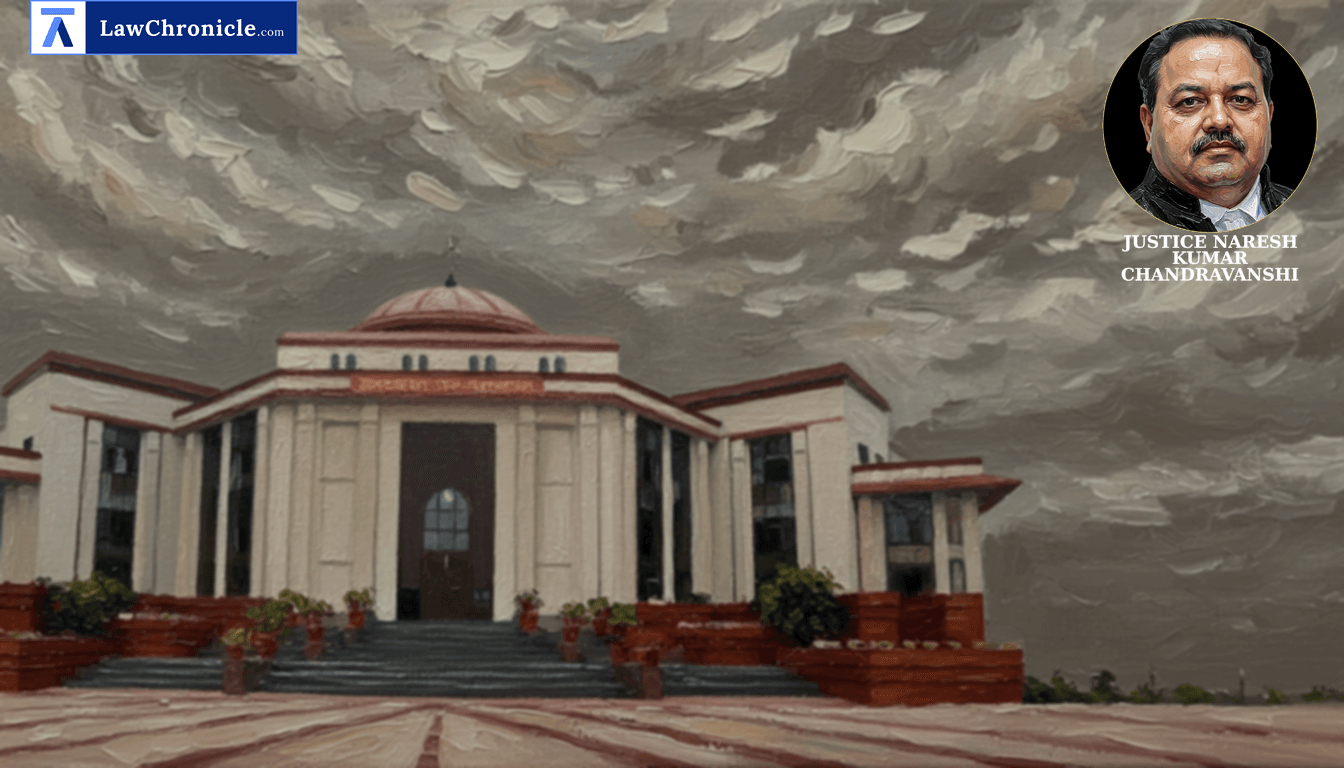
The Chhattisgarh High Court has reinforced the evidentiary bedrock of anti-corruption law, ruling that the mere recovery of tainted currency is legally insufficient to sustain a conviction without definitive proof of a prior demand for illegal gratification. In a significant acquittal, the Bench underscored that where foundational facts of demand are not established beyond reasonable doubt, statutory presumptions against a public servant cannot be triggered.
In a verdict delivered by Justice Naresh Kumar Chandravanshi, the Chhattisgarh High Court set aside the conviction of an Accountant working in a District Education Office who had been sentenced to four years of rigorous imprisonment. The High Court's intervention came after finding that the prosecution's case collapsed due to hostile witnesses and a failure to comply with mandatory electronic evidence procedures.
Key Takeaways
Primacy of Demand
Proof of demand is a mandatory prerequisite (sine qua non) for establishing offenses under Sections 7 and 13 of the Prevention of Corruption Act, 1988; recovery alone does not equal guilt.
Electronic Evidence Strictures
Failure to provide a certificate under Section 65-B of the Indian Evidence Act, 1872 renders electronic recordings, such as bribe-demand transcripts, inadmissible and legally deficient.
Limits of Statutory Presumption
Section 20 of the Prevention of Corruption Act, 1988 does not automatically presume guilt; it only activates once the prosecution proves the foundational facts of demand and voluntary acceptance.
Court's Rationale on Proof of Corruption
The Chhattisgarh High Court meticulously analyzed the evidentiary requirements under the Prevention of Corruption Act, 1988, emphasizing that the 'gravamen' of the offense lies in the demand. The Bench observed that the primary pillar of any corruption case is the testimony of the complainant. In this instance, the complainant (PW-1) turned hostile, categorically stating that the appellant never demanded a bribe and that his signatures were obtained on documents without him reading them.
The Bench observed that "...the legal position as regards to the essentials to be established to fasten criminal culpability on an accused are demand and acceptance of illegal gratification by the accused. To put it otherwise, proof of demand is sine qua non for the offences to be established under Sections 7 and 13(1)(d) r/w 13(2) of the PC Act, 1988 and dehors the proof of demand the offences under the two Sections could not be established. Therefore mere acceptance of any amount allegedly by way of bribe or as undue pecuniary advantage or illegal gratification or the recovery of the same would not be sufficient to prove the offences under the two Sections in the absence of evidence to prove the demand."
Inadmissibility of Electronic Transcripts
The prosecution attempted to prove demand through recorded conversations. However, the Court noted that the Investigating Officer (PW-10) admitted that no certificate under Section 65-B of the Indian Evidence Act, 1872 was obtained, nor was a voice sample taken for forensic authentication. Citing the principles in Neeraj Dutta v. State (Government of NCT of Delhi), the Court reiterated that while circumstantial evidence can be used when a complainant turns hostile, the foundational facts must still be proved through relevant and admissible evidence.
Ratio
Proof of demand for illegal gratification is the sine qua non for establishing offenses under Sections 7 and 13 of the Prevention of Corruption Act, 1988. Mere recovery of tainted currency, in the absence of proof of demand and voluntary acceptance, is insufficient to fasten criminal liability. Statutory presumptions under Section 20 of the Act are not automatic and arise only after the foundational facts of demand and acceptance are proved beyond reasonable doubt.
Background
The appellant, an Accountant at the Surajpur District Education Office, was accused of demanding a bribe of ₹15,000 for school recognition, later reduced to ₹8,000. Following a trap by the Anti-Corruption Bureau (ACB) in 2014, tainted currency was recovered from his pocket. The Trial Court convicted him under Sections 7 and 13(1)(d) of the Prevention of Corruption Act, 1988.
However, during the appeal, the High Court noted that the complainant (PW-1) and the accompanying witness (PW-3) had turned hostile. PW-3 even claimed the complainant forcibly placed money in the appellant's pocket. The Court relied on the precedents in Neeraj Dutta v. State (Government of NCT of Delhi) and P. Somaraju vs. The State of Andhra Pradesh ( "(2025 SCC OnLine SC 2291)": 2025 CaseBase(SC) 1101) to conclude that the prosecution failed to establish the chain of demand and acceptance, leading to the appellant's acquittal.
Case Details:
Case No.: CRA No. 569 of 2017
Neutral Citation: 2026:CGHC:40724
Case Title: Murli Prasad Choudari vs. State Of Chhattisgarh
Appearances:
For the Petitioner(s): Mr. Ashutosh Trivedi, Advocate
For the Respondent(s): Mr. DR Minj, Dy. Advocate General
Source: 2026 CaseBase(CTH) 17077
Similar Articles

 Breaking News


