Pushpa Kapila Hingorani: The Mother of PIL in India
 Copy Link
 Share
Share Save
Save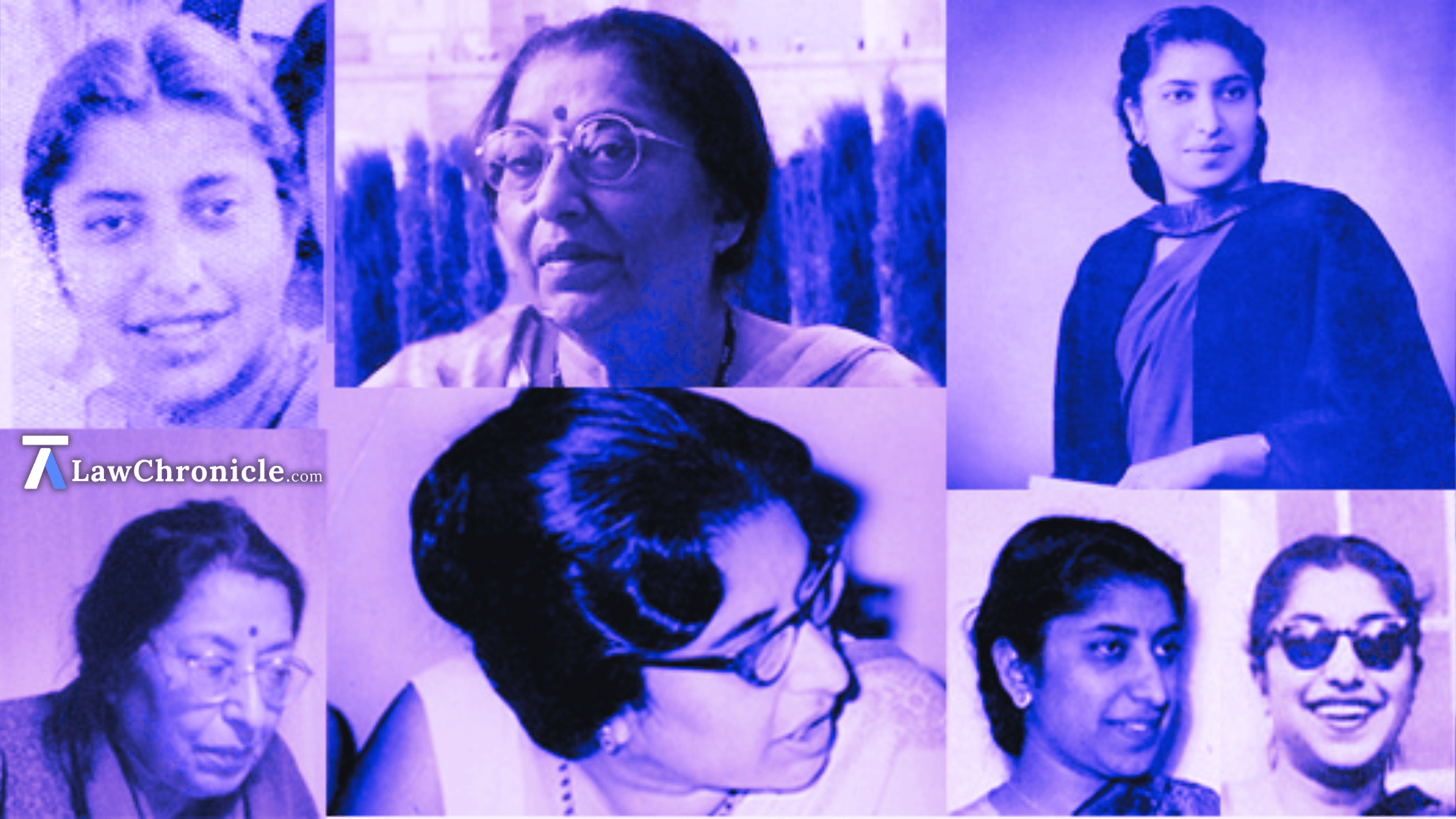
Born on 27th December, 1927, Pushpa Kapila Hingorani was an Indian lawyer who practised at the Supreme Court of India. She is widely regarded as the “Mother of Public Interest Litigation (PIL)” in India. She was born in Nairobi, Kenya, and held Indian citizenship after moving to India to practice law. Her primary professional designation was that of an Advocate of the Supreme Court of India. She established her footing as a practicing lawyer and created history as a public-interest litigant.
Kapila Hingorani practised at the Supreme Court of India from 1961 until shortly before her death on 31st December, 2013, with a career spanning roughly six decades. Her landmark contribution was the filing and arguing, in 1979, of India’s first Public Interest Litigation, the Hussainara Khatoon v. State of Bihar (1979 CaseBase(SC) 523). The case led the Supreme Court to read the right to a speedy trial into Article 21 of the Constitution and resulted in the release of an estimated 40,000 undertrial prisoners across the country. She is remembered chiefly for pioneering PIL as a tool of constitutional remedy for India’s poorest and most marginalised citizens, for exposing the Bhagalpur Blindings case, and for becoming, in 2017, the first woman lawyer to have her portrait placed in the Supreme Court library.
Early Life and Education
Kapila Hingorani was born on 27th December, 1927 in Nairobi, Kenya, where her family resided as part of the Indian diaspora in East Africa. Her father was an educationist and social reformer who encouraged her to pursue higher studies abroad.
In 1947, she became the first woman from the Indian community in Nairobi to travel to the United Kingdom for higher education. She studied law at University College, Cardiff (Cardiff Law School), and is recognized as the first Indian woman to have studied there, an achievement later commemorated with a plaque at Aberdare Hall, Cardiff. She subsequently qualified as a Barrister from the Honourable Society of Lincoln’s Inn, London.
Inspired by the ideals of Mahatma Gandhi and the Indian independence movement, she travelled frequently to India during this period. In the 1950s, before settling permanently in India, she taught for a time at Jamia Millia Islamia University in Delhi and served as warden of the women’s hostel, where she was noted for allowing female students greater evening freedoms than was then customary.
Legal Career of Kapila Hingorani
Advocate Pushpa Kapila Hingorani settled in Delhi in 1961 and began practising at the Supreme Court of India at a time when there were only two or three women lawyers practising there. She went on to build a continuous practice at the Supreme Court that lasted over fifty years.
She rose to national prominence in 1979 with the filing of the Hussainara Khatoon case, India’s first PIL, which is credited with launching the modern PIL movement in Indian constitutional law. As an Advocate (and Barrister) rather than a Senior Advocate or Advocate-on-Record by formal title, she nonetheless became one of the most recognized public-interest lawyers in the country.
Her area of specialisation was constitutional and human rights law, with a particular focus on Public Interest Litigation on behalf of undertrial prisoners, victims of custodial torture, bonded labourers, leprosy patients, mentally ill persons in institutional care, child labourers, dowry victims, and other disadvantaged groups. Working together with her husband, Nirmal Hingorani, she is reported to have filed and argued more than 100 PIL actions pro bono in the Supreme Court over the course of their careers.

Beyond PIL litigation, she is credited with playing a role in the establishment of family courts in India and in efforts to draft legislation banning prenatal sex-determination tests. She did not hold any judicial appointment and was therefore never elevated to the Bench; her entire career was spent as a practising advocate before the Supreme Court of India.
Notable Cases of Kapila Hingorani
Hussainara Khatoon vs State of Bihar (1979)
In 1979, Kapila Hingorani, acting on a then-novel idea together with her husband Nirmal Hingorani, filed a habeas corpus petition before the Supreme Court of India on behalf of undertrial prisoners in Bihar who had been incarcerated for periods exceeding the maximum sentences for the offences with which they were charged. Although the prevailing procedural law allowed a petition to be filed only by a victim or relative, the petition was filed and argued by Kapila Hingorani as a citizen invoking Article 32 of the Constitution.
Two weeks after she argued the case, the Supreme Court issued notice to the Government of Bihar, leading to the release of the named prisoners (Hussainara Khatoon being one of six women prisoners after whom the case is titled) and, eventually, of an estimated 40,000 undertrial prisoners across India. The Supreme Court, in a series of orders in Hussainara Khatoon & Ors. v. Home Secretary, State of Bihar (1979 CaseBase 523) , held that the right to a speedy trial is implicit in the right to life and personal liberty under Article 21 of the Constitution. The case has been regarded as a foundational moment in Indian constitutional jurisprudence and the origin of the PIL movement.
Bhagalpur Blindings Case (1980)
After a lawyer from Bihar wrote to her about the matter, Kapila Hingorani took up the case of the 1980 Bhagalpur Blindings in Khatri and Others v. State of Bihar (1980 CaseBase(SC) 209). In this case, the police had blinded around 33 suspected criminals by piercing their eyes with needles and pouring acid into them. Acting on the PIL, the Supreme Court directed that the policemen responsible be prosecuted, that the victims be released, and that they receive medical aid and a pension for life.
Other PIL Actions
Together with her husband, Kapila Hingorani filed and argued PIL actions on a wide range of social-justice issues, including the inhuman treatment of mentally ill patients at Ranchi Mental Hospital (1988 CaseBase(SC) 546), starvation deaths and self-immolation attempts by unpaid public-sector workers in Bihar (2003 CaseBase(SC) 434), the plight of leprosy patients and bonded labourers, the employment of children in the carpet industry, sexual exploitation of tribal girls in public-sector units (1997 CaseBase(SC) 650), occupational disease among slate-pencil industry workers, dowry victims, and the practices of devadasi dedication and sati (1990 CaseBase(SC) 585).
Public Standing of Kapila Hingorani
Advocate Pushpa Kapila Hingorani is described as having held a strong, lifelong commitment to the values of the Indian Constitution, particularly the fundamental rights chapter, and to using the law as an instrument to secure justice for citizens who had no practical means of accessing the courts. Her work treated PIL not as a device for individual litigants but as a mechanism by which the Supreme Court, as the constitutionally designated protector of fundamental rights, could act on behalf of those unable to approach it themselves. Her stature in the legal fraternity has made place in several books, including Raju Ramachandran's “14 Lawyers - Portraits from the Bar”.

Awards and Recognition
In 2017, Kapila Hingorani (posthumously) became the first woman lawyer in the Supreme Court’s then 67-year history to have her portrait placed in the Supreme Court library, where it was unveiled by the then Chief Justice Dipak Misra alongside portraits of legal luminaries such as M.C. Setalvad, C.K. Daphtary, and R.K. Jain. She had earlier been honoured by the Supreme Court Bar Association for completing 50 years at the Bar.

Personal Life of Kapila Hingorani
Advocate Pushpa Kapila Hingorani was married to Nirmal Hardasmal Hingorani, also a Senior Advocate of the Supreme Court of India, whom she met at the Supreme Court in the early 1960s. The couple had three children: Aman, Priya, and Shweta, of whom their son, Dr. Aman Hingorani, is himself a Senior Advocate practicing in the Supreme Court of India.
She died on 31st December 2013 in New Delhi at the age of 86, after a legal career spanning roughly six decades. At the time of her death, she was the senior-most woman lawyer enrolled with the Supreme Court of India.
 Breaking News