


Audit Objections Cannot Replace New Material Evidence: Sikkim HC Quashes Reassessment
 Copy Link
 Share
 Save
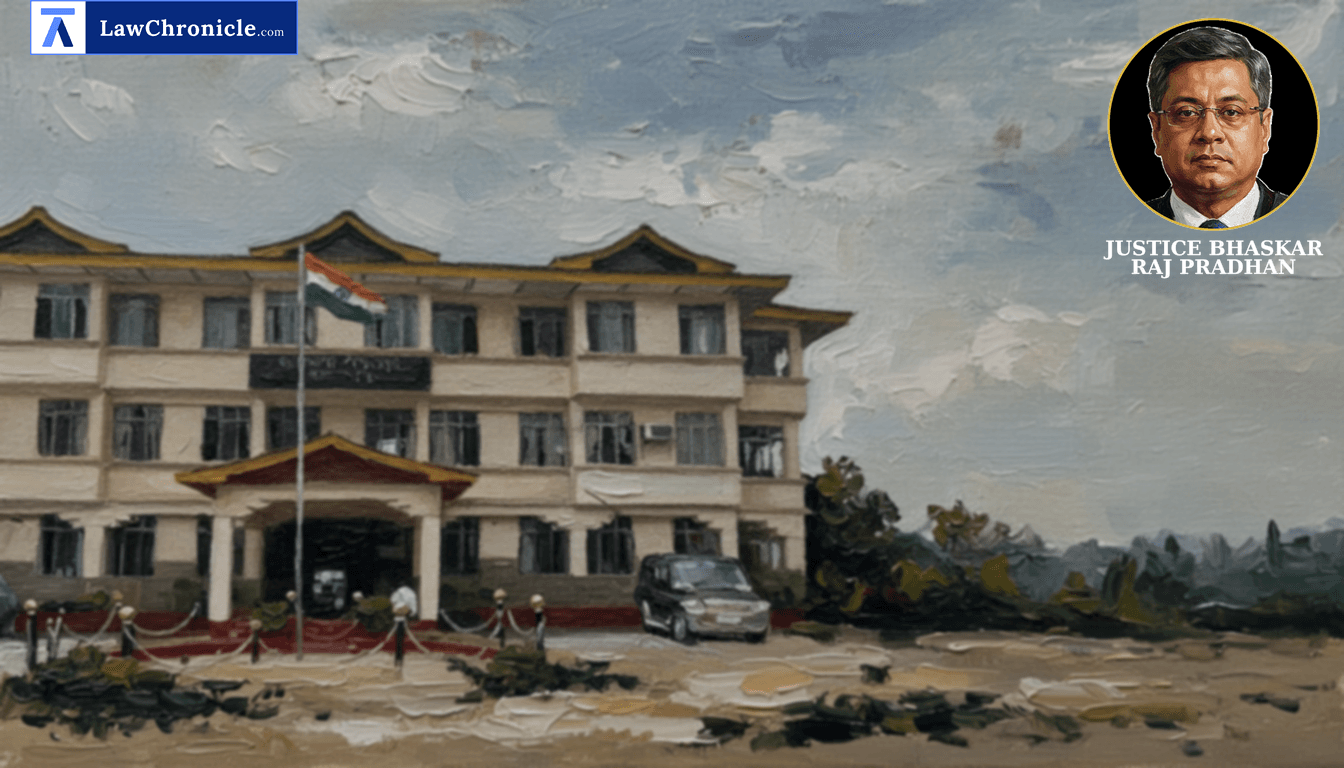
The Sikkim High Court restricted executive attempts to reopen concluded tax assessments solely based on audit party opinions, ruling that an internal audit memo does not constitute the 'new material evidence' required to bypass statutory limitation periods.
Justice Bhaskar Raj Pradhan, sitting as a Single Judge Bench, heard a batch of writ petitions filed under Constitution of India, 1950 by Zydus Healthcare Limited. The petitions challenged various notices and orders issued under the Income Tax Act, 1961, specifically targeting reassessment proceedings initiated for assessment years where original scrutiny had already been completed. The Sikkim High Court was primarily tasked with determining whether audit objections by the Comptroller and Auditor General (CAG) satisfy the stringent requirements of Section 149(1)(b) of the Income Tax Act, 1961 for reopening assessments after the three-year limitation period.
Key Takeaways
Finality of Assessment Upheld
Reassessment cannot be used as a tool to review a concluded assessment simply because the Revenue has changed its opinion on a settled set of facts.
Audit Memo is Not Evidence
While an audit objection qualifies as 'information' under the Act, it does not automatically constitute 'books of account or other documents or evidence' necessary for extended limitation periods.
Jurisdictional Pre-conditions
For reassessments initiated after three years, the Assessing Officer must explicitly prove the possession of new material evidence that was not available during the initial scrutiny.
Goodwill Depreciation Protected
Following Supreme Court precedents, the Court affirmed that depreciation on goodwill is a valid claim and cannot be revisited through reassessment without fresh factual triggers.
Court’s Rationale on Section 149(1)(b)
The Sikkim High Court observed that the power to reassess is an extraordinary one and not a power of review. It emphasized that under Section 149(1)(b), if more than three years have passed, the Revenue must possess tangible material in the form of documents or evidence, rather than just a subjective contrary opinion from an audit wing. The Bench noted that "The language used in section 149(1)(b) clearly contemplates new evidence and not new opinion. Merely because that opinion is written down in a document, it cannot be termed as new evidence entitling the Assessing Officer to revisit and reassess the assessment proceeding already completed. ... The audit objection although raised by a Constitutional authority based on examination of accounts and records is still an opinion."
Regarding the treatment of Excise Duty refunds as capital receipts, the Sikkim High Court relied on the Jammu & Kashmir High Court decision in Shree Balaji Alloys vs. Commissioner of Income-Tax and Another, which was affirmed by the Supreme Court in Commissioner of Income Tax, Jammu & Another vs. Shree Balaji Alloys, noting that these issues had already achieved finality.
Ratio
An audit objection, while qualifying as 'information' under Section 148, does not constitute 'books of account or other documents or evidence' under Section 149(1)(b) of the Income Tax Act. Consequently, reassessment proceedings initiated after three years solely on the basis of a contrary opinion by an audit party, without new material evidence, are without jurisdiction and barred by limitation.
Background
The petitioner, Zydus Healthcare Ltd, had undergone regular scrutiny assessments for the years 2015-16, 2017-18, and 2018-19. In these assessments, the Revenue had accepted the petitioner’s claims regarding Excise Duty refunds as capital receipts and depreciation on goodwill. Subsequently, the Director General of Audit raised objections, suggesting these were taxable and that depreciation was irregular. Based on these memos, the Assessing Officer issued notices under Section 148A and Section 148 to reopen the assessments. The Revenue argued that the audit memo itself was a 'document' in their possession and that the initial scrutiny was limited (CASS), thus allowing for reopening.
However, the Sikkim High Court distinguished cases like Commissioner of Income Tax, Delhi vs. Kelvinator of India Limited ( "(2010) 2 SCC 723": 2010 CaseBase(SC) 531) and CIT vs. Jay Ambey Corporation, noting the legislative shift in the Income Tax Act, 1961. Relying on Red Chilli International Sales vs. Income-tax Officer and Sapphire Foods India Ltd. vs. ACIT, the Sikkim High Court held that since all records were already before the AO during the initial scrutiny, the current attempt was a classic case of 'change of opinion'.
Case Details:
Case No.: W.P. (C) No. 39 of 2022, W.P. (C) No. 13 of 2024 and W.P. (C) No. 50 of 2025
Neutral Citation: 2026:SKHC:1
Case Title: Zydus Healthcare Limited vs. Assistant Commissioner of Income Tax
Appearances:
For the Petitioner(s): Mr. Mukesh M. Patel, Mr. Anup Kumar Bhattacharjee, Mr. Abhishek Singh, Mr. Deepu Prasad, Advocates
For the Respondent(s): Ms. Sangita Pradhan, Deputy Solicitor General of India; Ms. Natasha Pradhan, Mr. Amit Kr. Sharma, Advocates
Source: 2026 CaseBase(SIK) 92
Similar Articles

 Breaking News


