Registered Owner Liable Despite Unregistered Vehicle Sale: Himachal Pradesh HC
 Copy Link
 Share
 Save

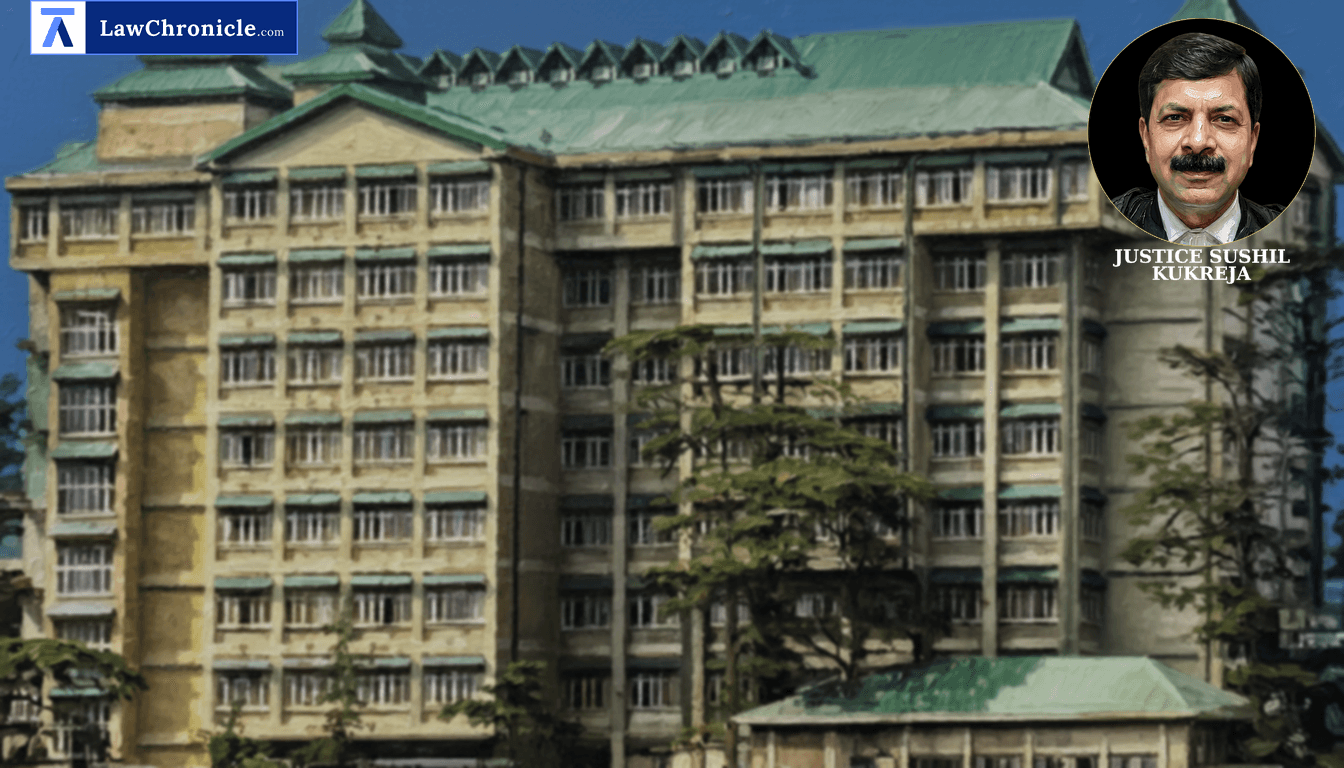
In a decisive affirmation of third-party rights under motor accident law, the Himachal Pradesh High Court has ruled that a registered owner remains statutorily liable for compensation even if the vehicle was sold and possession delivered, provided the transfer was not recorded with the registering authority.
An innocent claimant cannot be prejudiced by private affidavits of transfer that have never been reported to the authorities, as the mandate of the Motor Vehicles Act, 1988 prioritizes the certainty of the official records over private unregistered transactions.
A single-judge bench of Justice Yogesh Jaswal heard the appeal filed by the registered owner of a motorcycle involved in a 2012 accident. The appellant challenged the award of the Motor Accident Claims Tribunal (MACT), which had fastened the liability to pay ₹43,683 as compensation upon him, despite his plea that the vehicle had been sold four years prior to the accident.
Key Takeaways
Statutory Primacy of Registration
Registration records are conclusive for determining ownership under the Motor Vehicles Act, 1988, overriding private sale agreements or delivery of possession.
Liability Towards Third Parties
Registered owners cannot escape liability to third-party accident victims by relying on unregistered transfers or affidavits.
Mandatory Compliance of Section 50
A transferor must report the vehicle sale to the registering authority within fourteen days to extinguish their statutory liability as an 'owner'.
Protection of Claimants
Victims of road accidents are protected from following a 'trail of successive transfers' to identify the person currently in possession of the offending vehicle.
The Registered Owner’s Statutory Obligations
The Court emphasized that the definition of 'owner' under Section 2(30) of the Motor Vehicles Act, 1988 is expansive. It noted that the only exceptions to the rule that the person whose name is on the registration certificate is the owner are cases involving minors or specific agreements like hire-purchase, lease, or hypothecation. The Court clarified that an ordinary sale between private individuals does not fall under these exceptions unless the procedure under Section 50 of the Motor Vehicles Act, 1988 is strictly followed.
The Court has following directions:
"The present appeal fails and the same is dismissed, so also pending miscellaneous application(s), if any."
The Court, in its reasoning, observed: "The principle underlying the provisions of Section 2(30) is that the victim of a motor accident or, in the case of a death, the legal heirs of the deceased victim should not be left in a state of uncertainty. A claimant for compensation ought not to be burdened with following a trail of successive transfers, which are not registered with the registering authority. To hold otherwise would be to defeat the salutary object and purpose of the Act. Hence, the interpretation to be placed must facilitate the fulfilment of the object of the law."
On the issue of negligence, the Court upheld the Tribunal's finding that the motorcycle driver was rash, particularly pointing out that an adverse inference was drawn against the driver for failing to enter the witness box.
Regarding the quantum, the Court found the award of ₹43,683, along with 9% interest, to be just and reasonable, noting it covered medical expenses, attendant charges, special diet, and pain and suffering.
Ratio
For the purposes of the Motor Vehicles Act, 1988, the person in whose name the motor vehicle stands registered continues to be the 'owner' and remains liable to third parties for compensation arising from an accident. A private agreement for sale or delivery of possession without complying with the mandatory reporting requirements under Section 50 of the Act does not extinguish the liability of the registered owner.
Background
The dispute originated from an accident on July 26, 2012, when a motorcycle collided with a scooter occupied by the claimant, her husband, and their minor son at Paonta Sahib. An FIR was registered under Sections 279, 337, and 338 of the Indian Penal Code. The claimant sought compensation for multiple injuries sustained in the crash.
The appellant (registered owner) contended that he had sold the vehicle to another person in 2008 and had no control over it at the time of the accident. He relied heavily on HDFC Bank Ltd. v. Reshma and others to argue that the 'person in control' should be liable. However, the Court distinguished this, noting that HDFC Bank Ltd. v. Reshma and others applied to financiers under hypothecation agreements, not private sales.
The Court relied on a string of precedents including the three-judge bench decision in Naveen Kumar v. Vijay Kumar and others ( "(2018) 3 SCC 1": 2018 CaseBase(SC) 770) and subsequent rulings in Prakash Chand Daga v. Saveta Sharma and others ( "(2019) 2 SCC 747": 2018 CaseBase(SC) 327), Anil Kumar and Others v. Jyoti and Others, Brij Bihari Gupta v. Manmet and Others ( "2025 SCC OnLine SC 1650": 2025 CaseBase(SC) 455), and Labh Singh v. National Insurance Company Limited and others to hold that the registry record is the ultimate decider of liability. Since the appellant admitted he never intimated the RTO about the sale, he remained the owner in the eyes of the law.
Case Details:
Case No.: FAO (MVA) No.5 of 2021
Neutral Citation: 2026:HHC:49134
Case Title: Sanjeev Kumar v. Smt. Sushila Devi and Others
Appearances:
For the Petitioner(s): Mr. Parkash Sharma, Advocate.
For the Respondent(s): Mr. Abhishek Verma, Advocate, for respondent No.1; Mr. Reham Tullah, Advocate, vice Mr. Karan Kapoor, Advocate, for respondent No.2; Mr. Bimal Gupta, Senior Advocate, with Mr. Trigun Singh Negi, Advocate, for respondent No.3.
Source: 2026 CaseBase(HP) 11181
Similar Articles
 Breaking News