


Reproductive Autonomy Reigns as Gujarat HC Permits Minor's 28-Week Abortion
 Copy Link
 Share
 Save
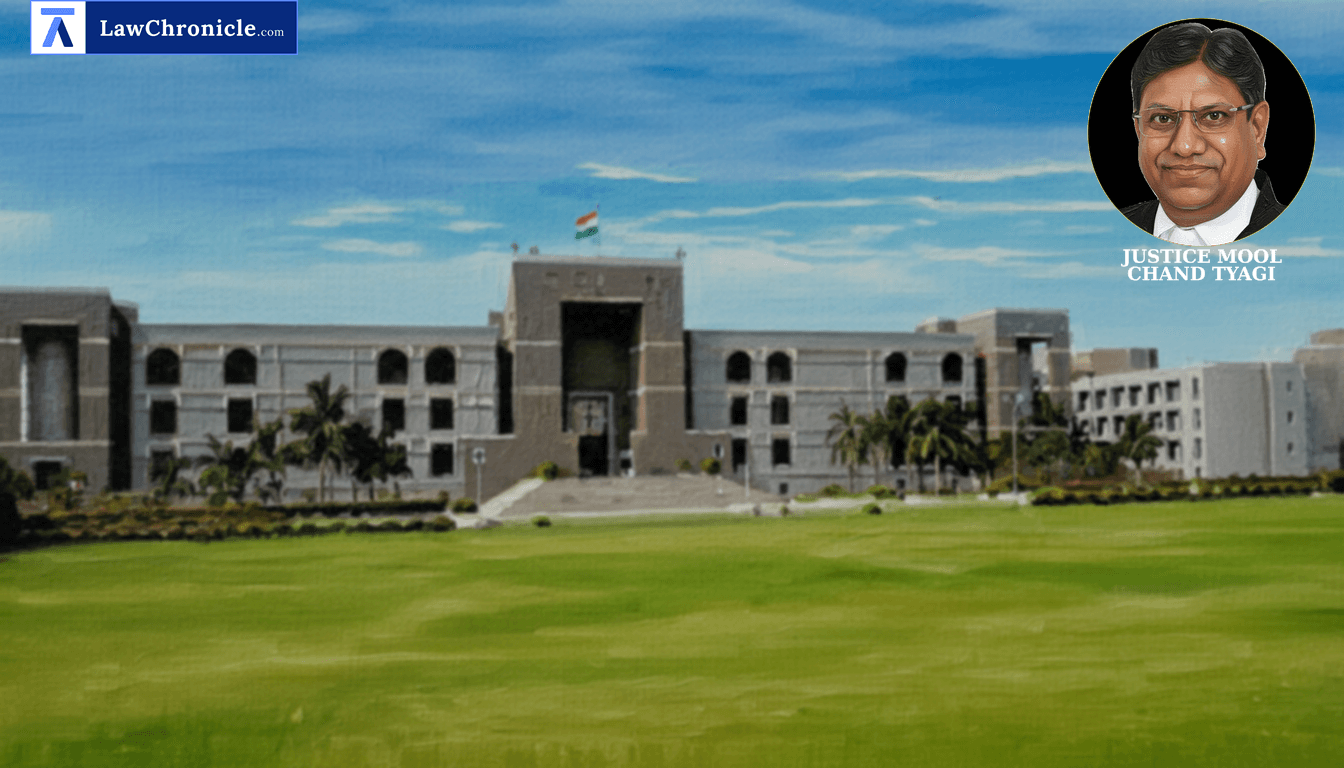
Prioritizing the reproductive autonomy and mental well-being of a rape survivor over statutory time-limits, the Gujarat High Court has authorized the medical termination of a 28-week pregnancy for a 14-year-old victim, ruling that constitutional remedies for bodily integrity cannot be stifled by legislative gaps.
Justice Mool Chand Tyagi, presiding over the matter, emphasized that no court should compel a minor to carry an unwanted pregnancy to full term against her will, as such an act constitutes a violation of personal liberty under the Constitution of India. The Court was hearing a petition filed by the victim's mother challenging a Sessions Court order that had previously denied the termination request.
Key Takeaways
Supremacy of Constitutional Rights
Reproductive choice is recognized as a fundamental right under Article 21 of the Constitution of India, which the Court held must take precedence over the procedural and statutory limitations of the Medical Termination of Pregnancy Act, 1971.
Decisional Autonomy of Minors
The Court established that the choice of the pregnant woman, even if she is a minor, is of higher relevance than the interests of an unborn child in cases of unwanted pregnancies resulting from sexual assault.
Avoidance of Illegal Procedures
By providing a legal channel for late-term termination, the Court aims to prevent vulnerable women from seeking unsafe, unregulated abortion services that pose grave risks to their lives.
Holistic State Responsibility
The judgment shifts the financial and rehabilitative burden to the State, ensuring that the victim receives long-term psychological, educational, and medical support beyond the clinical procedure.
Judicial Rationale on Bodily Integrity
The Court noted the medical report from Shri. Krishna Hospital, which indicated that while the pregnancy was at an advanced stage of 28 weeks and four days, the psychological trauma to the 14-year-old was significant. The Bench relied heavily on the principles established by the Supreme Court in S vs. The Union of India & Ors. ( "SLP (C) No. 14454/2026, decided on 24th April, 2026": 2026 CaseBase(SC) 6442), noting that a lack of remedy under a specific statute does not bar a constitutional remedy.
The Court, in its reasoning, observed: "The right to make decisions concerning one’s body, particularly in matters of reproduction, is an integral facet of personal liberty and privacy under Article 21 of the Constitution of India. This right cannot be rendered ineffective by imposing unreasonable restrictions, especially in cases involving minors and unwanted pregnancies... What is of relevance is the choice of the pregnant woman rather than the interest of an unborn child."
Mandatory Directions Issued by the Court
The Court has the following directions:
"1. Respondent No.3 - Medical Officer, Shri. Krishna Hospital, Karamsad is directed to:
a) Obtain a written undertaking from the victim authorizing her consent to conduct the procedure at her risk.
b) Upon receiving the undertaking, shall immediately constitute a Medical Board comprising three senior-most Gynecologists/Surgeons, along with a Physician, Anesthetist, Radiologist, Pediatrician, obstetrician and Psychologist, to evaluate the victim's physical and mental health. They shall explain to the victim as well as her guardian, about the risks involved in terminating the pregnancy and also other factors, such as surgical and clinical implications of terminating a pregnancy at this stage, more particularly considering the fact that the victim is at an advanced stage of pregnancy.
c) Proceed with the procedure on an urgent basis with the help of the afore experts, only upon a unanimous medical opinion that the termination can be carried out safely without endangering the life of the victim.
d) shall ensure that all necessary care and caution is taken by the doctors while carrying out procedure for termination of pregnancy. Provide all necessary medical infrastructure, including reserving a dedicated special room for the victim and her family, ensuring continuous psychological support and counseling throughout her admission.
e) Preserve and seal requisite fetal tissue samples strictly in accordance with standard medical and scientific protocols for DNA profiling, and hand them over to the Investigating Officer for onward transmission to the Forensic Science Laboratory (FSL).
f) Retain the victim in the hospital for all necessary post-operative care and observation, discharging her only after the Medical Board certifies that she is clinically stable, fully recovered, and fit for discharge.
2. In the event of the infant being alive at birth, the Hospital Authorities and State are directed to:
a) Extend immediate, state of the art intensive medical care to the newborn, either within the hospital or by arranging an immediate transfer to a specialized facility, ensuring all measures are taken for the infant's health and survival.
b) If the victim declines to accept the child, the State and its relevant child welfare authorities under the Juvenile Justice (Care and Protection of Children) Act, should assume full legal, physical and medical responsibility.
3. The Secretary, District Legal Service Authority is directed to:-
a) Take immediate statutory steps, in the event the family refuses custody, to place the child under the care of a recognized Specialized Adoption Agency in accordance with the law and statutory adoption guidelines.
b) Process and disburse interim compensation to the minor victim on a priority basis under the applicable Victim Compensation Scheme upon receipt of the records from the Investigating Officer, and take necessary measures for the expeditious release of the final compensation.
c) Formulate and supervise a long-term rehabilitation plan for the victim, taking into account the trauma suffered, shall offer counseling and ensure the provision of educational support, vocational training, and ongoing psychosocial assistance aligned with her wishes.
4. The Investigating Officer (I.O.) is directed to: a) Receive the sealed fetal tissue samples from the hospital authorities and promptly transmit them under proper chain of custody to the Forensic Science Laboratory (FSL) for forensic DNA analysis. b) Immediately transmit certified copies of the First Information Report (FIR), case diary, and complete medical records to the concerned DLSA to expedite the determination and disbursal of victim compensation.
5. The Principal Secretary, Department of Health and Family Welfare, Government of Gujarat, is directed to:
a) Provide immediate nutritional, travel, and incidental medical requirements.
b) Bear all medical expenses incurred toward the termination procedure, in-patient stay, medication, nutritional requirements, and complete postpartum care for both the victim and the child for a minimum period of six months."
Ratio
The reproductive autonomy of a woman is a fundamental aspect of personal liberty under Article 21 of the Constitution of India. When a pregnancy is unwanted, particularly in the case of a minor victim of sexual assault, the Constitutional Court must prioritize the mother's mental and physical health and her right to bodily integrity over statutory restrictions or the interests of the unborn child. A lack of statutory remedy under the Medical Termination of Pregnancy Act, 1971 does not preclude the High Court from exercising its writ jurisdiction to protect these fundamental rights.
Background
The petitioner, a 14-year-old rape survivor, sought termination of her 28-week pregnancy after her initial application was rejected by the Sessions Judge and Special Judge (POCSO), Anand, on October 27, 2026. The FIR had been registered under Sections 64(2)(m), 65(1), and 351(2) of the BNSS, 2023 and various sections of the POCSO Act.
The High Court examined the medical board's findings, which highlighted the risks associated with late-term abortion but also emphasized the psychological need for judicial intervention. Referencing the precedent in S vs. The Union of India & Ors. ( "SLP (C) No. 14454/2026, decided on 24th April, 2026": 2026 CaseBase(SC) 6442) and X v. Health & Family Welfare Department, the Court set aside the lower court's order and allowed the termination subject to strict medical safeguards and DNA preservation for the ongoing criminal trial.
Case Details:
Case No.: R/Special Criminal Application (Direction) No. 15958 of 2026
Neutral Citation: 2026:GUJHC:71623
Case Title: Priyankaben W/O Sanjaybhai Mafatbhai Rathod Versus State Of Gujarat & Ors.
Appearances:
For the Petitioner(s): Ms Renu Verma(5964)
For the Respondent(s): Ms. Jyoti Bhatt, APP
Source: 2026 CaseBase(GUJ) 43995
Similar Articles

 Breaking News


