


Dignity And Bodily Integrity Paramount: MP HC Orders Abortion For Rape Victim
 Copy Link
 Share
 Save
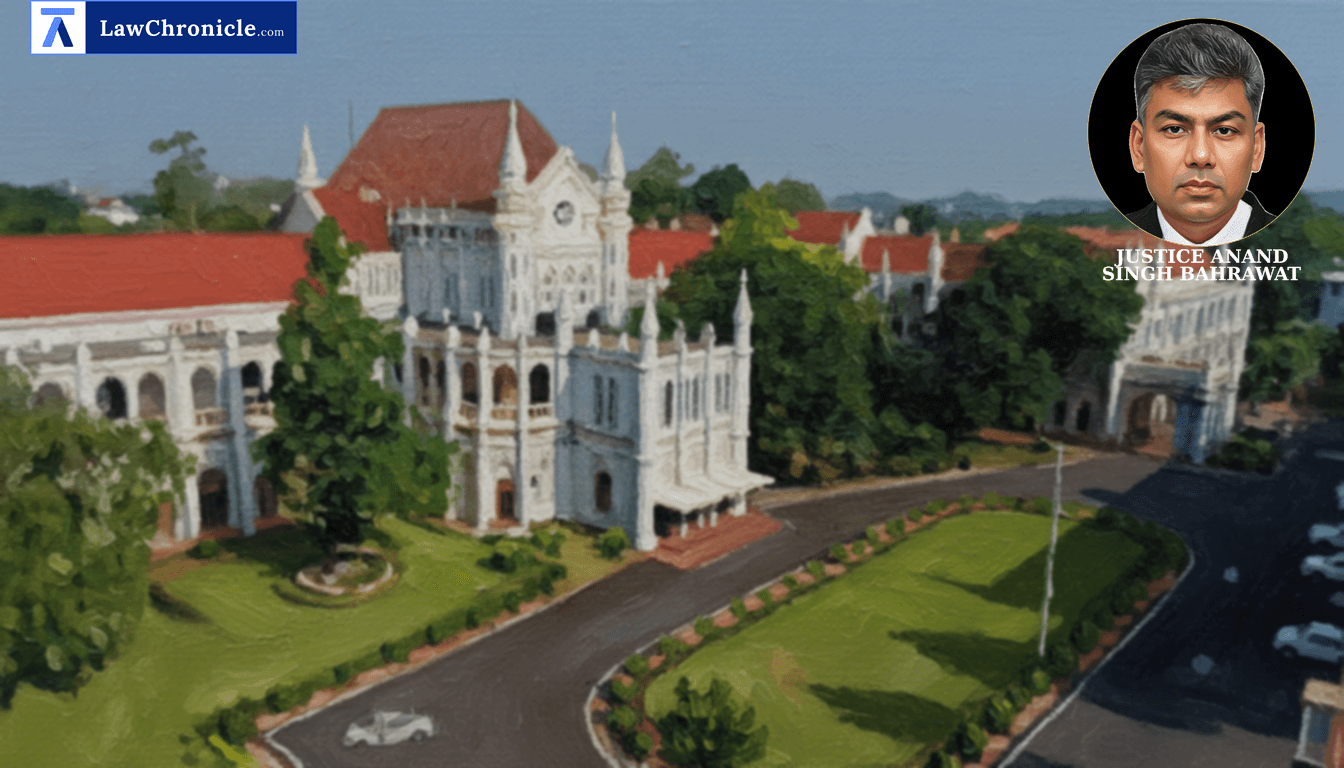
Prioritizing the physical, mental, and social well-being of a minor rape victim, the High Court permitted the medical termination of a 26-week pregnancy, ruling that compelling a survivor to carry an unwanted child violates her dignity. The Court reiterated that a woman's right to reproductive choices and bodily integrity is an essential component of personal liberty under the Constitution.
In a suo moto reference initiated upon the request of the Special Judge (POCSO Act), Bhind, a Single Bench of Justice Anand Singh Bahrawat considered the urgent plea for abortion of a minor victim aged around 16 years and seven months. The victim became pregnant following an alleged sexual assault, leading to an FIR under the Bharatiya Nyaya Sanhita, 2023, the Protection of Children From Sexual Offences Act, 2012, and the Scheduled Castes and Scheduled Tribes (Prevention of Atrocities) Act, 1989.
Key Takeaways
- Reproductive Autonomy Protected: Reaffirms that minor survivors of sexual assault cannot be forced to carry unwanted pregnancies that risk their physical and mental health.
- Exceeding Statutory Limits: Demonstrates judicial intervention using constitutional powers to allow abortion beyond the 24-week limit prescribed under the Medical Termination of Pregnancy Act, 1971.
- State Liability: Mandates the State Government to bear all medical expenses for the procedure, including pre- and post-operative care, and assume responsibility for the child if born alive.
- Preservation of Evidence: Enforces strict compliance to secure fetal DNA samples for crucial evidentiary use in ongoing criminal proceedings.
Judicial Rationale and Mandatory Directions
The High Court observed that forcing a minor victim to carry an unwarranted pregnancy to term would adversely impact her physical, mental, and social status. Citing established precedent in XYZ vs State of Gujarat and others, the Court relied on the principle that forced pregnancy resulting from sexual assault compounds injury and trauma.
The Court, in its reasoning, observed: "In Indian society, within the institution of marriage, generally pregnancy is a reason for joy and celebration... By contrast, pregnancy outside marriage, in most cases, is injurious, particularly, after a sexual assault/abuse and is a cause for stress and trauma affecting both the physical and mental health of the pregnant woman the victim."
The Court has the following directions:
"(i) The procedure of termination of pregnancy will be carried out in the presence of the Expert Team of at least 3 Doctors. The Expert Doctors will explain to the Family Members as well as the victim the risk of getting the termination of her pregnancy and other related medical factors;
(ii) Every care and caution will be taken by the Doctors while terminating the pregnancy. All medical attention and other medical facilities including that of a presence of a Pediatrician as well as a Radiologist and other required Doctors will be made available to the victim;
(iii) The post operative care, upto the extent required, will be extended to the victim. It will be the duty of the State Government to take care of the child, if born alive. The entire expenditure in respect of termination of pregnancy, pre and post care, shall be borne by State of M.P. Through Collector, Bhind;
(iv) It would be the responsibility of CMHO Bhind, CMHO Gwalior and SHO, Police Station Gormi, Bhind to ensure to bring the victim (in Ambulance) from Bhind to Gwalior along with lady Doctor and see that no slightest inconvenience is caused to the victim by today itself and all the necessary tests of victim be undertaken today itself and keep her in observation at Gaja Raja, Medical College, Gwalior M.P;
(v) The Doctors will ensure that a sample from the fetus is protected for DNA examination and will be handed over to the prosecution for using in the criminal case;
(vi) This procedure be carried out as expeditiously as possible taking all precautions and measures as required in the matter;
(vii) The victim shall remain present before the Head of the Department of Obstetrics and Gynaecology, Gaja Raja, Medical College, Gwalior M.P. on 11/08/2026 i.e. tomorrow at 09:00 AM sharp, so that the termination of pregnancy may be carried out by the Team of Doctors preferably during the course of the day i.e. on 11/08/2026 (tomorrow) or day-after tomorrow i.e. 12/08/2026; and
(viii) Registry is directed to provide certified copy of this order to the Office of Advocate General today itself, so as to communicate this order to the victim for appearance on the above mentioned date."
Ratio
Under Article 21 of the Constitution of India, a woman's right to make reproductive choices and safeguard her bodily integrity is a fundamental right. When a pregnancy results from sexual assault, compelling the survivor to carry the fetus to term inflicts severe bodily and mental trauma, overriding the statutory timeline restrictions set out under the Medical Termination of Pregnancy Act, 1971 when permitted by a medical board.
Background
The matter originated from a letter sent by the Special Judge (POCSO Act), Bhind, requesting judicial permission for termination of the victim's pregnancy. The victim's medical report indicated that she was 26 weeks and 6 days pregnant. Her parents provided explicit written consent for the procedure, expressing that denying abortion would ruin her future and reputation.
While examining Section 3 and Section 5 of the Medical Termination of Pregnancy Act, 1971, the Court noted that abortion is generally permitted up to 24 weeks. However, relying on Supreme Court rulings such as XYZ vs State of Gujarat and others, Suchita Srivastava v. State (UT of Chandigarh), Sarmishtha Chakrabortty v. Union of India Secretary ( "(2018) 13 SCC 339": 2018 CaseBase(SC) 539), Murugan Nayakkar v. Union of India, and X v. The Principal Secretary, Health and Family Welfare Department, Government of NCT of Delhi, the High Court emphasized that constitutional courts possess extraordinary jurisdiction to permit termination beyond the statutory period to preserve the life and dignity of the victim. Consequently, the High Court allowed the termination subject to strict medical and administrative conditions, disposing of the writ petition.
Case Details:
Case No.: WRIT PETITION No. 32750 of 2026
Neutral Citation: 2026:MPHC-GWL:24021
Case Title: IN REFERENCE (SUO MOTO) (PROSECUTRIX THROUGH FATHER P.S. GORMI DISTRICT BHIND Versus THE STATE OF MADHYA PRADESH
Appearances:
For the Petitioner(s): In Reference
For the Respondent(s): Shri K.S. Tomar - learned Government Advocate
Source: 2026 CaseBase(MP) 9369
Similar Articles
 Breaking News


