


Revenue Authorities Can Cancel Entries Based on Void Sale Deeds: Gujarat High Court
 Copy Link
 Share
 Save
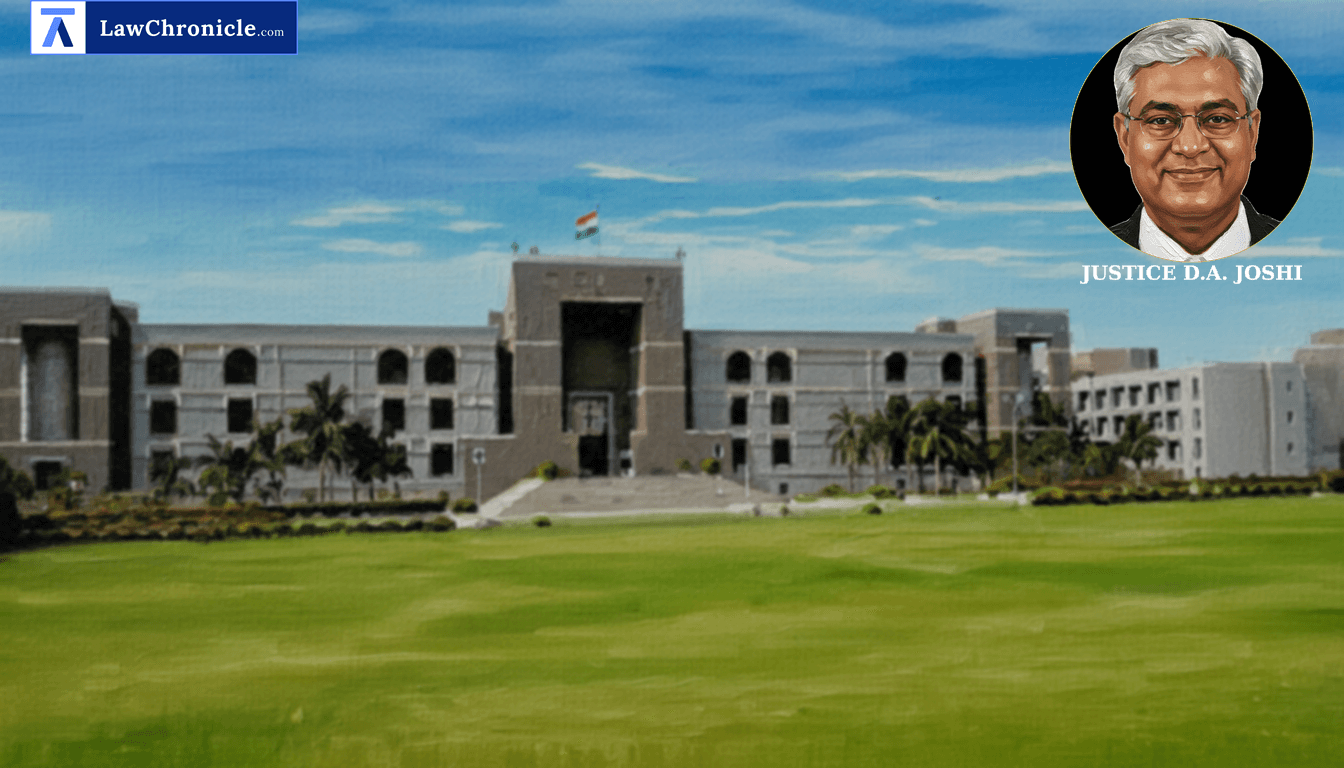
The Gujarat High Court has upheld the cancellation of revenue mutation entries, ruling that while revenue authorities typically do not adjudicate title, they are justified in acting when a registered document is prima facie void ab initio due to being based on a forged Power of Attorney.
In a verdict delivered by Justice Divyesh A. Joshi, the Court scrutinized the legality of mutation entries 6115 and 6116, which were premised on sale deeds executed via a Power of Attorney (PoA) that featured the thumb impression of a person who had died 20 years prior to the document's execution. The Court emphasized that while Section 135C of the Gujarat Land Revenue Code mandates authorities to record changes based on registered documents, such duty does not extend to validating transactions that are absolute nullities in the eyes of the law.
The Legality of Registered Documents vs. Revenue Jurisdiction
Addressing the petitioners' argument that revenue authorities exceeded their jurisdiction by examining the validity of sale deeds, the Court noted that the specific facts of the case including the death of executants before the sale deeds were signed rendered the authority under the PoA non-existent. The Court, in its reasoning, observed: "The aforesaid documents and materials available on record irresistibly demonstrate that the original owners of the subject land had never entered into any transaction for the sale of the subject land to the petitioners. Consequently, the said documents are, per se, illegal and cannot be relied upon as evidence. It was ultimately held by the competent Civil Court that the plaintiffs had failed to prove that they were the owners of the subject land and ultimately suit has been dismissed."
Impact of Concurrent Findings and Civil Court Observations
Although the petitioners relied on precedents like Gandabhai Dalpatbhai Patel v. State of Gujarat and Raichand Kanjibhai Shah v. State of Gujarat & Ors. to argue that revenue entries are strictly for fiscal purposes, the High Court distinguished these findings based on the specific evidence of forgery and the termination of agency under Section 201 of the Act of 1872.
Background:
The dispute concerned Block Nos. 402 and 417 in Mouje Por, Gandhinagar. The petitioners claimed to be bona fide purchasers who acquired the land through registered sale deeds in 2003, executed by a Power of Attorney holder. However, private respondents objected, pointing out that one of the PoA executants, Hiraben, had passed away decades before the document was created. Furthermore, other executants had died before the final sale deeds were signed.
The Mamlatdar cancelled the entries, a decision subsequently upheld by the Prant Officer, the Collector, and the Special Secretary Revenue Department (SSRD). During these proceedings, a Civil Court had also dismissed a suit filed by the petitioners, finding they failed to prove ownership. Invoking Section 31 of the Specific Relief Act, 1963, the High Court noted that seeking a declaration of a document as void is a discretionary remedy and the fact that the findings of the Trial Court against the petitioners still stand (despite an interim stay) justified the revenue authorities' refusal to restore the entries.
Case Details:
Case No.: R/SPECIAL CIVIL APPLICATION NO. 12837 of 2012
NeutralCitation: 2026:GUJHC:38197
Case Title: PATEL SHANTILAL MOHANLAL & ANR. Versus STATE OF GUJARAT & ORS.
Appearances:
For the Petitioner(s): MR VIMAL A PUROHIT
For the Respondent(s): MR SIDDARTH RAMI, AGP; MR. RAJ A TRIVEDI; VIRAL K SHAH
Source: 2026 CaseBase(GUJ) 309
Similar Articles
 Breaking News


