


SC: Non-Deduction of Royalty from Sale Value is Constitutionally Valid
 Copy Link
 Share
 Save
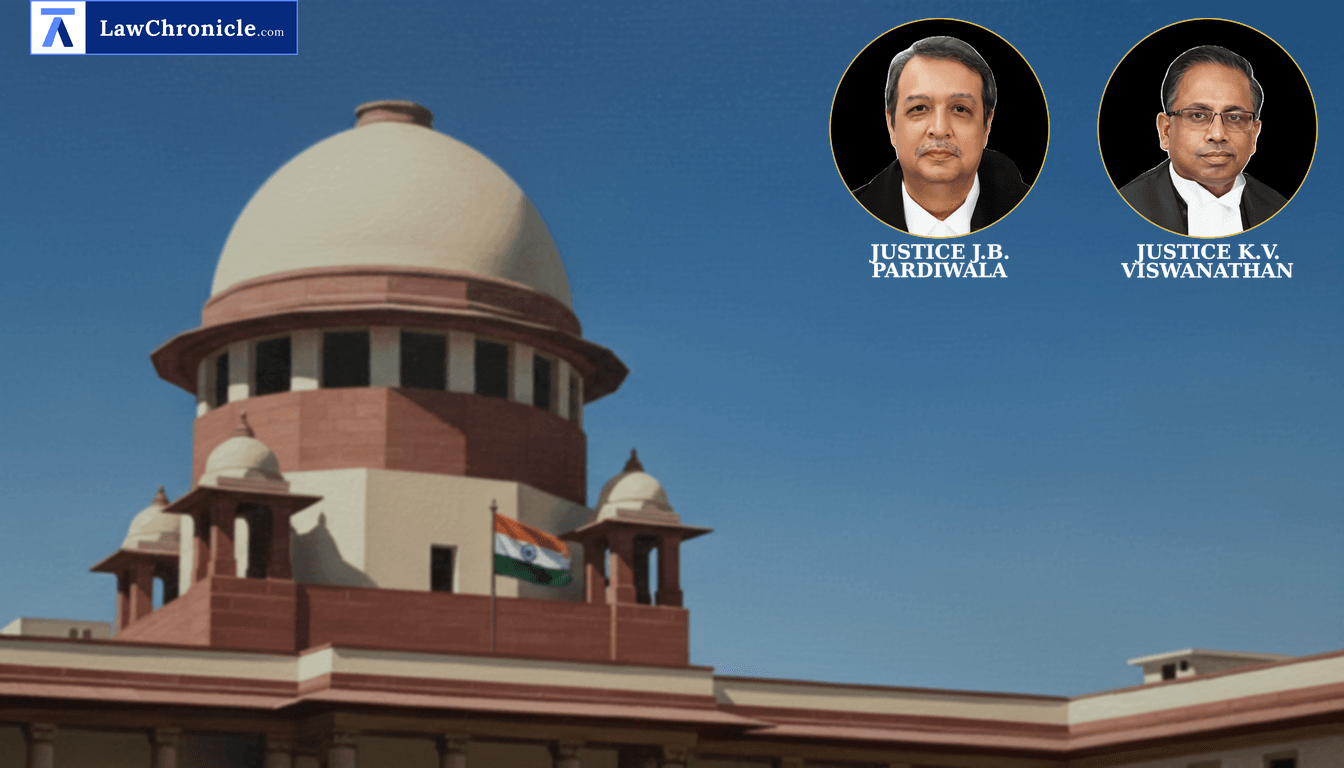
Miners seeking to exclude statutory levies from the calculation of 'Average Sale Price' suffered a definitive setback as the Supreme Court upheld the validity of rules preventing the deduction of royalty, DMF, and NMET payments from the sale value of minerals. This judgment effectively seals the exchequer's revenue streams against price manipulation and under-invoicing strategies often employed by private lessees in the iron ore sector.
In a decisive ruling, a bench of Justice J.B. Pardiwala and Justice K.V. Viswanathan addressed a challenge by Kirloskar Ferrous Industries Ltd. and Anr. v. Union of India & Anr.. The petitioners contested the constitutional validity of explanations appended to Rule 38 of the Minerals (Other Than Atomic And Hydro Carbons Energy Minerals) Concession Rules, 2016 and Rule 45 of the Mineral Conservation And Development Rules, 2017. These rules include royalty and other statutory contributions within the 'sale value' used to determine the Average Sale Price (ASP), which serves as the basis for royalty and auction premium calculations under the Mines And Minerals (Development And Regulation) Act, 1957.
The Doctrine of Measure vs Nature of Levy
The Court dismissed the petitioners' argument that including royalty in the sale value for the purpose of calculating royalty constituted 'royalty on royalty' or was ultra vires Section 9 of the Mines And Minerals (Development And Regulation) Act, 1957. It reiterated that the legislature possesses broad discretion in designing the 'measure' of a levy, which is distinct from the 'nature' of the levy itself.
The Court, in its reasoning, observed: "It is a well-settled principle that the determination of the principles for assessing the amount of tax is within the legislative domain. The quantification or measurement of liability is done on the basis of the procedures laid down by the competent legislature. In situations where the legislature selects one method out of the many available for assessing tax, the courts should not strike down the levy on the ground that the legislature should have adopted another method unless the method is capricious, fanciful, arbitrary or clearly unjust."
The Bench relied on the precedent set in Mineral Area Development Authority & Anr. vs. M/s Steel Authority of India and Another to underscore that the fixation of royalty rates under the Mines And Minerals (Development And Regulation) Act, 1957 is an integral part of mineral regulation and development. Similarly, referencing Union of India & Ors. vs. Bombay Tyre International Ltd. and Others ( "(1984) 1 SCC 467": 1983 CaseBase(SC) 52) and Ralla Ram vs. Province of East Punjab, the Court noted that adopting a broader base for the measure of a levy is permissible as long as a reasonable nexus with the levy is maintained.
Anti-Evasion Measures and Regulatory Justification
Curbing Price Manipulation
The Union of India justified the impugned rules as a necessary antidote to price manipulation. Data from Odisha and Karnataka revealed that some miners reported low ex-mine prices during high-despatch months to depress the ASP, thereby reducing their premium and royalty liabilities. The Court found this to be a legitimate regulatory objective.
The Court, in its reasoning, observed: "The measure of levy, as provided, read with the explanation, is intended to ensure that, to the extent possible, loss of revenue is offset. Such loss of revenue occurs due to manipulation of prices... It may be possible that all parties may not resort to such ingenious contrivances. However... when a measure of levy is prescribed to check evasion, individual hardships cannot be determinative. Afterall, the grundnorm is ‘Salus populi suprema lex’ – regard for the public welfare is the highest law."
Distinction from Coal Sector
Responding to the petitioners' plea for parity with the coal sector where such levies are excluded the Court held that coal and iron ore are not comparable. It noted that coal prices are governed by the National Coal Index, whereas iron ore ASP relies on data provided by private miners, necessitating stricter anti-evasion measures. Citing Sardar Baldev Singh vs. CIT, Delhi & Ajmer, Balaji vs. ITO, and Union of India vs. A. Sanyasi Rao, the Court affirmed that the legislature can create fictions or presumptive bases to prevent tax evasion.
Directions Issued to Miners and Authorities
The Court has the following directions:
"The Explanations to Rule 38 of the 2016 Rules and Rule 45(8)(a) of the 2017 Rules, insofar as they provide for inclusion of royalty and payments made towards DMF and NMET in the sale value for computing the average sale price for determination of royalty, is constitutional and valid. We hold that the impugned Rules are not violative of Constitution of India, 1950 and Constitution of India, 1950 of the Constitution. We further hold that the impugned provisions are not ultra vires Section 9 of the Mines And Minerals (Development And Regulation) Act, 1957. The writ petition is dismissed."
Key Takeaways:
Legislative Discretion in Fiscal Measures
The Court affirmed that the government has wide latitude in choosing the 'measure' of a levy, even if it results in individual hardship, provided there is a rational nexus to the objective.
Precedence of Public Interest
Applying the principle of 'Salus populi suprema lex', the Court prioritized the protection of the state exchequer against ingenious tax-avoidance strategies over private contractual interests.
Rejection of Sectoral Parity
Lessees of different minerals cannot claim identical treatment if the underlying market mechanisms (like price indexing vs. self-reporting) differ, as there is no violation of Article 14 in treating unequals unequally.
Ratio Decidendi:
The standard or measure adopted for assessing a levy is a matter of legislative policy. Inclusion of statutory dues in the 'sale value' of a mineral to determine the 'Average Sale Price' for royalty calculation is a valid regulatory measure to prevent price manipulation and does not amount to an unauthorized change in the rate of royalty or a violation of constitutional rights.
Background:
The petitioners, including Kirloskar Ferrous Industries Ltd. and Anr. v. Union of India & Anr., challenged the non-deduction of royalty, District Mineral Foundation (DMF) and National Mineral Exploration Trust (NMET) payments from the 'sale value' of iron ore. They argued this resulted in a 'cascading impact' and 'royalty on royalty,' violating Section 9 of the Mines And Minerals (Development And Regulation) Act, 1957 and Constitution of India, 1950. Following an earlier round of litigation where the Union of India eventually decided not to amend the rules, the petitioners filed a fresh challenge. They contended that since coal miners were allowed such deductions, the denial to iron ore miners was discriminatory. The Union argued that the measure was essential to counter systematic under-invoicing and price distortion in the private mining sector, where miners manipulated ex-mine prices to lower the ASP. The Court upheld the Union's stance, citing the presumption of constitutionality for subordinate legislation and the necessity of anti-evasion measures.
Case Details:
Case No.: WRIT PETITION (C) NO. 733 OF 2025
NeutralCitation: 2026 INSC 679
Case Title: Kirloskar Ferrous Industries Ltd. and Anr. Versus Union of India & Anr.
Appearances:
For the Petitioner(s): Dr. Abhishek Manu Singhvi (Senior Counsel), Mr. Balbir Singh (Senior Counsel), Mr. Ninad Laud (Counsel)
For the Respondent(s): Mr. R. Venkataramani (Attorney General for India)
Source: 2026 CaseBase(SC) 635



 Breaking News


