


SC Voids Illegal Madrasah Appointments, Upholds Merit and Transparency
 Copy Link
 Share
 Save
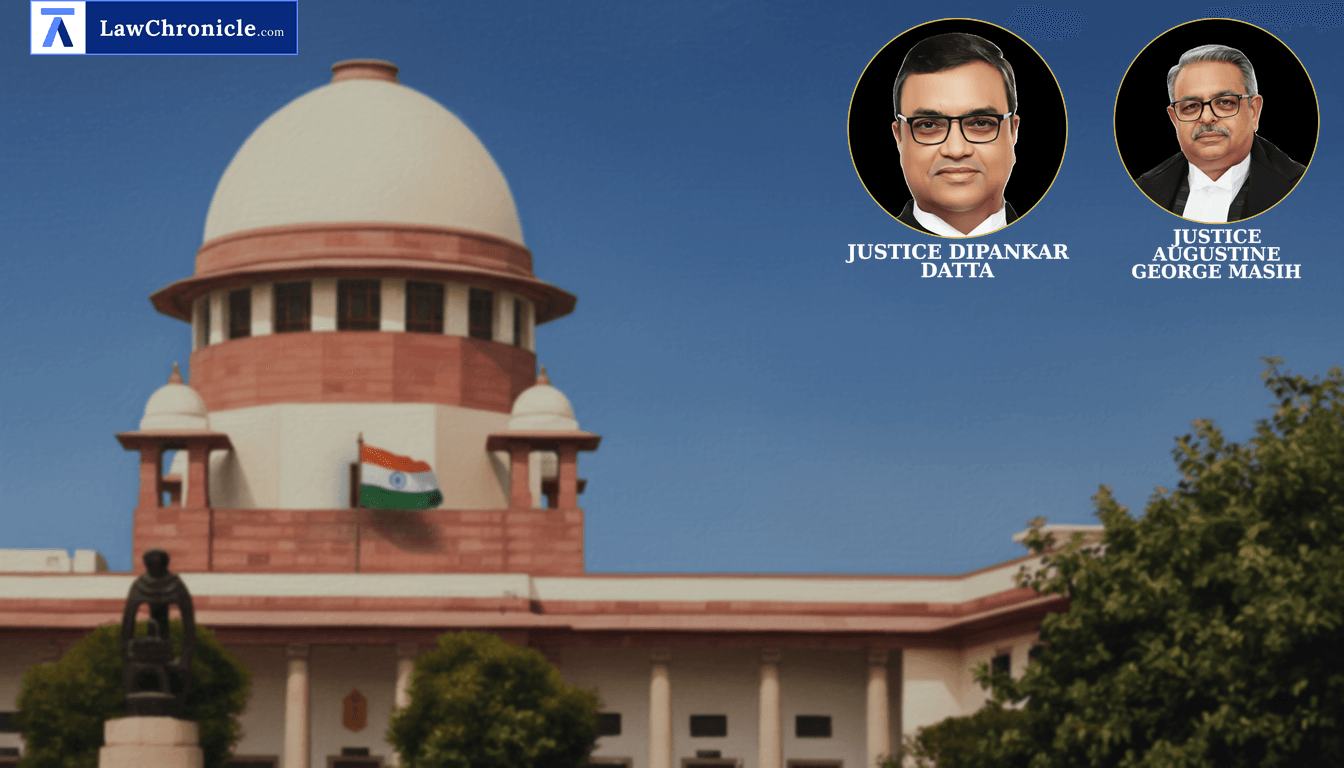
Public exchequer funds cannot sustain private patronage or opaque, non-competitive recruitment processes that bypass constitutional mandates of equality and transparency. The Supreme Court has dealt a final blow to hundreds of teaching and non-teaching staff in West Bengal madrasahs, ruling that appointments made during a period of legal uncertainty without following strict statutory norms or obtaining court leave are ex-facie illegal and void.
In a comprehensive judgment, a Bench of Justice Dipankar Datta and Justice Augustine George Masih consolidated 49 writ petitions filed by over 350 individuals under Article 32 of the Constitution of India, 1950. The petitioners, claiming to be staff of various recognized aided madrasahs, sought the regularization of their services and release of benefits, alleging deprivation by the State of West Bengal.
The Demise of Backdoor Appointments
The dispute traced back to the legal challenge against the West Bengal Madrasah Service Commission Act, 2008. While the High Court had initially struck down several provisions of the Act, the Supreme Court later upheld its validity in Sk. Mohd. Rafique v. Managing Committee, Contai Rahamania High Madrasah ( "(2020) 6 SCC 689": 2020 CaseBase(SC) 354). The present batch of petitions arose from appointments made by local Managing Committees in the interregnum between the High Court's invalidation and the Supreme Court's reversal. The Court observed that many such appointments were made in total disregard of West Bengal Board Of Madrasah Education Act, 1994. or the recruitment procedures laid down in Management of Recognised Non-Government Madrasahs (Aided and Un-aided) Rules, 2002 and West Bengal School Service Commission Act, 1997.
Analyzing the specific claims, the Court noted: "The appointment of this petitioner, in view of the ante-dated documents, pollutes the stream of public employment and strikes at the foundation of a fair and transparent recruitment process."
The Court has the following directions:
"The vacant sanctioned posts may now be filled up as per the recommendations of the Commission. Since the interim orders have been vacated, the vacant sanctioned posts may now be filled up as per the recommendations of the Commission. Orders passed on the writ petitions restraining the respondents from dislodging these petitioners from service and/or directing payment of admissible salary and allowances stand vacated forthwith."
Strict Adherence to Recruitment Norms
Validity of Post-Stay Appointments
The Court emphasized that once a stay was granted on March 14, 2016, regarding the High Court's judgment, any subsequent appointments made without the express leave of the Supreme Court were invalid. The Bench noted that the Managing Committees could not have proceeded on their own perceiving earlier notifications to be still valid. Referring to Shree Chamundi Mopeds Ltd. v. Church of South India Trust Association, the Court clarified the distinction between staying an order and quashing it, noting that the stay made the High Court's decision inoperative, creating a vacuum that the committees filled illegally.
Rejection of Regularization Claims
Addressing pleas for regularization, the Court refused to deviate from the principles established in State of Karnataka v. Umadevi (3) ( "(2006) 4 SCC 1": 2006 CaseBase(SC) 148) and Official Liquidator v. Dayanand ( "(2008) 10 SCC 1": 2008 CaseBase(SC) 545). It held that Article 142 could not be used to protect ineligible teachers at the cost of students' futures. The Court noted: "Minority right under clause (1) of Article 30 of the Constitution does not and cannot include the right to burden the exchequer with appointments made through a non-competitive, opaque process."
Key Takeaways:
Public Money Demands Accountability
State aid to minority institutions necessitates a competitive and transparent selection process for all posts funded by the public exchequer.
Stay Orders Create Legal Limitations
Appointments made after a superior court stays a judgment that had authorized local hiring are void if made without the court's explicit permission.
Fraud Vitiates Selection Processes
Evidence of ante-dating documents or failing to publish wide-scale advertisements in state-level newspapers renders the entire recruitment exercise a nullity.
Ratio Decidendi:
An appointment on a post entailing expenditure from the public exchequer is void if it is made through a procedure inconsistent with the principle of equality and equal opportunity under Articles 14 and 16. Minority rights under Article 30(1) do not permit the bypassing of merit-based selection when the institution receives government aid. Any recruitment conducted during the pendency of an appeal where the operating judgment has been stayed is illegal unless authorized by the appellate court.
Background:
The litigation began with a challenge to the West Bengal Madrasah Service Commission Act, 2008 by the Managing Committee of Contai Rahamania High Madrasah. After the High Court struck down provisions allowing the Commission to select staff, the State issued Management of Recognised Non-Government Madrasahs (Aided and Un-aided) Rules, 2002 and West Bengal School Service Commission Act, 1997 to allow local recruitment. However, the Supreme Court in Sk. Mohd. Rafique v. Managing Committee, Contai Rahamania High Madrasah ( "(2020) 6 SCC 689": 2020 CaseBase(SC) 354) and later Snehasis Giri v. Subhasis Mitra ( "(2023) 18 SCC 529": 2023 CaseBase(SC) 222) mandated a verification process for such interim hires. A 3-member Committee, constituted under the directions in Snehasis Giri v. Subhasis Mitra ( "(2023) 18 SCC 529": 2023 CaseBase(SC) 222) and headed by a retired Judge, examined nearly 500 claims and found none meeting the threshold of valid appointment. The petitioners challenged these findings, but the Supreme Court upheld the Committee's report, finding instances of fraud, lack of qualifications, and failure to follow mandatory advertising rules. The Court ultimately dismissed the entire batch of petitions, vacating all interim protections.
Case Details:
Case No.: WRIT PETITION (CIVIL) NO. 566/2024
NeutralCitation: 2026 INSC 691
Case Title: NAJMA KHATUN & ORS. v. THE STATE OF WEST BENGAL & ORS.
Appearances:
For the Petitioner(s): Mr. Salman Khurshid, Ms. Maninder Acharya, Mr. Devdutt Kamat, Mr. Pijush Kanti Roy, Senior Advocates; Mr. Biswaroop Bhattacharya and Ms. Srija Choudhury, Advocates
For the Respondent(s): Mr. Huzefa Ahmadi, Mr. Raju Ramchandran and Mr. M. R. Shamshad, Senior Advocates
Source: 2026 CaseBase(SC) 648
Similar Articles
 Breaking News


