


Supreme Court Orders Reinstatement And Regularisation Of High Court Employees Denied Parity
 Copy Link
 Share
 Save
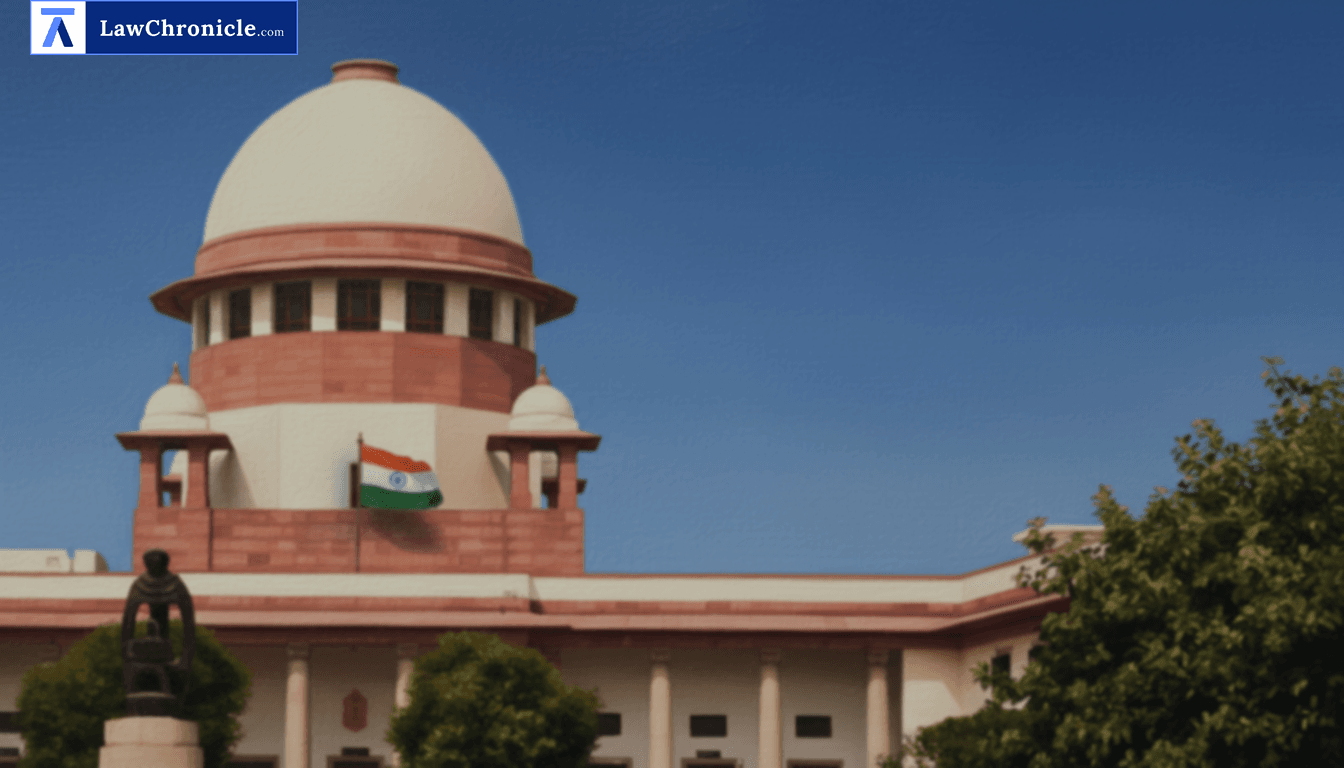
A bench of Justices J.K. Maheshwari and Vijay Bishnoi heard appeals by several former Operator‑cum‑Data Entry Assistants / Routine Grade Clerks challenging orders of the High Court of Judicature at Allahabad that declined to regularise them despite similarly placed colleagues having been regularised. The appeals arose from differing treatments following appointments made by the Chief Justice under Rules 8(a)(i), 41 and 45 of the Allahabad High Court Officers and Staff (Conditions of Service and Conduct) Rules, 1976.
The Court set aside the impugned High Court judgments and issued final directions for relief. It held that the differential treatment of employees appointed through the same channel was arbitrary and unsustainable under Article 14. The Court ordered reinstatement, regularisation after one year from the respective dates of appointment, and grant of consequential benefits except for salary during periods not worked, to be implemented within eight weeks under Article 142. The Court, in its reasoning, observed: “In the conspectus of these facts, the distinction sought to be established by the Respondents between the Appellants and ‘Category A’ employees as well as between the Appellants and ‘Category B’ employees, in our considered view is arbitrary, unreasonable and superficial. Such arbitrariness and unreasonableness becomes evident in light of the principles as enshrined in Article 14 of Constitution of India. All three categories of employees i.e., Category A, Category B, and Category C (the Appellants), were appointed through the same channel of recruitment, namely the exercise of the powers vested in the Chief Justice under Rules 8(a)(i), 41 and 45 of the 1976 Rules sans following the regular recruitment process. Merely because the appointment orders contained different stipulations regarding the nature of appointment i.e. whether labeled ad-hoc or not, or whether containing a condition for examination or not, cannot be a rational basis for differential treatment for purpose of regularization when the channel of such appointments is identical.” The Court further noted that the case was exceptional and warranted exercise of its inherent powers to render complete justice.
Background The appellants were engaged on Class‑III posts by orders of the Chief Justice between 2004–2005. A Division Bench of the Allahabad High Court had earlier (20.09.2011) held that appointments made by the Chief Justice under the cited rules could not be impugned and directed appropriate steps for confirmation/regularisation; thereafter a Committee of two High Court judges examined representations and recommended regularisation of some employees while rejecting others. The Committee categorized employees into three groups: (A) ad‑hoc appointees whose employment letters contemplated an examination but whom the Committee treated as eligible for confirmation; (B) appointees treated as probationary under Rule 32/33; and (C) appointees (including the present appellants) appointed on or after 02.09.2004, whom the Committee said could not benefit from the U.P. Regularisation Rules, 1979. Several persons in Categories A and B were regularised and promoted; Category C claimants were denied similar relief and some were discontinued. The appellants challenged the rejection before the High Court and obtained mixed outcomes; the Division Bench ultimately declined relief, offering age‑relaxation to participate in future recruitment. The Supreme Court found that identical channel of appointment and identical service rendered made the differential treatment arbitrary, emphasised that “equals must be treated equally and persons similarly circumstanced should not be treated differently without a rational and intelligible differentia,” and therefore ordered (a) reinstatement to the posts held at discontinuance; (b) regularisation after one year from respective appointment dates; (c) entitlement to consequential benefits including seniority, promotion, pay fixation, increments and retiral benefits (excluding salary for periods not worked); and (d) compliance within eight weeks. The Court limited its directions to the facts of these appeals and recorded no order as to costs.
Case Details: Case No.: 2025 INSC 1477; Civil Appeal Nos. 428–431 of 2022 Case Title: Ratnank Mishra & Others v. High Court of Judicature at Allahabad through Registrar General (and allied appeals) Appearances: For the Petitioner(s): Mr. P.S. Patwalia, Senior Counsel (for appellants) For the Respondent(s): Ms. Preetika Dwivedi, Counsel (for High Court)
Similar Articles
 Breaking News


