


Seized Vehicles Cannot Rot in Yards: Madras HC Mandates Prompt Release Under BNSS
 Copy Link
 Share
 Save
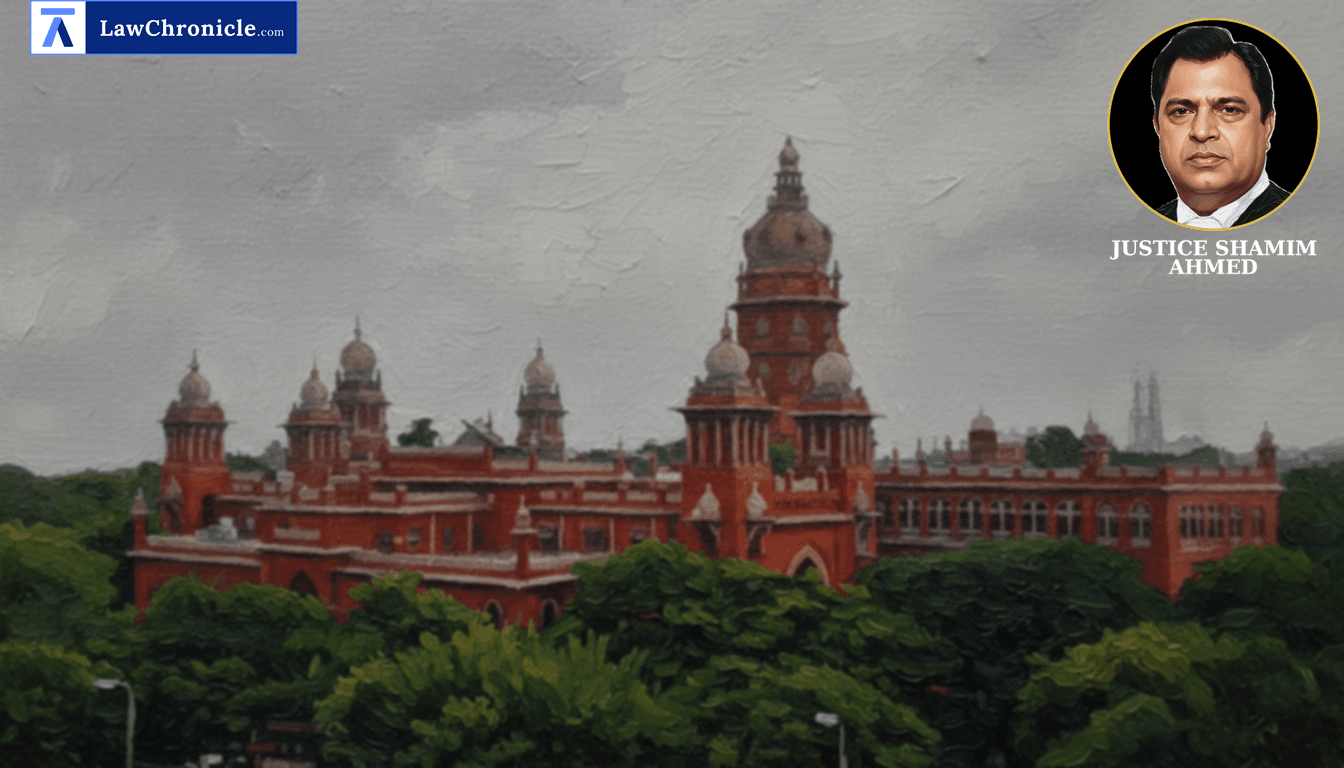
The Madras High Court has delivered a decisive blow against the administrative inertia that allows seized vehicles to decay in police stations, ruling that keeping such property in open yards during trial constitutes a form of mental and financial torture for the owner. Invoking the newly enacted Bharatiya Nagarik Suraksha Sanhita, 2023, the Court underscored that Magistrates must exercise their powers judiciously and promptly to ensure that properties do not become junk while legal proceedings remain pending.
Justice Shamim Ahmed dealt with a criminal revision case challenging a lower court's refusal to release a two-wheeler seized under the Tamil Nadu Prohibition (Amendment) Act, 2024. The Madras High Court emphasized that the failure of trial courts to widely apply the protective provisions of the new criminal code undermines the principles of natural justice and the rights of property owners.
Key Takeaways
BNSS Primacy in Property Disposal
Magistrates are now mandated to proactively utilize Sections 497 and 503 of the Bharatiya Nagarik Suraksha Sanhita, 2023 to prevent the physical degradation of seized assets during the pendency of a trial.
Ownership Predominance
Where the ownership of a seized vehicle is not in dispute and the State does not claim its ownership, the property should be returned to the registered owner rather than being left to the elements.
Curbing Judicial Delay
Trial courts must decide on the disposal of seized property within a period of thirty days after the statement of property is prepared, as per the statutory timelines envisioned in the new criminal code.
Prevention of Economic Waste
The judgment establishes that allowing a vehicle to become junk in a police yard serves no public purpose and constitutes an unnecessary financial burden on the citizen.
Judicial Scrutiny of Trial Court's Inaction
The Madras High Court observed that the power conferred under Section 497 of the Bharatiya Nagarik Suraksha Sanhita, 2023 was not being properly or widely utilized by trial courts. It noted that merely keeping an article in the custody of the Court in an open yard results in the damage of property without fulfilling any legal objective. The Bench highlighted that owners should be allowed to enjoy their property during the trial period, especially when their ownership is undisputed.
In its reasoning, the Madras High Court further noted: "In the opinion of this Court, the procedure as contemplated under Section 503 of the Bharatiya Nagarik Suraksha Sanhita, 2023 be also followed promptly, so that the concerned Court may take prompt decision for disposal of such properties and be released in favour of the entitled person of the said property, keeping the said property in the custody and keeping the same in the custody of the Trial Court in the open yard will not solve any purpose and that gives a mental and financial torture to the owner of the said property which is also against the law and against the principles of natural justice."
Ratio
The Madras High Court held that the pendency of confiscation proceedings is not an absolute bar to the release of a vehicle required for trial. Under Sections 497 and 503 of the Bharatiya Nagarik Suraksha Sanhita, 2023, trial courts have a duty to exercise their discretion to release seized property to the rightful owner upon securing appropriate bonds and guarantees, thereby preventing the property from becoming junk and ensuring the owner is not subjected to unnecessary financial hardship during legal proceedings.
Background
The petitioner, Sathish, approached the High Court after the Judicial Magistrate Court, Senthamangalam, dismissed his application for the release of his motorcycle. The vehicle had been seized by the Erumapatti Police Station in connection with an offence under Section 4(1)(A) of the Tamil Nadu Prohibition (Amendment) Act, 2024. The petitioner argued that as the registered owner, he was not involved in the alleged offence and that the vehicle was deteriorating in the open yard of the police station.
The Madras High Court relied heavily on the precedent set in Sunderbhai Ambalal Desai and C.M. Mudaliar Vs. State of Gujrat, where the Apex Court held that seized vehicles should not be kept at police stations for long periods. The Bench also noted the principles established in Nand Vs. State of U.P., Jai Prakash Vs. State of U.P., and Kamaljeet Singh Vs. State of U.P., all of which affirmed that the pendency of excise-related confiscation proceedings does not preclude the release of the vehicle to its owner. Consequently, the Madras High Court set aside the impugned order and directed the immediate release of the vehicle subject to a bank guarantee.
Case Details:
Case No.: CRL RC No. 2385 of 2026
Case Title: Sathish vs. The State Represented by Inspector of Police
Appearances:
For the Petitioner(s): Mr.R.Abi Ragavendran for Mr.S.Kasirajan
For the Respondent(s): Mr.M.Dinesh, GA (Criminal Side)
Source: 2026 CaseBase(MAD) 28345
Similar Articles
 Breaking News


