


Simple Injury No Bar To Charge Attempt To Murder Under Section 307 IPC: Punjab & Haryana HC
 Copy Link
 Share
 Save
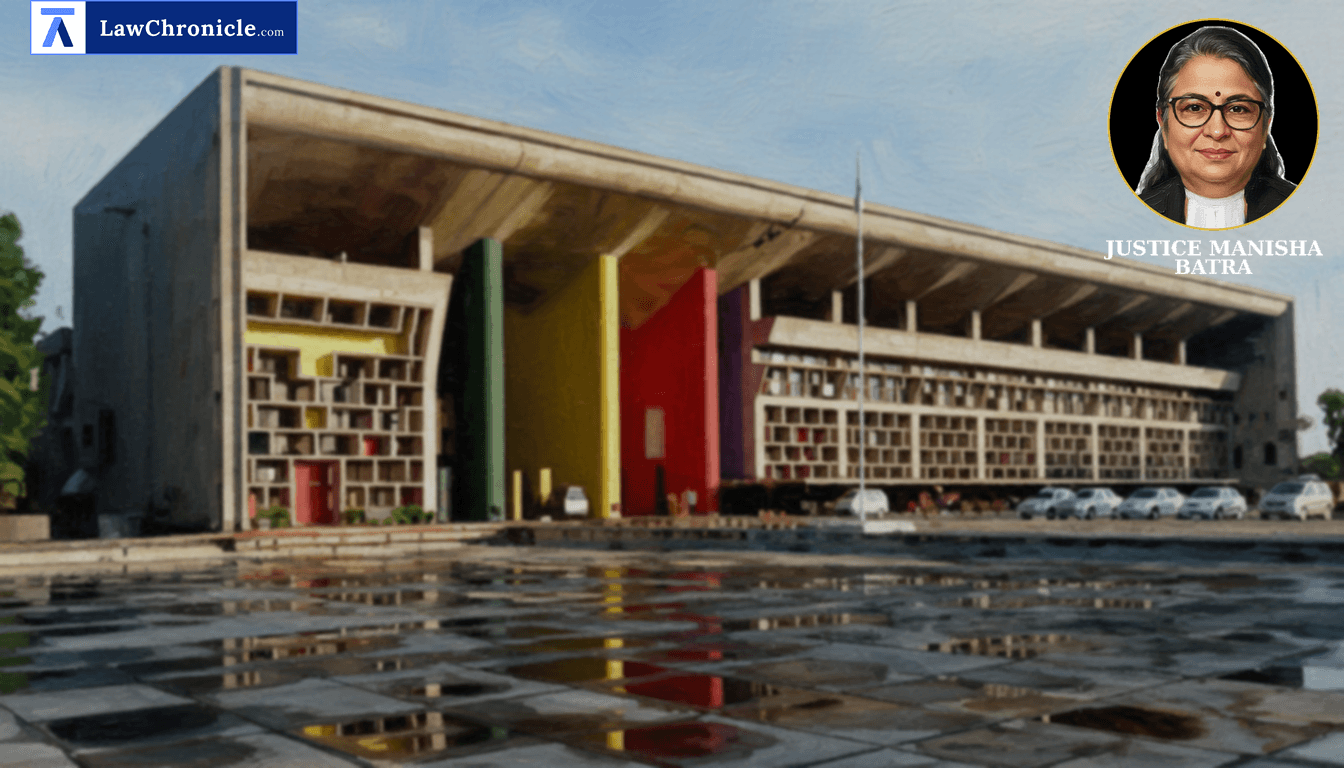
In a crucial clarification on standard of proof at the initial stage of criminal trials, the High Court has held that the absence of fatal or grievous injuries does not automatically preclude the framing of charges for attempt to murder. The Court affirmed that intention and knowledge, rather than the ultimate bodily harm caused, remain the decisive factors when evaluating a prima facie case under attempt to murder provisions.
A single-judge bench comprising Justice Manisha Batra heard a criminal revision petition challenging a trial court order that framed charges for attempt to murder alongside other offences under the IPC against the petitioner.
Key Takeaways
Nature of Injury Not Sole Determinant: The severity or simple nature of an injury cannot be the sole basis to drop charges of attempt to murder at the charge-framing stage.
Intention Inferred From Circumstances: Intention or knowledge under Section 307 of the IPC must be gathered from factors like weapon used, severity of blow, and targeted body part, rather than merely the end result.
Limited Scope At Charge Stage: Trial courts are not required to conduct a detailed appreciation of evidence or assess final conviction probability while framing charges.
Court Observations and Directions
Examining the statutory framework of Section 307 of the IPC, the Court stressed that an attempt to murder requires intention or knowledge coupled with an act towards its execution. The Court observed that victim protection maneuvers, such as raising a hand to block a blow, often alter the point of impact, which does not dilute the assailant's initial intent.
The Court, in its reasoning, observed: "The intention of the accused has to be gathered from the weapon used, the manner of assault, the part of the body targeted, the circumstances in which the occurrence took place and other surrounding circumstances... The fact that the injury was caused on the hand of the injured when she raised it to protect herself, or that the injury was ultimately found to be simple, may be relevant considerations during the course of trial. However, these circumstances, by themselves, are not sufficient to conclude at the stage of framing of charge that Section 307 of IPC is not attracted."
While evaluating precedents, the Court referred to Hari Singh v. Sukhbir Singh and others ( "1988 4 SCC 551": 1988 CaseBase(SC) 429), where the Supreme Court held that intention under Section 307 precedes the act and must be gathered from surrounding circumstances. Similarly, in State of Maharashtra v. Kashirao and others ( "(2003) 10 SCC 434": 2003 CaseBase(SC) 228), the apex court held that inflicting an injury capable of causing death is not mandatory to make out a case. This position was reinforced through Parsuram Pandey and others v. State of Bihar ( "(2004) 13 SCC 189": 2004 CaseBase(SC) 606) and Jage Ram and others v. State of Haryana ( "(2015) 11 SCC 366": 2015 CaseBase(SC) 299), establishing that non-occurrence of intended consequences due to intervening factors does not exonerate the offender from attempt to murder.
Ratio
To frame a charge under Section 307 of the IPC, the Court must primarily examine whether the act was done with the requisite intention or knowledge to cause death, as inferred from the weapon, manner of assault, and surrounding circumstances, irrespective of whether the resulting injury was simple in nature.
Background
The dispute originated from an incident on May 11, 2019, where the petitioner along with co-accused allegedly forced entry into the complainant's residence armed with weapons including a kirpan and gandasas. The attack stemmed from a dispute over a house purchased by the complainant's family from the petitioner. During the assault, the petitioner aimed a kirpan blow at the victim, who raised her right hand to defend herself, causing the blow to land on her hand.
Following investigation, police filed a charge-sheet under Section 173 of the Cr.P.C.. Statements of witnesses were recorded under Section 161 of the Cr.P.C., and the trial court framed charges under Sections 307, 324, 452, 427, 506, and 148 of the IPC on February 6, 2020. The petitioner moved the High Court seeking to quash the charge under Section 307, arguing that the medical examination declared the injuries simple and non-vital.
Rejecting the petitioner's contentions, the High Court held that detailed evidentiary appreciation is reserved for trial and dismissed the revision petition.
Case Details:
Case No.: CRR No. 178 of 2021 (O&M)
Case Title: Kamaljit Singh v. State of Punjab
Appearances:
For the Petitioner(s): Mr. Digvijay Manchanda, Advocate
For the Respondent(s): Ms. Ruchika Sabherwal, Senior DAG, Punjab; Mr. Dinesh Nagar, Advocate for the complainant
Source: 2026 CaseBase(PNH) 9101
Similar Articles
 Breaking News


