


Specific Relief Denied As Plaintiff Lacks Funds For Sale Consideration: Kerala HC
 Copy Link
 Share
 Save
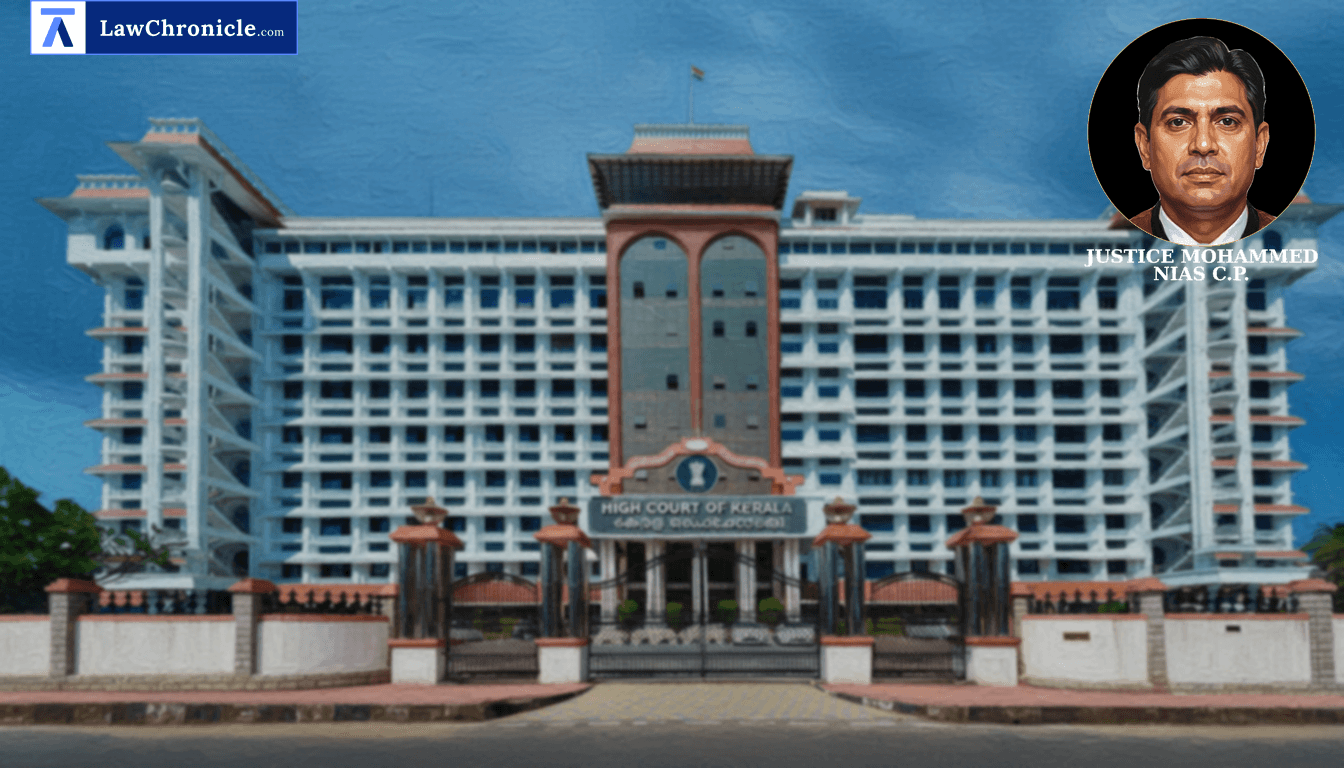
The Kerala High Court has affirmed that a decree for specific performance cannot be granted when the plaintiff fails to prove financial readiness to pay the balance consideration, emphasizing that refund of advance money requires a specific prayer under the Specific Relief Act, 1963. The Court held that statutory mandates for pleadings cannot be bypassed by general prayers for 'other reliefs' in the plaint.
In a decision delivered by Justice Mohammed Nias C.P., the Court scrutinized an appeal against a Trial Court judgment that had dismissed a suit for specific performance despite finding the sale agreement to be genuine. The Court noted that the plaintiff's inability to demonstrate independent financial capacity at the material time was fatal to the claim.
Requirement of Readiness and Willingness
The Court observed that the plaintiff (PW1) admitted during cross-examination that he did not possess the necessary funds to pay the balance consideration on the stipulated date. He had instead relied on his son, who was not a party to the contract, to provide the funds. The Court found this insufficient to meet the legal threshold for readiness.
The Court, in its reasoning, observed: "In short, there was nothing on record to show that either the plaintiff or his son had money to pay the balance sale consideration. Under such circumstances, there is a clear embargo under Section 16 of the specific relief to grant a decree for specific performance, as the plaintiff is required at all material times to be ready and willing to perform the contract."
Mandatory Prayer for Refund of Advance Money
A significant legal point addressed was whether the Court could order the refund of an advance payment in the absence of a specific prayer. The appellant argued that a refund is a 'lesser relief' and should be granted naturally if the contract is held valid but specific performance is refused. However, the High Court rejected this, pointing to the strict procedural requirements of Section 22 of the Specific Relief Act, 1963.
Regarding the statutory bar, the Court noted: "The non-obstante clause in Section 22(1) of the Specific Relief Act, 1963 grants it an overriding effect, thereby excluding the operation of the Code of Civil Procedure, 1908. This necessarily means that the contention of the learned counsel for the plaintiff that the relief of advance in such circumstances is only a lesser relief and can be granted under the provisions of the Code of Civil Procedure, 1908 cannot be accepted."
Furthermore, the Court relied on the precedent in Suresh K.R. v. R. Poornima to establish that a plaintiff who does not seek an amendment to include a prayer for refund cannot be granted that relief suo motu by the Court.
The Court's Final Decision
The Court has the following directions:
"Resultantly, the judgment and decree in the instant case call for no interference. Accordingly, the appeal will stand dismissed."
Background:
The dispute originated from a sale agreement dated March 1, 2007, where the defendant agreed to sell property at Rs. 21,000 per cent, receiving an advance of Rs. 25,000. The plaintiff initially filed an injunction suit to prevent the defendant from alienating the property, which was later dismissed for non-prosecution. Subsequently, the plaintiff filed O.S.No.134/2007 for specific performance.
The defendant contested the suit, alleging that the agreement was forged and that his signatures were obtained on blank papers as security for a loan. However, the Trial Court, based on witness testimonies, concluded the agreement was genuine. Despite this, it refused specific performance on two grounds: first, the plaintiff’s lack of financial readiness; and second, the comparative hardship to the defendant, who intended to build a house on the land, whereas the plaintiff already owned two houses. The Trial Court also refused the refund of the advance citing Section 22(2) of the Specific Relief Act, 1963. The High Court, in this appeal, found no merit in the appellant's challenges and upheld the Trial Court's findings in their entirety.
Case Details:
Case No.: RFA NO. 587 OF 2009
NeutralCitation: 2026:KER:39804
Case Title: K.V.VARKEY v. BIJU
Appearances:
For the Petitioner(s): SRI.MANOJ P.KUNJACHAN, Advocate
For the Respondent(s): SHRI.DEEPU LAL MOHAN, Advocate
Source: 2026 CaseBase(KER) 330
Similar Articles
 Breaking News


