


State Cannot Penalize Internal Movement of Excavated Earth Within Same Campus: Bombay HC
 Copy Link
 Share
 Save
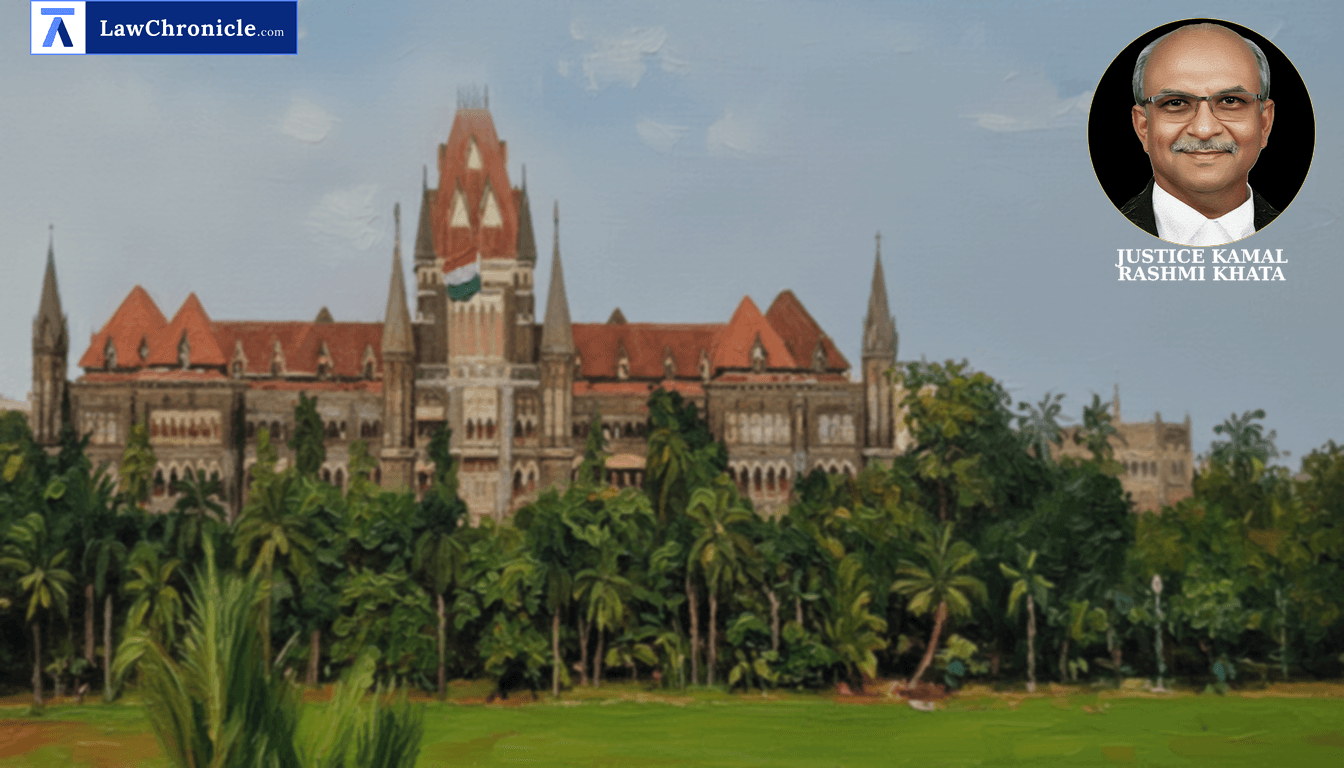
The Bombay High Court has quashed a penalty demand of over ₹54 lakhs against an infrastructure company, ruling that the internal movement of excavated earth within the same campus does not constitute unauthorized mineral extraction. Justice Kamal Khata, while presiding over the matter, emphasized that governmental authorities must act as model litigants and avoid adversarial approaches that burden the judiciary with avoidable litigation.
In a significant ruling concerning the interpretation of Section 48(7) of the Maharashtra Land Revenue Code, 1966, the Court set aside orders passed by the Sub-Divisional Officer, Collector, and Additional Commissioner. The Bench found that the authorities had mechanically applied penal provisions without verifying that the excavated material remained within the IIT Powai campus for legitimate leveling work. The Court, in its reasoning, observed: "The excavated material was not removed from or deposited outside the IIT campus. The authorities have neither established that the Petitioner acted without lawful authority nor demonstrated how the mere movement of the material between two survey numbers within the same campus attracted the ingredients of section 48(7)."
Court's Rationale on Mineral Extraction and Penal Liability
Justice Khata noted that the authorities failed to appreciate that the entire land was allotted to and possessed by a single entity. The Court relied on the precedent set in Promoters and Builders Association of Pune Vs. State of Maharashtra, where the Supreme Court held that the mere excavation of ordinary earth does not automatically attract Section 48(7) of the Maharashtra Land Revenue Code, 1966, as liability depends on the commercial exploitation of the material. The Court further noted that a Notification dated 11th May 2015 issued under the Mines and Minerals (Development and Regulation) Act, 1957 explicitly exempts royalty on earth utilized for leveling on the same plot.
Critiquing the state's conduct, the Court remarked: "The State, unlike a private litigant, must endeavour to discourage avoidable litigation, resolve disputes at the threshold and, wherever possible, prevent disputes from arising. It must act consistent with its constitutional obligation to uphold the law as declared by the Courts."
Failure of Administrative Accountability
The Court observed that the initial Show Cause Notice was issued under a non-existent enactment referred to as the 'Mumbai Minor Minerals Act, 1955', which reflected a total non-application of mind. Referring to Tata Telecommunications vs State of Maharashtra, the Court stressed that revenue officers are expected to know the law and act in conformity with binding judicial decisions. Drawing from Dilbagh Rai Jarry v. Union of India ( "(1974) 3 SCC 554": 1973 CaseBase(SC) 84), State of Punjab v. Geeta Iron & Brass Works Ltd., Madras Port Trust v. Hymanshu International, and Urban Improvement Trust, Bikaner v. Mohan Lal, the Bench reiterated that the State should be a model litigant and not defeat lawful entitlements through technical pleas.
The Court has the following directions:
"The amount [costs] shall be paid to the Petitioner within four weeks of the uploading of this Judgment on the website of the Bombay High Court. It shall be open to the State to identify the officers responsible for the initiation and continuation of this litigation and to consider recovering the amount, wholly or partly, from such officers who were responsible for this litigation over the years. The State must necessarily take appropriate remedial measures to ensure that all concerned authorities exercising statutory powers are made aware of the local laws and binding judicial decisions. The State must frame appropriate guidelines to enable such authorities to obtain legal advice whenever a genuine doubt arises concerning the interpretation or application of a statutory provision. The Deputy Secretary, Revenue and Forest Department of the State shall, within eight weeks from the date on which this order is uploaded on the website of the Bombay High Court, file an affidavit setting out the measures already adopted or proposed to be adopted to prevent the recurrence of such litigation."
Background:
The dispute arose when IVRCL Limited was awarded a contract by the Department of Atomic Energy for construction at IIT Powai. The contract specifically required disposing of surplus excavated material within the IIT campus. Despite following these terms, the Sub-Divisional Officer issued a notice alleging unauthorized excavation of 3,800 brass of minor minerals because the material was moved across different survey numbers. Following the principles in AIGP Developers Pune Private Limited Vs. State of Maharashtra and CEAT Speciality Tyres Ltd. Vs. State of Maharashtra & Ors., the Court found the penalty unsustainable as the material was redeployed for development on the same site. The Court allowed the petition and imposed costs of ₹5 lakhs on the State for ten years of avoidable litigation, citing the recent reiteration in Yuvraj Vasantrao Pandhare v. State of Maharashtra regarding the need for a responsible state litigation policy.
Case Details:
Case No.: WRIT PETITION NO.1830 OF 2015
Case Title: IVRCL Limited vs State of Maharashtra & Ors.
Appearances:
For the Petitioner(s): Ms. Shilpa Kapil a/w Adv. Shruti Bhatt
For the Respondent(s): Ms. Jyoti Chavan, Addl. G.P.
Source: 2026 CaseBase(BOM) 247
Similar Articles

 Breaking News


