


Statement of Account Without Corroborative Evidence Fails to Fasten Liability: Delhi HC
 Copy Link
 Share
 Save
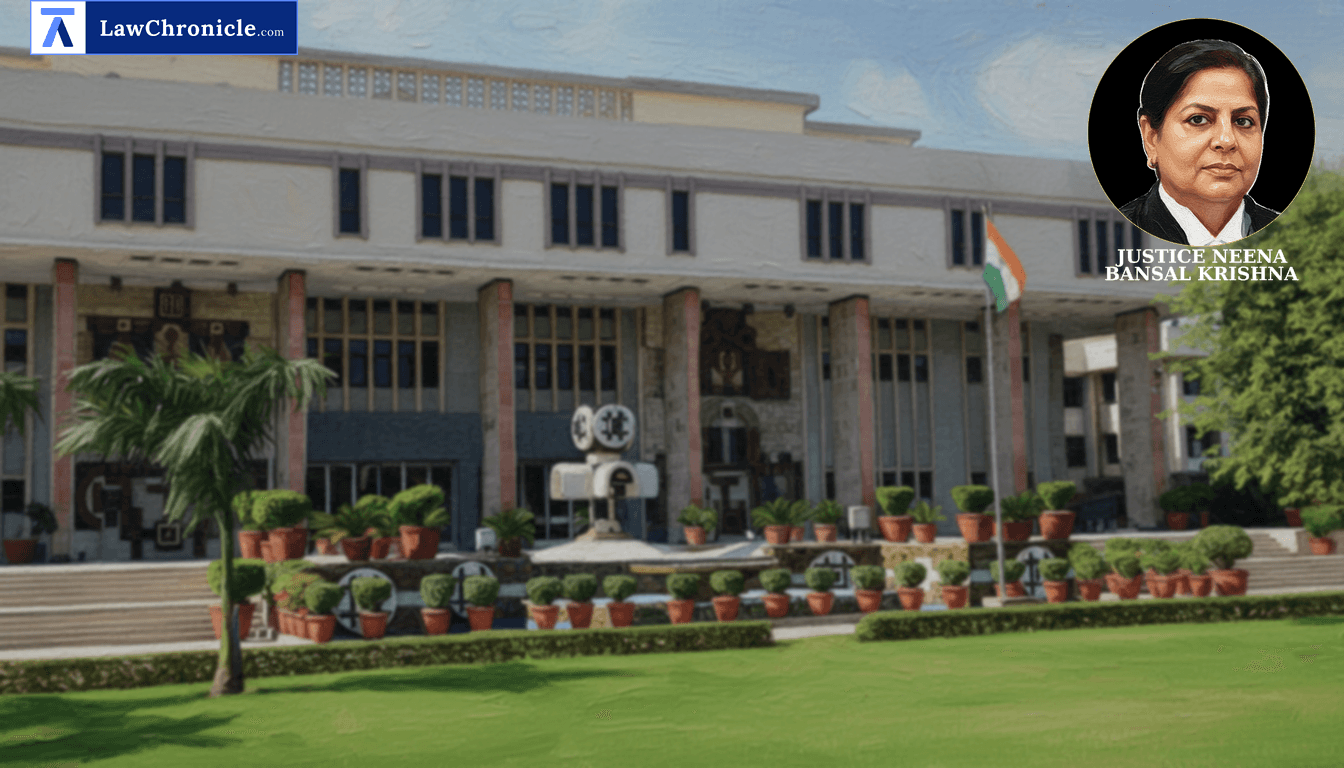
The Delhi High Court has held that a plaintiff cannot be granted a decree for recovery of money based solely on entries in a statement of account without producing up-to-date records or independent evidence of delivery.
Justice Neena Bansal Krishna, while hearing a Regular First Appeal filed under Section 96 of the Code of Civil Procedure, 1908, upheld the dismissal of a suit for recovery, observing that the plaintiff had failed to provide a complete picture of payments made by the defendant. The court scrutinized the evidentiary value of account books under the Indian Evidence Act, 1872 and the Negotiable Instruments Act, 1881 in commercial disputes.
Establishing Delivery of Goods and Evidentiary Standards
The court noted that while the trial court had doubted the delivery of goods, the defendant had not specifically denied receiving the materials. However, the High Court emphasized that the burden of proof rests on the plaintiff to establish the exact outstanding liability. The Court, in its reasoning, observed: "...a person cannot be held liable solely on the basis of entries contained in the statement of account that are maintained in the course of business. In terms of Section 34 of the Indian Evidence Act, 1872, entries made in the books of account are relevant, however, such entries must be duly supported by independent and corroborative evidence establishing the transaction therein."
Precedents on Account Statements and Liability
The Court relied on the principle laid down by the Supreme Court in Chandradhar Goswami and Others v. Gauhati Bank Ltd., which mandates that account entries must be supported by independent evidence. Furthermore, the court referred to the Division Bench decision in Harish Mansukhani v. Ashok Jain ( "2009 (109) DRJ 126 (DB)": 2008 CaseBase(DEL) 1059), which clarified that mere raising of a bill and reflecting it in a statement of account does not constitute good evidence without establishing delivery and contemporaneous grievance of non-payment. The court also noted the dismissal of a similar claim in Devender Bhati v. Chander Kanta by the trial court.
Effect of Settlement Under Negotiable Instruments Act
A critical factor in the court's decision was the previous litigation between the parties. The plaintiff had initiated proceedings under Section 138 of the Negotiable Instruments Act, 1881 following the dishonor of a cheque. These proceedings were settled for a sum of Rs. 1.65 lakhs. The High Court observed that the plaintiff failed to mention in subsequent legal notices that this settlement was only a partial discharge of a larger liability.
The Court has the following directions:
"There is no merit in the present Appeal, which is hereby dismissed. Pending Application(s), if any, are also disposed of."
Background:
The dispute originated when the plaintiff, a trader in electrical goods, filed a suit seeking recovery of Rs. 7,68,227/- against the defendant. The plaintiff alleged that despite several invoices and delivery challans, the defendant had failed to clear the outstanding balance. The defendant contended that all dues were settled during the pendency of a complaint under the Negotiable Instruments Act, 1881, resulting in the payment of Rs. 1,65,000/- via three cheques.
The trial court dismissed the suit, prompting the plaintiff to appeal. The plaintiff argued that the defendant had not specifically denied the statement of account as required under Order VIII Rule 3 of the Code of Civil Procedure, 1908. However, the High Court found that the plaintiff's statement of account was not updated and failed to reflect payments made in 2013, thereby lacking the necessary "preponderance of evidence" to succeed in a civil suit.
Case Details:
Case No.: RFA 117/2020
Case Title: SH. JAGDISH SINGH DAWAR (NOW DECEASED) Through LRs v. MOHAMMAD LAIK
Appearances:
For the Petitioner(s): Mr. T.R. Sandhu, Advocate.
For the Respondent(s): Mr. Avinash Kumar Tyagi, Advocate.
Source: 2026 CaseBase(DEL) 456
Similar Articles
 Breaking News


