


Students Participating In Admission Process Cannot Challenge Rules Later: Bombay HC
 Copy Link
 Share
 Save
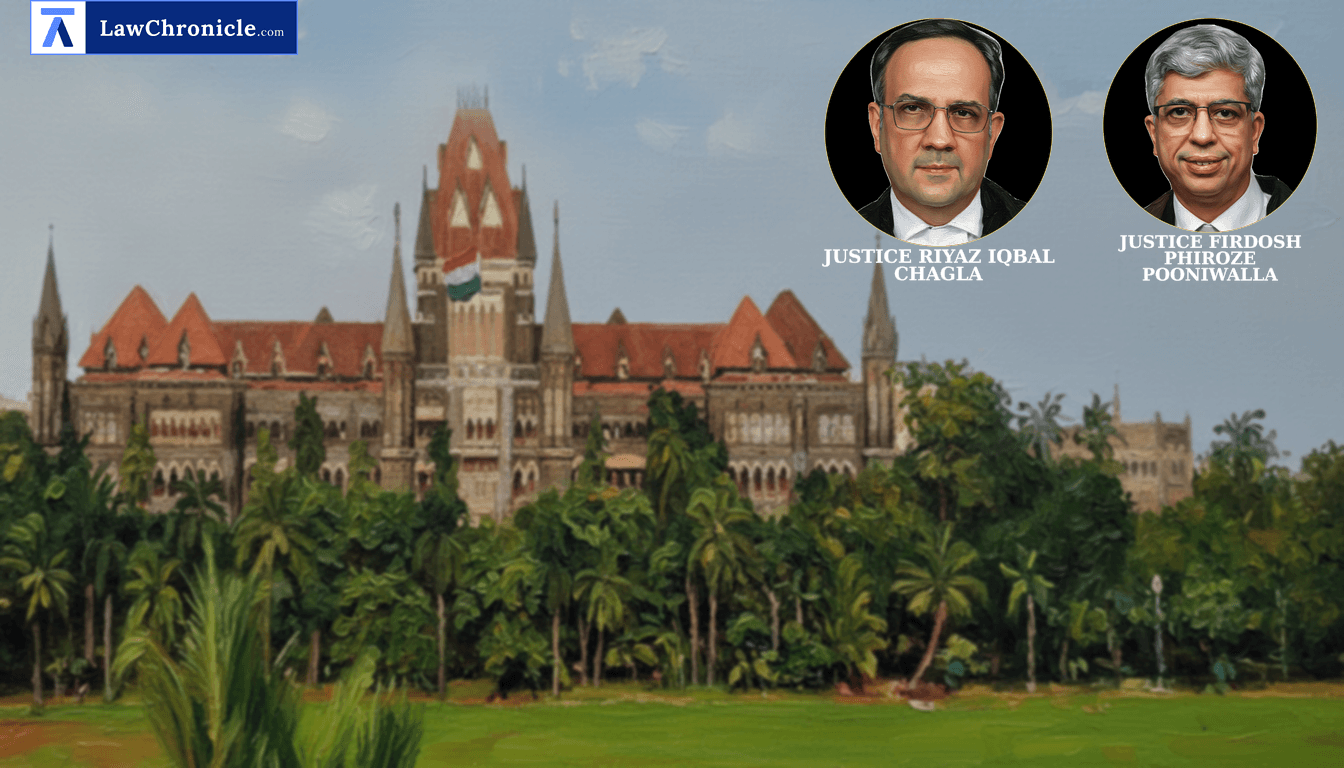
In a significant ruling for medical education governance, the Bombay High Court has declared that candidates participating in the centralized admission process without protest are legally estopped from challenging the seat allocation or quotas defined in the prospectus. The Bench further clarified that the autonomy of medical societies to establish self-financing models remains protected, provided statutory reservation percentages based on local demographics are maintained post-merger of Union Territories.
Following a detailed hearing of a writ petition challenging MBBS seat allocations, a bench of Justice R.I. Chagla and Justice Firdosh P. Pooniwalla delivered the verdict. The Petitioner had moved the court seeking to set aside the allocation of NRI and Management Quotas in the Societies Registration Act, 1860 registered NAMO Medical Education and Research Society, while also demanding a consolidated merit list between Dadra and Nagar Haveli and Daman and Diu.
Key Takeaways
Principle of Estoppel
Once a candidate participates in a selection or admission process under published rules and a prospectus without demur, they cannot challenge the 'rules of the game' upon finding their merit rank insufficient.
Autonomy of Medical Societies
Autonomous societies registered under the Societies Registration Act, 1860 are independent legal entities empowered to formulate admission architecture and fee structures, including self-financing cross-subsidization models.
Preservation of Reservation Post-Merger
Under the Merger of Union Territories Act, 2019, existing reservation percentages for SC/ST/OBC remain in force to address distinct demographic and local needs of the unified territories.
Scope of Section 28 of NMC Act
Prior Central Government approval is mandatory for increasing admission capacity but does not extend to the internal allocation of seats within the sanctioned intake.
Court's Observations on Seat Allocation and Autonomy
The Bombay High Court analyzed the transition of the medical institute into an autonomous body. It noted that the 2026-2027 prospectus was formulated by a society approved by the Union Cabinet, thereby exempting it from certain departmental mandates applicable to direct government departments. The Bench found that the mathematical computation of a 2% SC reservation in Dadra and Nagar Haveli (DNH) correctly yielded exactly one seat, which could not be doubled through rounding off or merging with other territorial pools.
The Bombay High Court particularly estopped the candidate from challenging seat allocation by stating that “The Petitioner, having participated in the Central Admission Counseling Process (‘CAP’) knowing fully well the seat distribution, without demur, it is not open for the Petitioner to now raise a challenge to the seat allocation.” Addressing the statutory requirements for seat increases, the Bombay High Court clarified that Indian Medical Council Act (now National Medical Commission Act) regulates capacity rather than distribution. It held: “This provision applies only to increase in admission capacity in the course of study, and not to the allocation of seats.”
Ratio
A candidate who participates in a centralized admission process with full knowledge of the seat matrix and rules published in the prospectus is precluded by the doctrine of estoppel from challenging those very rules after the process has commenced. Furthermore, statutory reservation quotas based on local demographics are preserved post-merger of territories under Merger of Union Territories Act, 2019 to prevent the dilution of specific community protections.
Background
The dispute arose when the Petitioner, a Scheduled Caste candidate from DNH, challenged the 2026-2027 MBBS prospectus issued by Respondent No. 5. The Petitioner contended that the introduction of a 15% NRI quota and 10% Management Quota was illegal and had reduced the available seats in the general merit pool. It was further argued that DNH and Daman & Diu pools should be combined to increase SC seats.
The Respondents, represented by Dr. Sanjay Jain, argued that the institute was now an autonomous society under the Societies Registration Act, 1860 with a cabinet-approved self-financing model. They relied on Dr. Ashok Sinha v. State of Tripura & Ors ( "(2020) 11 Supreme Court Cases 757": 2019 CaseBase(SC) 4066) to justify the quota system as a recognized cross-subsidization model. The Bombay High Court also distinguished the present case from Ms. Larissa Rohit v. Union Territory of Dadra and Nagar Haveli and Daman and Diu & Ors., noting that the latter involved a constitutional challenge to EWS reservations under Constitution of India, which was not the subject of the current litigation. Ultimately, the Bombay High Court found no merit in the Petitioner's claims as she stood second in the merit list for a category that legally had only one seat allocated.
Case Details:
Case No.: WRIT PETITION NO.12846 OF 2026
Neutral Citation: 2026:BHC-AS:41918-DB
Case Title: Vrutika Vasantbhai Rohit Versus The Union Territory of Dadra and Nagar Haveli & Ors.
Appearances:
For the Petitioner(s): Mr. Sanjiv Sawant with Mr. Malhar Bageshwar i/b. Ms. Rekha Musale
For the Respondent(s): Dr. Sanjay Jain, Mr. Jugal Haria with Mr. Harsh Dedhia for Respondent Nos. 2 and 5; Mr. Kunjan Makwana with Mr. Ganesh Gole for Respondent No. 3 (NMC)
Source: 2026 CaseBase(BOM) 6532
Similar Articles
 Breaking News


