


Supreme Court Allows Divorce on Ground of Irretrievable Breakdown and Grants Limited Visitation to Mother
 Copy Link
 Share
 Save
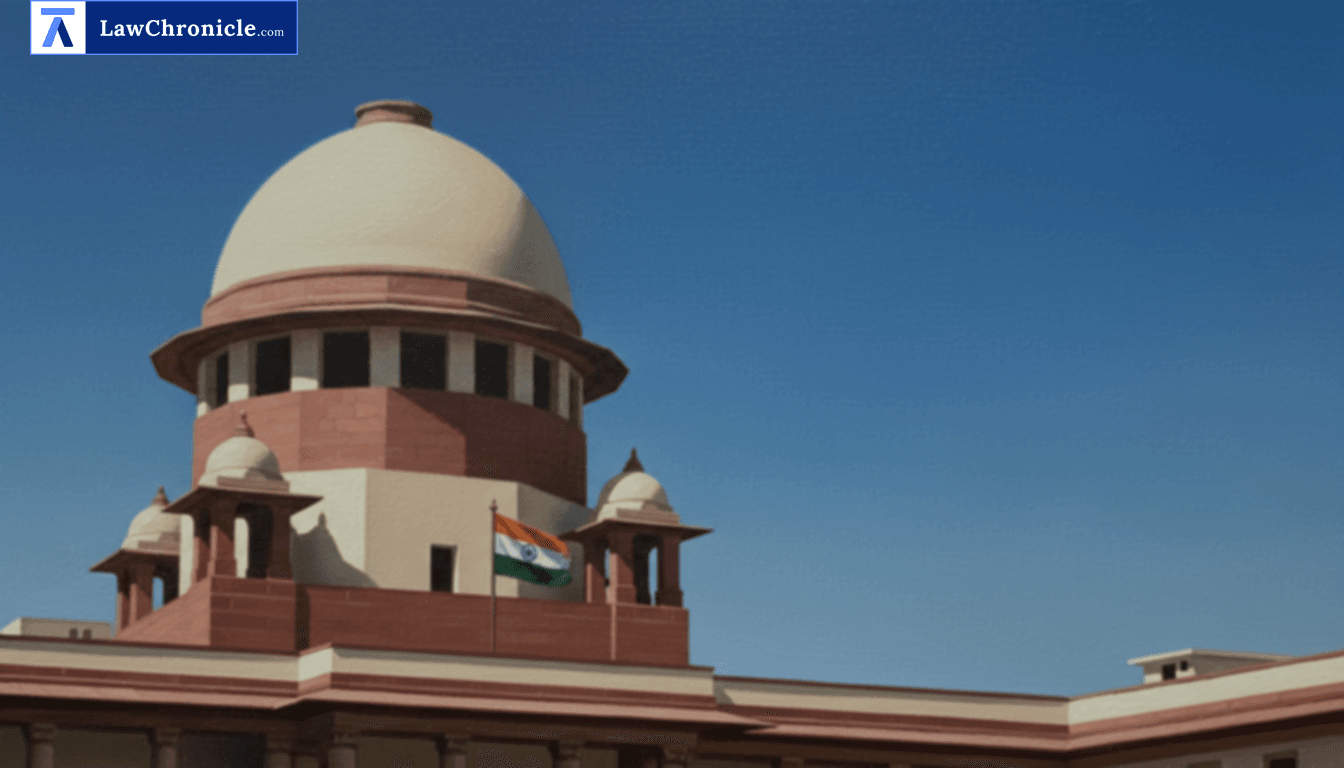
A bench of Justices Vikram Nath, Sanjay Karol and Sandeep Mehta heard the appeal by the husband challenging concurrent findings of the Family Court, Ranchi and the Jharkhand High Court that had dismissed his petition for dissolution of marriage under Sections 13(1)(ia) and (iii) of the Hindu Marriage Act. The appeal concerned whether the marriage, solemnized in November 2012, had irretrievably broken down and whether the Court should exercise its powers under Article 142 of the Constitution to dissolve it.
The Court allowed the appeal and dissolved the marriage under Article 142 on the ground of irretrievable breakdown, while granting the respondent limited visitation rights. The judges observed that the parties had lived separate lives for over a decade and that “neither party has shown any willingness or inclination to restore the marital bond.” The Court, in its reasoning, observed: “From the factual matrix before us, it is evident that the marriage has completely and irrevocably broken down. Multiple attempts at reconciliation through mediation have failed. Neither party has shown any willingness or inclination to restore the marital bond. The parties have lived separate lives for over a decade, and there is a complete absence of marital ties. In our considered view, continuing such a marriage would only perpetuate hardship and serve no useful purpose. This is a fit case for exercise of this Court’s jurisdiction under Article 142 of the Constitution of India to do complete justice and dissolve the marriage on the ground of irretrievable breakdown.” The Court further directed that “the respondent shall be entitled to visitation rights with her daughter on two days each month,” to be mutually fixed, clarified that all reasonable expenses for visits would be borne by the appellant, and emphasised that this arrangement would not constitute a determination of custody.
Background The marriage between the parties was solemnized on 24 November 2012 and produced two children. The appellant filed a petition for divorce on 6 March 2014 under Sections 13(1)(ia) and (iii) HMA. The respondent lodged a criminal complaint in 2014 under Section 498A IPC and Sections 3 and 4 of the Dowry Prohibition Act alleging mental and physical cruelty; the second child, born on 30 November 2014, was diagnosed with cerebral palsy and later died after a few years. The Family Court dismissed the appellant’s divorce petition by order dated 2 July 2019; the High Court dismissed the first appeal on 28 June 2023, noting that cohabitation until March 2014 undermined earlier allegations of cruelty.
On appeal to the Supreme Court, both parties and their counsel were heard; the appellant sought dissolution on the ground of irretrievable breakdown and relied on prolonged separation, hostility and mutual allegations. The respondent explained her absence from custody litigation by reference to the special care demands of the second child and her employment as an Agricultural Coordinator. The Court found that reconciliation efforts had failed, that the parties had been living apart for over ten years, and that continuation of the marriage served no useful purpose. Exercising its equitable jurisdiction under Article 142, the Court dissolved the marriage, granted limited visitation to the mother (two days per month at the appellant’s residence, with expenses to be borne by the appellant), and left open adjudication on custody to appropriate fora. The respondent had not claimed alimony; pending applications were disposed of.
Case No.: Civil Appeal No. 14276 of 2024 (2025 INSC 543) Case Title: Ramanuj Kumar v. Priyanka Appearances: For the Petitioner(s): Advocates not indicated in the judgment For the Respondent(s): Advocates not indicated in the judgment
Similar Articles
 Breaking News


