


Supreme Court Holds Domicile-Based Reservation Unconstitutional For PG Medical Seats; Upholds Institutional Preference
 Copy Link
 Share
 Save
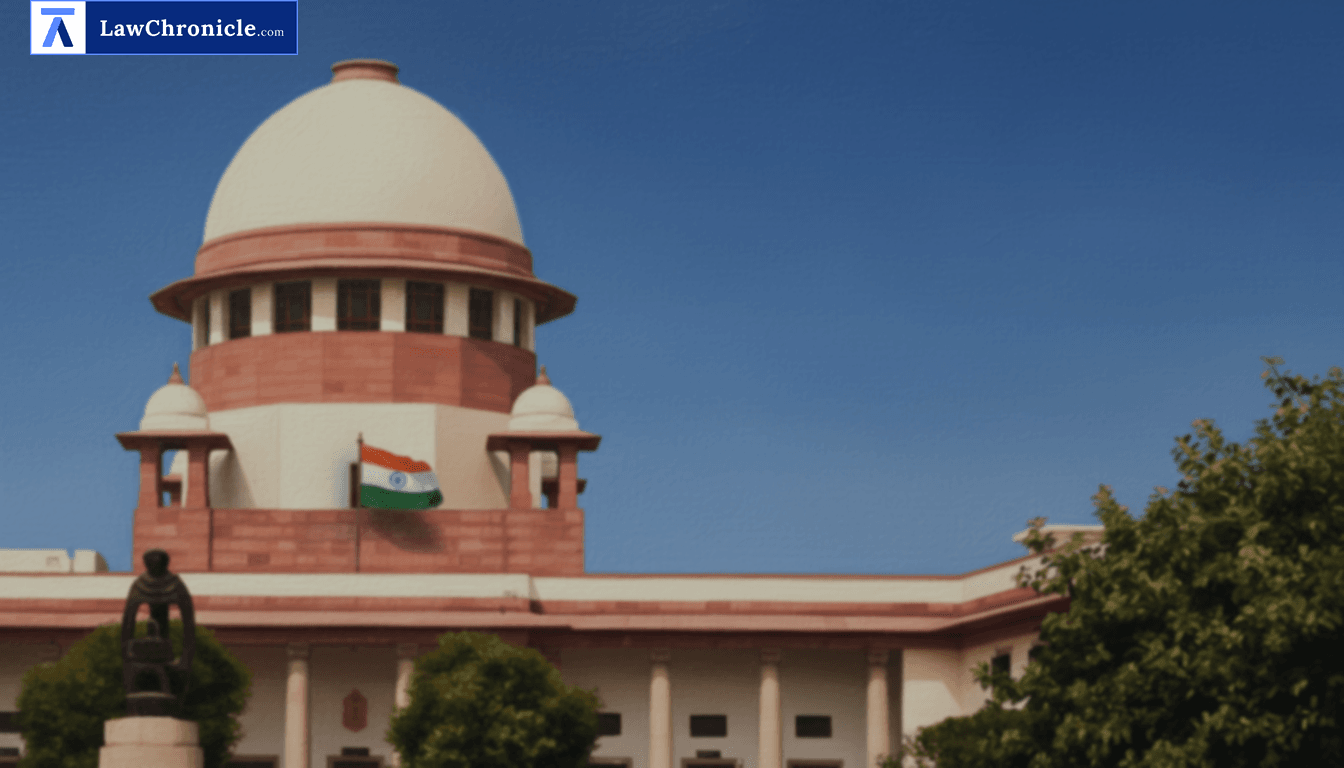
A bench of Justices Hrishikesh Roy, Sudhanshu Dhulia and S.V.N. Bhatti heard appeals and a writ petition challenging residence/domicile-based reservation in postgraduate medical admissions and the validity of a prospectus clause of the sole Government Medical College & Hospital, Chandigarh that allocated State Quota seats on that basis.
The Court held that domicile or residence‑based reservation in admission to postgraduate (PG) medical courses within the State/UT quota was constitutionally impermissible and violative of Article 14. It affirmed that a limited number of institutional preference seats remained valid but directed that State‑quota seats, other than permissible institutional preference seats, must be filled strictly on the basis of merit as reflected in the NEET rank. The Court followed and applied the principles in Jagadish Saran, Dr. Pradeep Jain and Saurabh Chaudri, concluding that “residence‑based reservation is not permissible in PG medical courses.” The Court, in its reasoning, observed: “Now, the primary imperative of Article 14 is equal opportunity for all across the nation for education and advancement ... Anyone anywhere, humble or high, agrestic or urban, man or woman, whatever be his language or religion, place of birth or residence, is entitled to be afforded equal chance for admission to any secular educational course for cultural growth, training facility, speciality or employment. It would run counter to the basic principle of equality before the law and equal protection of the law if a citizen by reason of his residence in State A ... should have opportunity for education or advancement which is denied to another citizen because he happens to be resident in State B.”
Background
The dispute arose after the Government Medical College & Hospital, Chandigarh issued a prospectus for the 2019 PG admission cycle allocating 64 State‑quota seats into a 32‑seat Institutional Preference Pool (for candidates who passed MBBS from that college) and a 32‑seat UT Chandigarh Pool reserved for candidates fulfilling broad residency/domicile criteria (including five years’ study in Chandigarh, parents’ five‑year residence, or parental ownership of immovable property for five years). Petitions in the Punjab & Haryana High Court challenged the UT‑pool provisions as discriminatory; the High Court struck down the domiciliary clauses 2B(i)–(iii) and held affected admissions to be invalid, directing re‑allocation by NEET merit. This Court granted interim relief on 9 May 2019 permitting the filing of SLPs and stayed the High Court order subject to outcome of the appeals, allowing impleadment of admitted students.
The Supreme Court reviewed precedent, emphasising the distinction between permissible institutional preference and impermissible residence‑based reservation at the PG level. It reiterated that “domicile” in Indian constitutional law denoted only domicile in the territory of India and that provincial or State domicile was a misconceived concept: “Now it is clear on a reading of the Constitution that it recognises only one domicile, namely, domicile in India.” The Court explained that while limited residence‑linked preferences could be justified for undergraduate (MBBS) admissions on local‑needs and infrastructural‑investment grounds, the exigencies of postgraduate and specialist training required strict merit selection to preserve national equality and excellence. The Court therefore upheld the High Court’s finding that the UT Chandigarh pool, as formulated, was unconstitutional, while maintaining that the 32 institutional preference seats were valid. The Court protected students already admitted and undergoing PG courses (including by reference to the interim order), and disposed of the connected appeals and writ petition accordingly.
Case Details: Case No.: CIVIL APPEAL NO. 9289 OF 2019 (with CIVIL APPEAL NOS. 9290 & 9291 OF 2019 and WRIT PETITION (C) NO. 1183/2020) Case Title: Dr. Tanvi Behl v. Shrey Goel & Ors. Appearances: For the Petitioner(s): [Not specified in the judgment text] For the Respondent(s): [Not specified in the judgment text]
Similar Articles


 Breaking News


