


Residence, Not Origin, Determines ST Reservation in Union Territories: Bombay High Court
 Copy Link
 Share
 Save
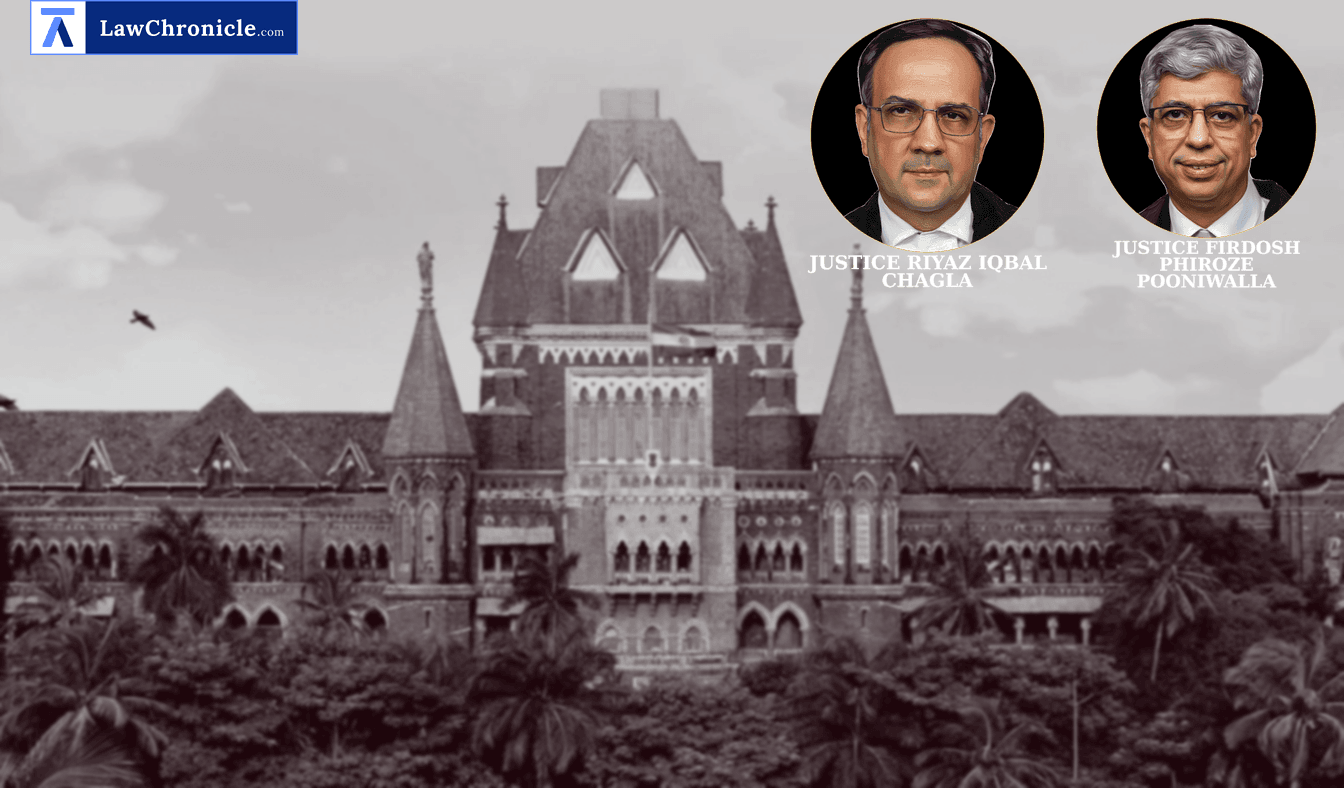
The Bombay High Court has ruled that reservation benefits for Scheduled Tribes in Union Territories must be extended based on residence rather than origin, effectively dismantling the 'migrant' barrier for long-term inhabitants. The Bench declared that the state cannot arbitrarily categorize permanent residents as migrants to deny them meritorious medical admissions, holding that such actions violate the fundamental mandate of Constitution of India, 1950.
Following a challenge against the unilateral alteration of a student's admission status, a bench comprising Justice R.I. Chagla and Justice Firdosh P. Pooniwalla set aside the Union Territory administration's decision to treat a permanent resident as an 'unreserved' candidate. The Bombay High Court emphasized that the Presidential Notification for Dadra and Nagar Haveli does not require residency to date back to 1962, but rather focuses on the candidate's established status as a resident of the territory.
Key Takeaways
Residence Over Origin Doctrine
In Union Territories, ST reservation eligibility is determined by the candidate's residence in the territory, not their state of origin or ancestral roots.
Curbing Executive Arbitrariness
Educational institutions and UT administrations cannot unilaterally alter a candidate's category from 'ST' to 'UR' if they possess valid domicile and caste certificates issued by the local authority.
Protection of Meritorious Students
Meritorious students who are otherwise eligible cannot be denied seats through the misapplication of 'migrant' status, ensuring compliance with [Constitution of India, 1950.
Interpretation of Presidential Orders
Presidents' Orders for UTs are to be interpreted as extending benefits to those listed tribes who are residents, without an implied 'cut-off' date based on the order's initial notification date.
Resident Status vs. Migrant Status
The Bombay High Court noted that the Petitioner No. 2 was born in the Union Territory and had completed his entire education there. Despite possessing a valid Domicile Certificate and a Caste Certificate issued by the Mamlatdar, his status was changed to 'Unreserved' on the grounds that his ancestors migrated from Gujarat. The Bench found this distinction legally unsustainable and observed that "The Presidential Notification issued for the Union Territory of Dadra and Nagar Haveli extends the benefit of reservation to the Scheduled Tribes mentioned therein on the basis of residence and not on the basis of origin. This would be irrespective of whether the case is of public employment or education... the residence of the candidate in the said Union Territory, and not the permanent abode of the persons/parents on the date of Notification of the said Presidential Notification/Order, determines extending reservation to such candidate."
Addressing the argument that the term 'resident' should strictly mean those present on the date of the 1962 Order, the Bombay High Court relied on Director Transport Department, UT Administration of Dadra & Nagar Haveli, Silvassa & Ors. v. Abhinav Dipakbhai Patel ( "(2019) 6 SCC 434": 2019 CaseBase(SC) 3817) to clarify that residency is the determinative factor for UTs. The Bench further noted that denial of admission to a meritorious student “smacks of nothing but arbitrariness, unreasonableness, and unfairness in State action.”
Ratio
In the context of Union Territories, the Presidential Notification for Scheduled Tribes extends reservation benefits based on the candidate's status as a 'resident' of that Union Territory, rather than their 'origin'. Any policy or executive action that treats a long-term resident as a 'migrant' to deny reservation benefits is arbitrary and violates Constitution of India, 1950. The term 'resident' in these Presidential Orders is not restricted to those residing at the time of the initial notification.
Background
The petitioners, a constable and his son, had been residing in the Union Territory of Dadra and Nagar Haveli since 1996. Petitioner No. 2 was born in the UT in 2008 and obtained his education there. After scoring 400 marks in the NEET (UG) 2026, he applied for an MBBS seat under the ST category in Dipak Kumar Jagubhai Patel & Anr. v. Union of India & Ors.. However, the college altered his status from ST to Unreserved (UR), labeling him a 'migrant' because his ancestors belonged to the Dhodia tribe in Gujarat.
The Respondents argued that under Article 341(1) of the Constitution of India and Article 342(1) of the Constitution of India, reservation is state-specific and that migrants cannot carry their status to another territory. They also cited a policy suggesting that only those resident before the 1962 Order were eligible. The Bombay High Court rejected these arguments, citing precedents like Union Territory of Dadra and Nagar Haveli and Daman and Diu & Ors. v. Hemant Hiralal Chudasama, Vishwa Chandubhai Patel and Others versus Union of India and Others, and Durgesh Kumar Lalubhai Patel and Others versus Union of India and Others, which established that for UTs, the 'residency' test prevails over the 'origin' test. The Bench concluded that the petitioner, as a permanent resident, was entitled to the ST seat.
Case Details:
Case No.: WRIT PETITION NO.12215 OF 2026
Neutral Citation: 2026:BHC-AS:42155-DB
Case Title: Shaileshbhai Patel & Anr. Versus Union of India & Ors.
Appearances:
For the Petitioner(s): Mr. Rahul Walia a/w Mr. Puneet Pathak, Ms. Asmita Pendharkar
For the Respondent(s): Dr. Sanjay Jain a/w Mr. Harsh Dedhia for Respondent No. 4
Source: 2026 CaseBase(BOM) 6539
Similar Articles
 Breaking News


