Supreme Court Holds Sale Agreement Sham and Denies Specific Performance to Plaintiff with Unclean Hands
 Copy Link
 Share
 Save
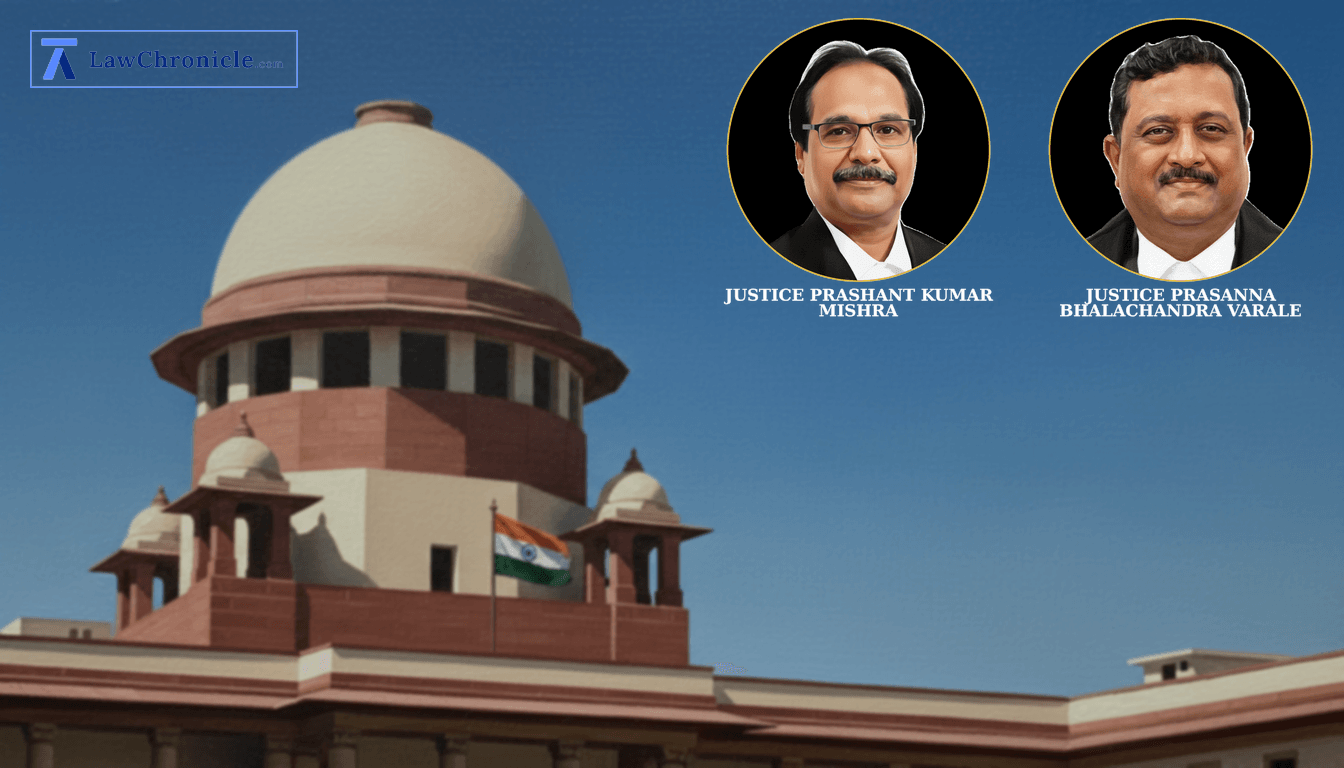
A bench of Justices Prashant Kumar Mishra and Prasanna B. Varale heard Civil Appeal No. 3255 of 2026 arising from a challenge to the High Court’s order which had set aside a trial court decree granting specific performance of an agreement of sale dated 4.6.2002. The appeal was filed by the purchaser who sought a decree for specific performance against the defendants/respondents who contested the transaction as a sham security for a loan.
The Court dismissed the appeal and upheld the High Court’s finding that the registered agreement of sale was "a sham and nominal document" executed as security for an advance and therefore not enforceable by a decree of specific performance. The judges recorded that the surrounding circumstances and contemporaneous documents probabilised the defence raised by the respondents and that equity required denial of relief where material facts were withheld. The Court, in its reasoning, observed: "In a suit for specific performance, the conduct of the parties is significant as it assists the Court in evaluating the evidence to find out the bona fides of the parties at the time of execution of the agreement. Even a slight doubt in the mind of the Court that the plaintiff was not acting bonafidely and that the material facts, having bearing on the agreement, have been withheld in the agreement itself and from the Court also, the equitable and discretionary relief has to be denied. A plaintiff approaching the Court with uncleaned hands, like in the present case—the plaintiff having withheld the document i.e., MoU (Exhibit B-2), as the same was nowhere mentioned in the plaint, the present was a fit case for denial of relief of specific performance and the High Court has rightly allowed the appeal preferred by the respondent(s)/defendant(s) to set aside the judgment and decree passed by the Trial Court."
Background
The dispute arose from a registered sale agreement dated 4 June 2002 relating to a house built on Plot No. 1 (Survey No. 1) at Medchal, Ranga Reddy District, for a total consideration of Rs.13,00,000, of which Rs.6,00,000 was advanced and the balance Rs.7,00,000 was to be paid at execution of the sale deed within 11 months. The purchaser (plaintiff) pleaded readiness and willingness to pay the balance and served a legal notice dated 25.4.2003; when the defendants did not execute the sale deed, the plaintiff instituted the suit for specific performance. The defendants contended from the outset that the transaction was in truth a loan of Rs.6,00,000 secured by a sham sale agreement and that a contemporaneous Memorandum of Understanding (MoU) dated 4.6.2002 recorded the parties’ true understanding: repayment of the loan within 12 months or, failing that, transfer of the property at market value, with the plaintiff expressly undertaking not to assert rights in the interim.
At trial the plaintiff examined himself and produced the registered agreement (Exhibit A‑1), a no-objection letter from the defendants’ sons (Exhibit A‑2), the legal notice (Exhibit A‑3) and a bank statement (Exhibit A‑7) said to show funds. The defendants produced the MoU (Exhibit B‑2) and a photocopy of a receipt for Rs.1,00,000 (Exhibit B‑1); the receipt was held inadmissible. The Trial Court granted specific performance on the ground that the agreement was registered and the plaintiff had demonstrated readiness and willingness. On appeal the High Court set aside the Trial Court’s decree, accepting the defence that the sale agreement was a sham.
The Supreme Court examined the contemporaneous documents and circumstances: the MoU and the no-objection letter were dated the same day, bore consecutive document numbers and were purchased from the same stamp vendor, with the same witnesses—facts the Court said "probablise[d] the defence" that the sale agreement was not a genuine sale. The Court emphasised that in suits for specific performance the parties’ conduct was material to assessing bonafides and that even a slight doubt arising from withheld material facts mandated denial of discretionary equitable relief. The appeal failed and was dismissed, leaving the High Court’s order setting aside the Trial Court’s decree intact. No interim directions were recorded.
Case Details:
Case No.: Civil Appeal No. 3255 of 2026
NeutralCitation: 2026 INSC 214
Case Title: MUDDAM RAJU YADAV v. B. RAJA SHANKER (D) THROUGH LRS. & ORS.
Source: 2026 CaseBase(SC) 188
Similar Articles
 Breaking News