


Supreme Court Modifies Life Without Remission to 20 Years in Kidnap‑Rape‑Murder Case
 Copy Link
 Share
 Save
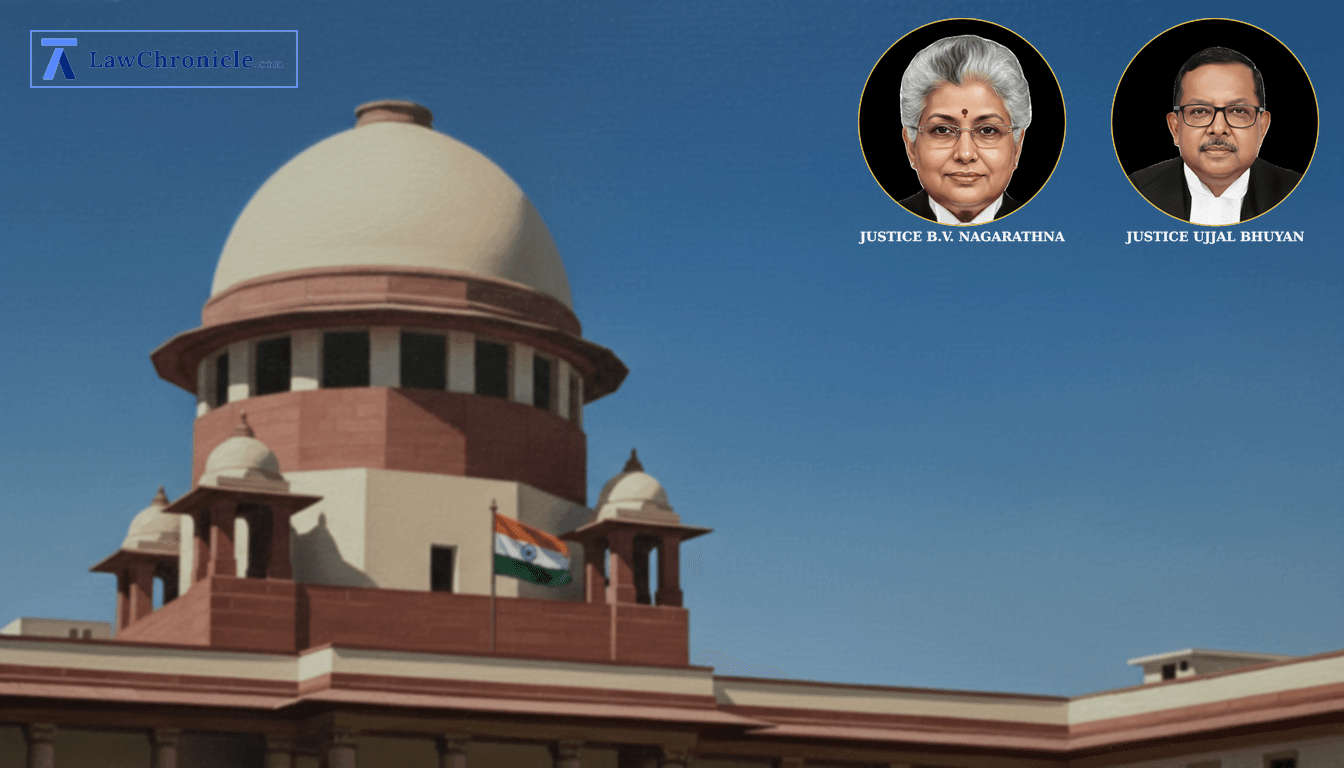
A bench of Justice B.V. Nagarathna and Justice Ujjal Bhuyan heard an appeal by two convicts challenging the Calcutta High Court’s order which had commuted their death sentences to life imprisonment “without the possibility of remission till the end of their natural life.” The appeal arose out of SLP (Criminal) No. 20547 of 2025 and concerned only the quantum and nature of the sentence imposed on the appellants.
The Court allowed the appeal in part and modified the sentence. It observed that, having considered the arguments and the nature of the offence, “interest of justice would be served by modifying the sentence imposed on the appellants herein to life imprisonment, i.e., for a period of twenty years without remission.” The Court, in its reasoning, observed: “We have considered the arguments advanced at the Bar. We have also noted the judgments of this Court in various situations and having regard to the nature of crime, we find that in the instant case, interest of justice would be served by modifying the sentence imposed on the appellants herein to life imprisonment, i.e., for a period of twenty years without remission.
The Appeal is allowed in part in the aforesaid terms.
Pending application (s) shall stand disposed of.”
Background
The dispute arose from the abduction, sexual assault and murder of a young victim in December 2014. On 13.12.2014 the appellants allegedly contacted the victim’s father demanding ransom; the victim’s body was recovered from the bank of the river Ganga after arrests on 14.12.2014. A chargesheet followed under Sections 363, 364A, 376(2)(i), 302 and 201 IPC read with Section 6 of the Protection of Children from Sexual Offences Act, 2012, with charges framed for common intention under Section 34 IPC. The Sessions Court convicted the appellants on 22.10.2020 and sentenced them to death.
The Division Bench of the Calcutta High Court thereafter commuted the death sentence to life imprisonment but expressly ordered that life imprisonment “be without the possibility of remission till the end of their natural life.” As recorded in the High Court’s paragraph 105: “In view of the State having failed to place any material to establish that the appellants cannot be reformed and are beyond scope of rehabilitation, the award of death penalty is commuted to one of life imprisonment. Keeping in view the brutality of the offence committed, it would be appropriate that, the appellants be sentenced to life imprisonment without the possibility of remission till the end of their natural life.”
The appellants, who were 22 and 19 years old respectively at the time of the offence, challenged the High Court’s order insofar as it removed any possibility of remission and imposed life imprisonment until natural death. They relied on this Court’s precedents addressing the scope of life imprisonment and remission, including Union of India v. V. Sriharan (Murugan) (2016) and a more recent authority cited from 2025, contending that a sentence that both converts death to life and removes statutory remission produced a double hardship and denied the prospect of reform and reintegration. The State defended the High Court’s view that the brutality of the offence warranted exclusion of remission.
Having considered submissions and the legal authorities, the Supreme Court concluded that modification to a determinate term served the interest of justice in the circumstances and directed that the sentence be treated as life imprisonment for twenty years without remission. The appeal was allowed in part and pending applications were disposed of.
Case Details: NeutralCitation: 2026 INSC 184 Case Title: Gourab Mondal @ Shanu & Another v. State of West Bengal
Similar Articles
 Breaking News


