


Supreme Court Refers Bharat Drilling Precedent to Larger Bench, Emphasises Party Autonomy in Arbitration Claims
 Copy Link
 Share
 Save
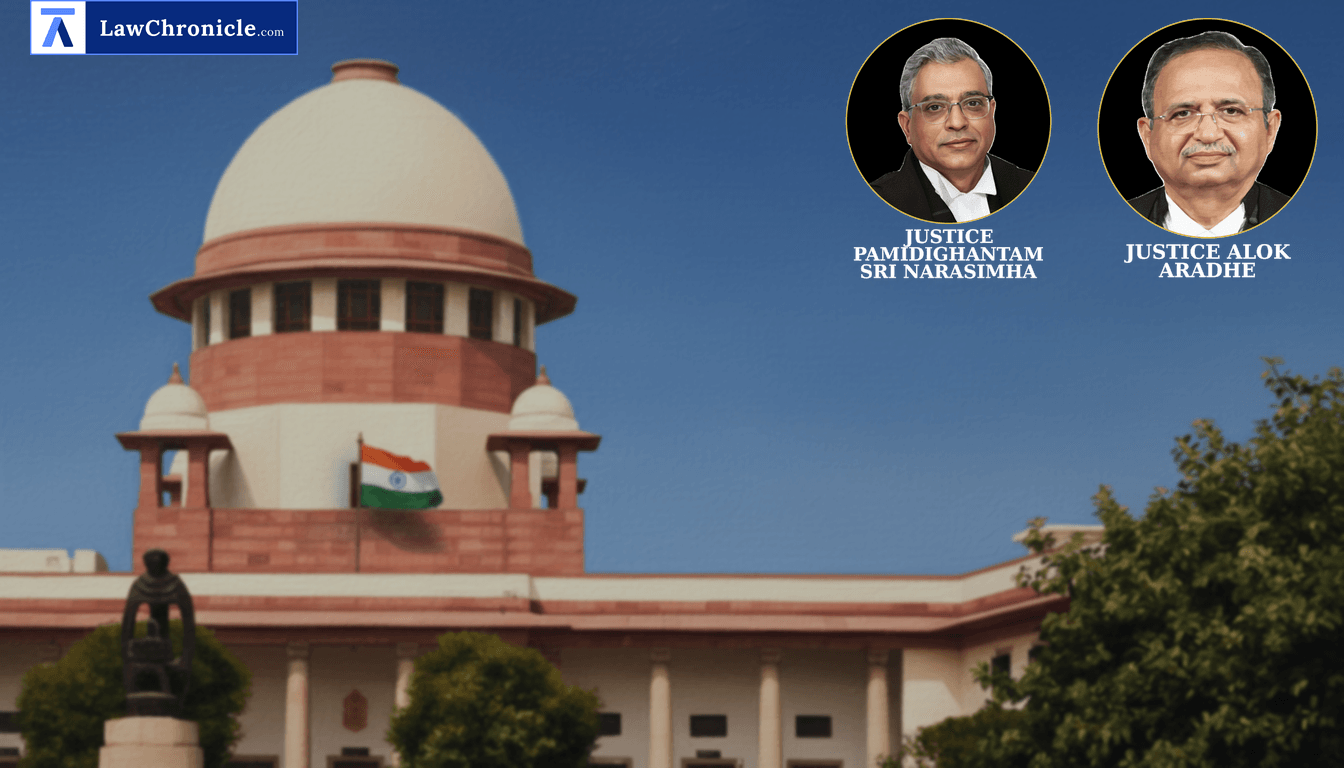
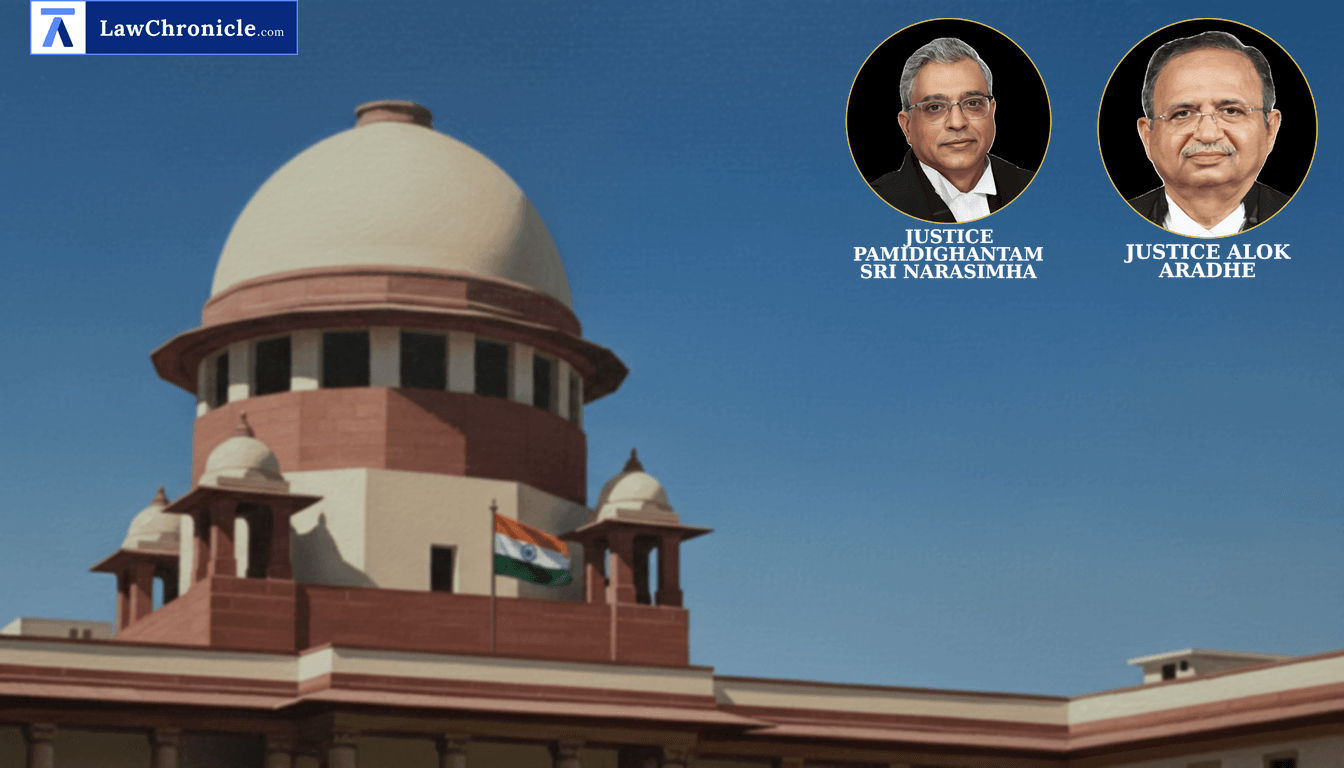
A bench of Justice Pamidighantam Sri Narasimha and Justice Atul S. Chandurkar heard an appeal by the State of Jharkhand against a High Court order that restored parts of an arbitral award granted to a contractor. The primary question before the Court was whether contractual excepted or prohibitory clauses that barred certain claims applied only to the employer or also constrained the Arbitral Tribunal — a position earlier read from Bharat Drilling & Foundation Treatment Pvt. Ltd. v. State of Jharkhand.
The Court allowed the appeal in part by concluding that the ratio of Bharat Drilling required reconsideration and by referring that decision to a larger bench for authoritative adjudication. The bench stressed the centrality of party autonomy in arbitration and held that "the agreement between the parties" must guide an Arbitral Tribunal when construing prohibitory clauses. The Court, in its reasoning, observed: "Applicability of excepted or prohibitory clauses would primarily depend upon the agreement between the parties, which alone is the guiding principle for the Arbitral Tribunal." It also noted earlier dicta that "party autonomy is fundamental to international commercial arbitration" and warned against treating Bharat Drilling as a blanket authority for all government contracts. The Court directed the Registry to place the judgment before the Chief Justice for constitution of a larger bench.
Background
The dispute arose from a construction contract between the State of Jharkhand and the Indian Builders, where the Arbitral Tribunal by award dated 19.04.2007 allowed certain claims of the contractor. The contract contained express clauses under the heading "4.20.0 CLAIMS", including: "4.20.2: No claim for idle labour, idle machinery, etc. on any account will be entertained…" and "4.20.4: No claim shall be entertained for business loss or any such loss." The State objected under Section 34 of the Arbitration and Conciliation Act, 1996, and the Civil Court set aside awards in respect of claim nos. 3, 4 and 6 on the ground that they were specifically barred by those contractual provisions. The respondent challenged that order before the High Court, which, relying on Bharat Drilling, restored the awards without an independent examination of the contractual clauses.
On appeal to this Court, Mr. Rajiv Shankar Dwivedi, for the State, submitted that Bharat Drilling was being misapplied to interpret prohibitory claim clauses in government contracts and that the High Court erred by failing to examine the contract. Mr. Manoj C. Mishra, for the respondent, urged support for the High Court decision. The Supreme Court reviewed precedent including Central Organisation for Railway Electrification (CORE), Pam Developments, and cases on the scope of Section 31(7) regarding interest, distinguishing the law on interest from the law on contractual prohibitions. The bench found that Bharat Drilling had not engaged with the contractual text at issue and that its reliance on Port of Calcutta — a decision concerned with interest — was inapposite. The Court concluded that clarity and consistency required reference of the issue to a larger bench and recorded that "the ratio of Bharat Drilling requires to be reconsidered."
The result was a referral for reconsideration; no final determination was made on the merits of the individual claims in the present appeals. The Registrar was directed to place the judgment and order before the Chief Justice for appropriate orders to constitute a larger bench.
Case Details: Case No.: 2025 INSC 1388 (CIVIL APPEAL NOS. 8261-8262 OF 2012) Case Title: The State of Jharkhand v. The Indian Builders Jamshedpur Appearances: For the Petitioner(s): Mr. Rajiv Shankar Dwivedi (Advocate for the State of Jharkhand) For the Respondent(s): Mr. Manoj C. Mishra (Advocate for the Respondent)
Similar Articles
 Breaking News


