


SC: Higher Rank Means Accountability; No Parity, Bank Manager’s Framing Charges Upheld
 Copy Link
 Share
 Save
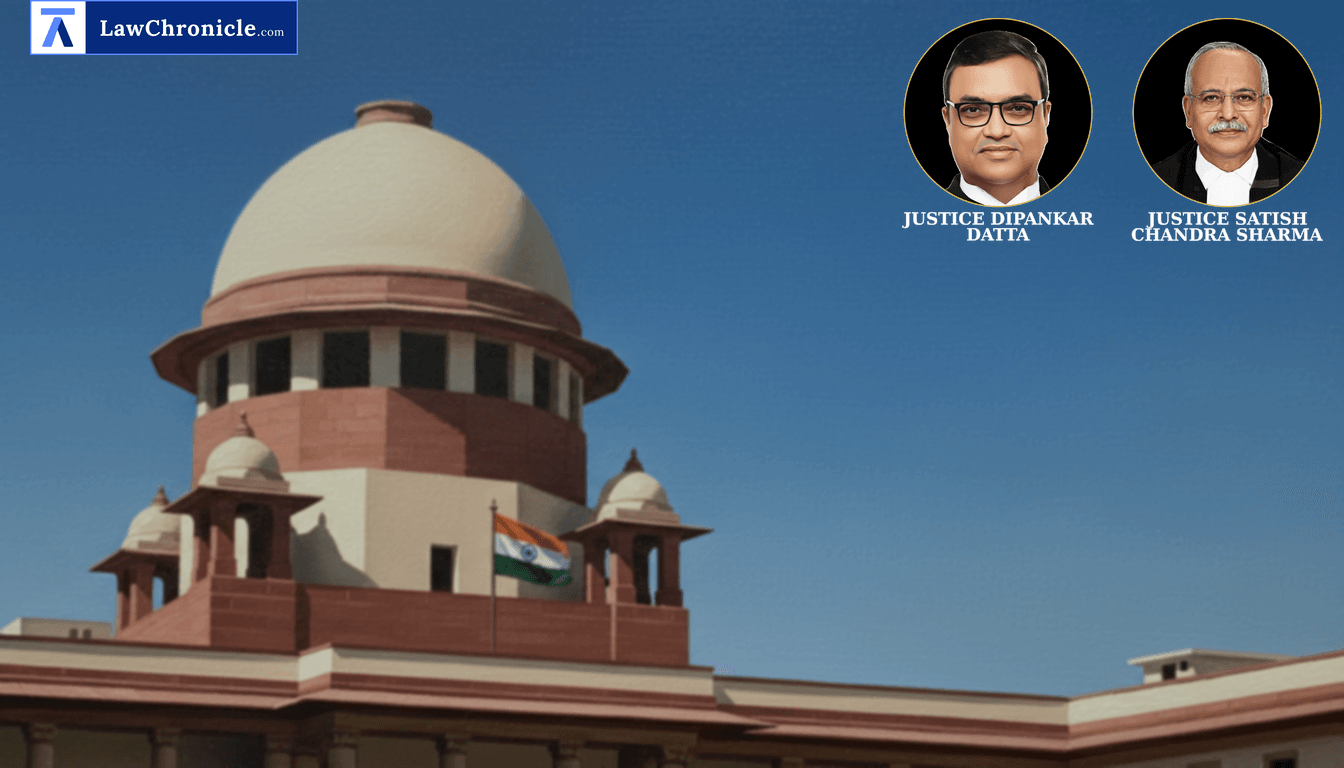
A bench of Justice Dipankar Datta and Justice Satish Chandra Sharma heard the appeal filed by Punjab & Sind Bank against a Division Bench of the Delhi High Court, which had affirmed a Single Judge’s order converting a dismissal from service into compulsory retirement on grounds of parity and Article 14. The challenge raised was limited: whether the High Court erred in interfering with the disciplinary authority’s imposition of the maximum penalty when co-delinquents received lighter punishments for related misconduct.
The Court allowed the appeal, set aside the impugned High Court and Single Judge orders and restored the disciplinary authority’s order of dismissal. The bench emphasised judicial restraint in review of disciplinary punishments and reiterated that interference would be warranted only in “exceptional and rare” cases where the penalty was “strikingly or shockingly disproportionate” or where no reasonable person could have imposed the punishment.
The Court, in its reasoning, observed: “What follows from the precedents noted above is that courts should exercise restraint while interdicting orders of punishment. Normally, no court in exercise of its power of judicial review should interfere with an order of punishment imposed on a delinquent as a measure of disciplinary action by the competent authority ... interference could be warranted if it appeals to the court that the disciplinary authority has ‘used a sledgehammer for cracking a nut’. A punishment, which is strikingly or shockingly disproportionate and is not commensurate with the gravity of misconduct, proved to have been committed in the course of inquiry or otherwise, would border on arbitrariness and offend Article 14 of the Constitution.” The Court also noted that “The greater the trust reposed, the stricter the scrutiny imposed,” and held that higher rank attracted greater accountability: “Authority carries accountability; higher the authority, higher the accountability.”
Background:
The respondent joined Punjab & Sind Bank in 1987 and rose to the post of Senior Manager in MMGS-III. He was placed under suspension in December 2011 and, following a departmental inquiry on allegations of connivance to misappropriate customer funds and theft of bank records, the disciplinary authority dismissed him from service on 25 November 2024. Two co-delinquents — an officer and a gunman — received lesser punishments: the co-officer was penalised by “lowering by two stages,” and the gunman was compulsorily retired. The respondent’s departmental appeals and review did not succeed, and he approached the High Court by writ petition.
On initial hearing, a Single Judge directed reconsideration and later, on remand, allowed the writ petition limited to the quantum of punishment and converted dismissal to compulsory retirement on parity and Article 14 grounds. The Division Bench of the Delhi High Court dismissed the bank’s intra-court appeal and affirmed that order. The bank approached this Court by special leave.
The Supreme Court reviewed settled precedents governing judicial interference in disciplinary sanctions — including principles from Bhagat Ram, Ranjit Thakur, B.C. Chaturvedi, Ganayutham and Om Kumar — and reiterated that judicial review of punishment was a secondary role applying Wednesbury-type reasonableness; intervention was confined to cases of perversity, irrationality or disproportionality that “shocked the conscience”. Applying those principles to the facts, the Court found no such perversity. It held that the respondent’s senior post carried greater responsibility and oversight, and that differential treatment in punishment, on account of rank and accountability, did not amount to arbitrary discrimination. The Court concluded that the High Court erred in substituting its view and in granting parity without appreciating the difference in authority and responsibility. Consequently, the order converting dismissal to compulsory retirement was set aside, and the original punishment of dismissal from service was restored. The appeal was allowed and the parties were directed to bear their own costs.
Case Details:
Case No.: CIVIL APPEAL NO. 847 OF 2026
NeutralCitation: 2026 INSC 313
Case Title: Punjab & Sind Bank v. Sh. Raj Kumar
Appearances:
For the Petitioner(s): Mr. Rajesh Kumar Gautam, Advocate
For the Respondent(s): Mr. G.S. Chaturvedi, Advocate
Source: 2026 CaseBase(SC) 276
Similar Articles


 Breaking News


