


Delhi HC: Treating Unauthorised Absence as Leave Without Pay Does Not Absolve Misconduct
 Copy Link
 Share
 Save
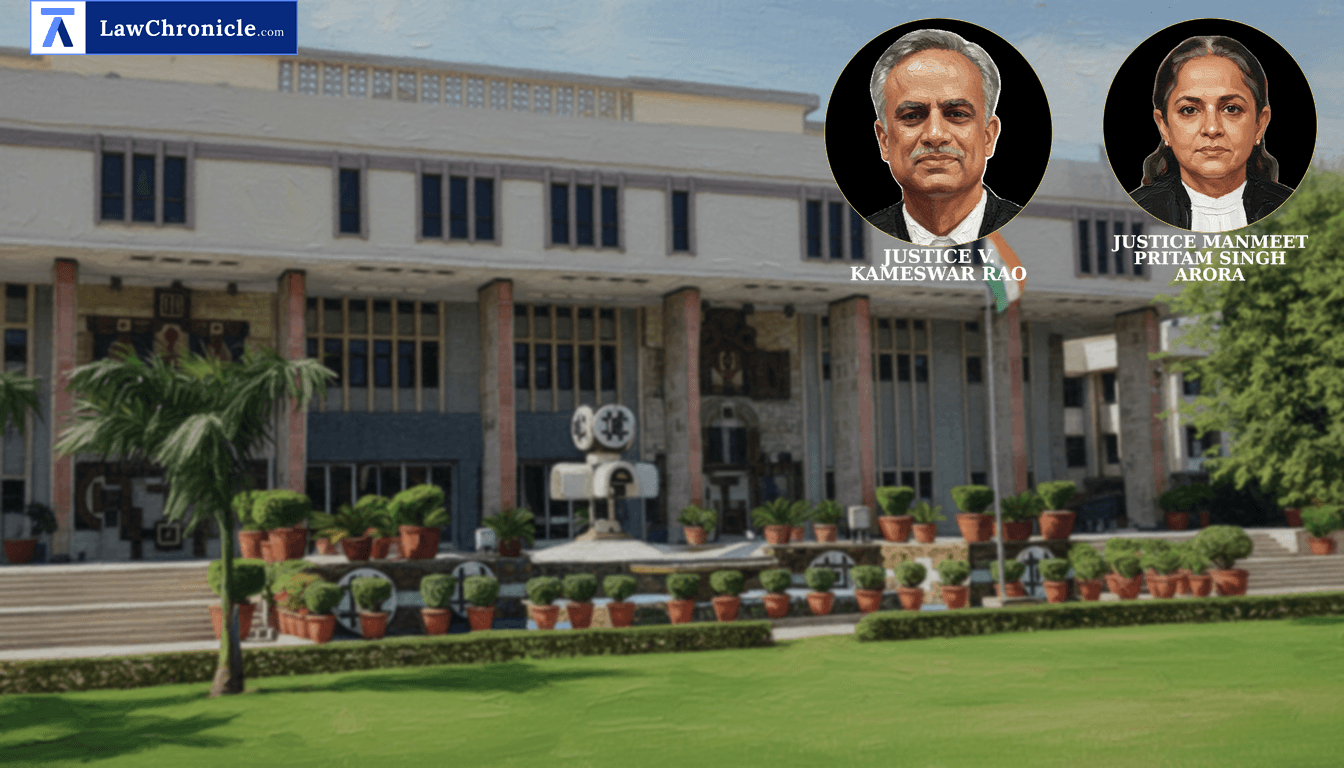
The Delhi High Court has fortified the disciplinary authority of public corporations, ruling that the mere administrative act of regularising an employee's unauthorised absence as 'leave without pay' does not extinguish the underlying misconduct or shield the individual from dismissal. This judgment clarifies that such accounting adjustments are strictly for maintaining service records and cannot be interpreted as a retrospective sanction of misconduct that would invalidate termination proceedings.
A Division Bench comprising Justice V. Kameswar Rao and Justice Manmeet Pritam Singh Arora upheld the decision of a Single Judge which had set aside an Industrial Tribunal's order in favour of a deceased driver of the Delhi Transport Corporation. The Court was hearing an appeal regarding whether the treatment of absence as 'leave without pay' effectively pardons the delinquency of an employee.
Regularisation of Absence for Record-Keeping vs. Sanctioned Leave
The Court examined whether the Corporation's internal decision to mark 22 days of unauthorised absence as 'leave without pay' included in a total of 214 days of absence precluded them from taking disciplinary action. The Industrial Tribunal had previously held that such a treatment meant no misconduct remained. However, the High Court, relying on established precedents from the State of Madhya Pradesh v. Harihar Gopal and Delhi Transport Corporation v. Sardar Singh ( "2004 (6) SCALE 613": 2004 CaseBase(SC) 422), rejected this interpretation.
The Court, in its reasoning, observed: "...even if the absence is treated as leave without pay, the same does not absolve the employee of misconduct or lapses. ...the regularization of leave without pay is only for the purpose of maintaining correct record of service which does not interfere nor obliterate the order of dismissal from service."
Validity of Charges and Opportunity to Defend
The appellants argued that the charges issued against the deceased employee were vague as they did not specify exact dates of absence. The Bench dismissed this contention, noting that the leave statements were provided during proceedings. The Court further observed that the employee had been given multiple opportunities to join the domestic enquiry but chose not to appear, thereby failing to rebut the charges of habitual absence.
Regarding the tribunal's dismissal of the application under Section 33(2)(b) of the Industrial Disputes Act, 1947, the Court held:
"The Court has the following directions: “In view of the aforesaid discussion, I find that the impugned order dated 11th February, 1999 of the Trial Court is contrary to the law laid down by the Hon’ble Supreme Court. The same is set aside. The approval application is decided in favour of the Petitioner. Petition is disposed of accordingly.”
Background:
The dispute began when Pyare Lal, a driver with the Delhi Transport Corporation, was removed from service on April 27, 1993, following a history of habitual unauthorised absence. Between 1979 and 1991, the employee had been repeatedly cautioned and penalised for being away from duty without permission. In February 1993, he was charge-sheeted for 22 days of unauthorised absence. Despite several notices, he did not participate in the domestic enquiry. Consequently, the Corporation moved an application under Section 33(2)(b) of the Industrial Disputes Act, 1947 for approval of his removal. The Industrial Tribunal rejected this application, ruling that since the Corporation treated the absence as 'leave without pay' based on the testimony of a management witness, the misconduct stood regularised. The Single Judge overturned this, leading to the present Letters Patent Appeal (LPA) by the legal representatives of the deceased employee.
Key Takeaways:
Administrative Records vs. Disciplinary Action
Marking an absence as 'leave without pay' is a procedural requirement for service history and does not constitute a waiver of the right to punish for unauthorised leave.
Burden of Proof on Employee
As per Delhi Transport Corporation v. Sardar Singh ( "2004 (6) SCALE 613": 2004 CaseBase(SC) 422), the burden lies on the employee to establish that the absence was not due to negligence or lack of interest, especially when the absence is habitual.
Judicial Consistency in Labour Law
Tribunals cannot ignore settled Supreme Court precedents like State of Madhya Pradesh v. Harihar Gopal even if the specific facts of a newer case (like Delhi Transport Corporation v. Sardar Singh ( "2004 (6) SCALE 613": 2004 CaseBase(SC) 422)) were not available at the time of the original dispute, provided the legal principle remains the same.
Ratio Decidendi:
The administrative regularisation of an unauthorised period of absence as 'leave without pay' for the purpose of maintaining service records and accounting does not amount to a retrospective sanction of the absence and does not absolve the employee of the misconduct inherent in staying away from duty without prior permission.
Case Details:
Case No.: LPA 550/2013
Case Title: PYARE LAL (SINCE DECEASED) THR LRS v. DELHI TRANSPORT CORPORATION
Appearances:
For the Petitioner(s): Mr. Arun Bhardwaj, Senior Advocate with Mr. Pranava Rastogi and Ms. Ashu Tiwari, Advocates.
For the Respondent(s): Ms. Avnish Ahlawat SC, DTC, Mr. Uday Singh Ahlawat, Ms. Tania Ahlawat, Mr. Nitish Kumar Singh, Mr. Nitesh Kumar Singh, Ms. Aliza Alam and Mr. Mohnish Sehrawat, Advocates.
Source: 2026 CaseBase(DEL) 471
Similar Articles
 Breaking News


