


Tribunal Must Invoke 'No Fault Liability' in MV Act Despite Rejection Of Negligence Claim: Sikkim HC
 Copy Link
 Share
 Save
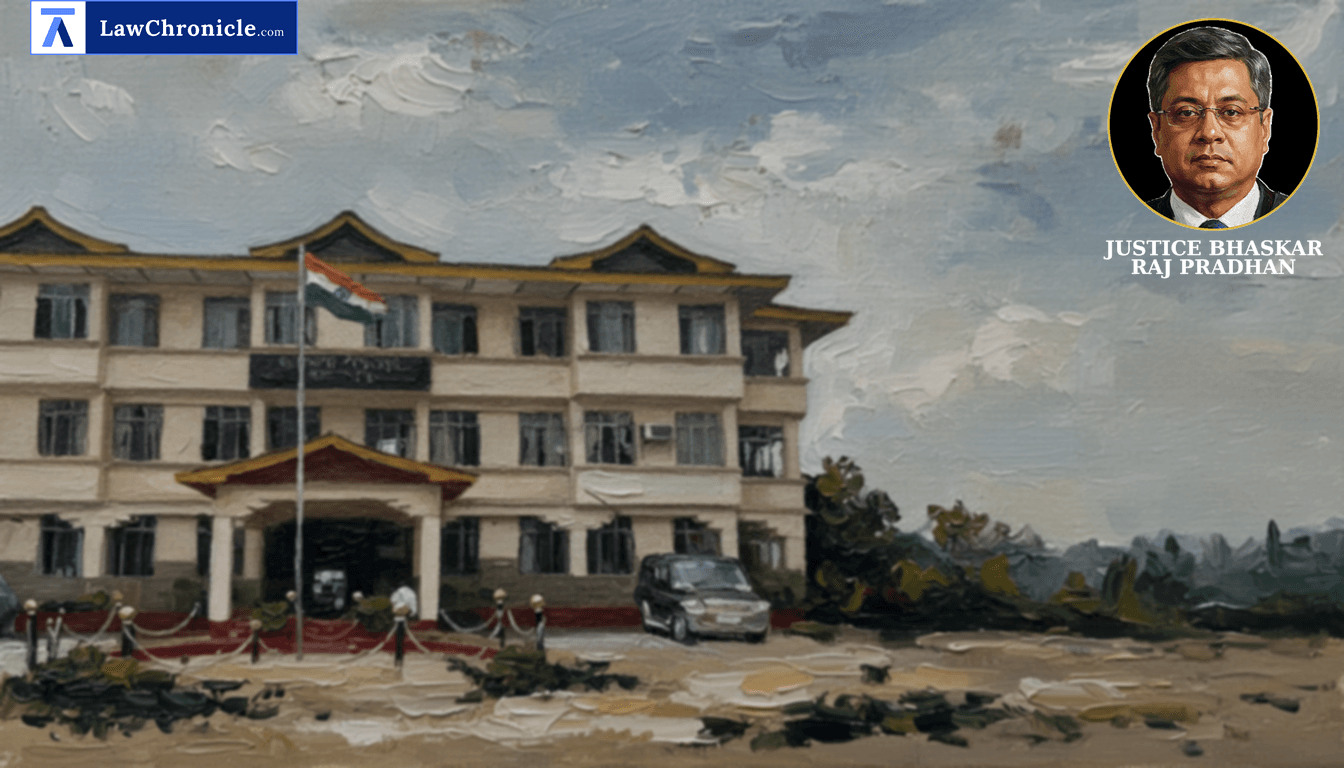
The Sikkim High Court has mandated that Motor Accident Claims Tribunals must grant 'no fault liability' compensation even when claims for rash and negligent driving are dismissed, ensuring victims receive statutory relief despite findings of mechanical failure. This ruling reinforces the benevolent nature of motor accident law, holding that insurance companies cannot evade indemnity obligations by relying on the lack of information possessed by claimants regarding policy terms.
A Single Bench of Justice Bhaskar Raj Pradhan heard the appeal challenging a Tribunal's decision to dismiss a compensation claim following a fatal accident. The Court addressed whether the heirs of a deceased occupant are entitled to relief under the principle of no-fault liability when the primary claim of negligence fails.
Key Takeaways
Mandatory No Fault Liability in MV Act
Tribunals are duty-bound to invoke Section 140 of the Motor Vehicles Act, 1988 even if the primary allegation of rash and negligent driving is not proved.
Insurer's Duty of Disclosure
Insurance companies must proactively file complete policy documents and clarify indemnity limits rather than placing the burden of proof entirely on uninformed claimants.
Beneficial Interpretation of Law
Courts can apply enhanced compensation rates from newer statutory provisions to cases originating under older regimes to fulfill the legislative intent of social security.
Insurer Conduct and No-Fault Liability
The Sikkim High Court expressed concern over the lack of transparency in insurance certificates, noting that requiring policyholders to navigate complex websites to understand indemnity limits is unacceptable. Referring to National Insurance Company Limited New Delhi vs. Jugal Kishore & Ors., the Bench emphasized that instrumentalities of the State and insurance providers must act fairly and produce documents helpful for doing justice.
Ratio
Even if a claim under Section 166 of the Motor Vehicles Act, 1988 is rejected due to the absence of rash and negligent driving, the Tribunal is advised to invoke Section 140 to provide compensation under no-fault liability, as the owner's liability for such fixed sums is regardless of wrongful acts or neglect.
Background
The dispute arose from a motor accident on November 12, 2019, involving a vehicle owned by Mani Kumar Chettri. The deceased, Deepen Mukhia, was an occupant of the vehicle. The claimants filed an application under Section 166 of the Motor Vehicles Act, 1988, but the learned Tribunal at Gangtok dismissed it, finding the accident was caused by brake failure and not rash driving by the respondent-driver. The Tribunal also noted the registration of a case under Sections 279, 337, and 304A of the Indian Penal Code, 1860.
On appeal, the appellants restricted their prayer to no-fault liability compensation. The insurance company argued that the deceased was a tortfeasor and thus his heirs were not entitled to compensation. However, the High Court relied on Eshwarappa Alias Maheshwarappa & Anr. vs. C.S. Gurushanthappa & Anr., Indra Devi & Ors. vs. Bagada Ram & Anr. ( "(2010) 13 SCC 249": 2010 CaseBase(SC) 786), Nishan Singh & Ors. vs. Oriental Insurance Company Limited, and Ram Murti & Ors. vs. Punjab State Electricity Board to establish that insurer liability for occupants under package policies is settled. Following the principle in Ram Murti & Ors. vs. Punjab State Electricity Board, the Sikkim High Court enhanced the compensation to Rs. 5 Lakhs, treating it as a beneficial provision.
Case Details:
Case No.: MAC App. No. 20 of 2024
Case Title: Rekha Chettri & Ors. vs. TATA AIG General Insurance Company & Ors.
Appearances:
For the Petitioner(s): Mr. Sishir Mothay, Advocate
For the Respondent(s): Mr. Rahul Rathi and Ms. Khushboo Rathi, Advocates for Respondent No. 1; Mr. Bhim Shankar Pradhan, Advocate for Respondent Nos. 2 & 3.
Source: 2026 CaseBase(SIK) 64
Similar Articles
 Breaking News


