


Insurer Liable for Owner's Death as Passenger Under Package Policy: Uttarakhand HC
 Copy Link
 Share
 Save
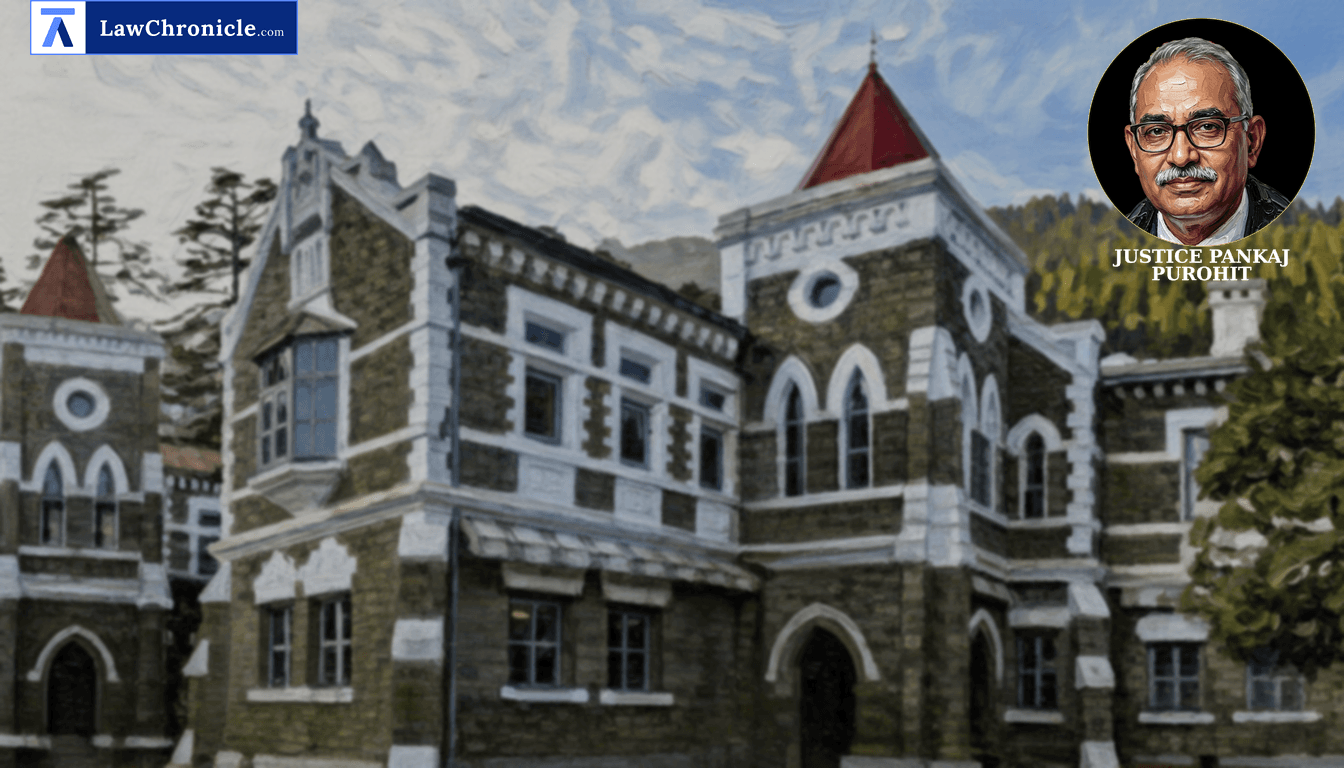
The Uttarakhand High Court has dismantled the 'hyper-technical' shield often used by insurers to deny compensation for an owner's death, ruling that a comprehensive package policy covers the owner specifically when travelling as an occupant or passenger. In a decisive verdict, Justice Pankaj Purohit overturned a Tribunal's dismissal of a road accident claim petition, emphasizing that the contractual terms of a "Package Policy" must be interpreted to give effect to the additional premiums paid for passenger risk. The Uttarakhand High Court noted that when a vehicle owner dies while being driven by another individual, their status as a 'passenger' remains intact for indemnification purposes under broad-spectrum insurance contracts.
Key Takeaways
- Policy Terms Supersede General Ownership Bars: The Uttarakhand High Court clarified that while an owner is generally not a 'third party', a specific package policy providing for 'passenger liability' overrides this restriction.
- Occupant Status of Deceased Owners: Legal heirs can maintain a claim under the Motor Vehicles Act, 1988 if the owner was travelling as an occupant and not operating the vehicle.
- Rejection of Hyper-Technical Approaches: The judiciary signaled a move toward consumer-friendly interpretations, citing IRDA circulars that mandate compensation for occupants under comprehensive policies.
- Future Prospects and Dependency Ratios: The ruling reinforces the application of standard multipliers and future prospect additions even in cases involving notional income assessments for self-employed owners.
Court Rejects 'Third Party' Exclusion for Owners in Package Policies
Summarizing the main holding, the Uttarakhand High Court clarified that the Tribunal erred by applying a blanket rule that an owner can never be indemnified. The Bench observed that the specific nature of the insurance policy, in this case, a "Passengers Carrying Commercial Vehicle Policy B Package", which included a specific premium for nine passengers, was the deciding factor. Since the deceased was not driving the vehicle, his ownership did not negate his status as a passenger covered under the specific terms of the contract.
The Uttarakhand High Court issued the following directions:
"The claimants shall be entitled to a total compensation of ₹8,34,800/- along with interest at the rate of 7% per annum from the date of filing of the claim petition till realization. Respondent no.1-Insurance Company shall deposit the aforesaid amount before the learned Tribunal within a period of eight weeks from today. Learned Claims Tribunal shall release the amount so deposited by the respondent-Insurance Company to the appellants/claimants forthwith."
In its reasoning, the Uttarakhand High Court relied on the evolving legal position regarding comprehensive policies. The Bench observed that "It is well settled that in matters concerning motor accident claims, Courts should not adopt a hyper-technical approach. As rightly submitted by the claimant-respondents, in accordance with the circular of the IRDA dated 16.11.2009, insurance companies are liable to compensate for any occupant in the vehicle under a comprehensive/package policy."
Ratio
Where an insurance policy is a 'Package Policy' or 'Comprehensive Policy' and the insurer has collected a specific premium to cover liability towards passengers/occupants, the insurance company is liable to indemnify the legal representatives of the owner of the vehicle if the owner dies while travelling as a passenger/occupant and was not driving the vehicle at the time of the accident. Ownership of the vehicle does not act as a bar to compensation when the status of the deceased at the time of the accident is that of a covered passenger under the express terms of the insurance contract.
Background
The dispute originated from a fatal accident on January 17, 2008, involving a Tata Spacio. The deceased, Laxman Singh, who was the owner of the vehicle, was travelling as a passenger while the vehicle was being driven by another individual. The Motor Accident Claims Tribunal (MACT) had originally dismissed the claim petition filed by the deceased's wife and children, relying on Dhanraj v. New India Assurance Co. Ltd. ( "(2004) 8 SCC 553": 2004 CaseBase(SC) 612) and Oriental Insurance Co. Ltd. v. Jhuma Saha ( "(2007) 9 SCC 263": 2007 CaseBase(SC) 486), holding that an owner is not a third party and cannot seek indemnification for his own death.
However, on appeal, the High Court distinguished Dhanraj v. New India Assurance Co. Ltd. ( "(2004) 8 SCC 553": 2004 CaseBase(SC) 612), noting that the policy in the present case was a package policy where a specific premium of ₹2,115/- was paid for "Liability to Passenger(s) 9". The Bench also referred to National Insurance Co. Ltd. v. Smt. Thungala Dhana Laxmi ( "2026 SCC OnLine SC 1486": 2026 CaseBase(SC) 730) to support the proposition that comprehensive policies must be given effect according to their terms. For the calculation of compensation, the Uttarakhand High Court applied the principles laid down in Laxmi Devi v. Mohammad Tabbar ( "(2008) 12 SCC 165": 2008 CaseBase(SC) 1193) for notional income, National Insurance Co. Ltd. v. Pranay Sethi ( "(2017) 16 SCC 680": 2017 CaseBase(SC) 551) for future prospects, and Sarla Verma v. Delhi Transport Corporation ( "(2009) 6 SCC 121": 2009 CaseBase(SC) 380) for the appropriate multiplier and deduction for personal expenses. The appeal was allowed, setting aside the 2012 Tribunal award.
Case Details:
Case No.: Appeal from Order No.208 of 2013
Neutral Citation: 2026:UHC:8213
Case Title: Smt. Poonam Devi and others Vs. The New India Assurance Company and another
Appearances:
For the Petitioner(s): Mr. Mohd. Suhail, learned counsel holding brief of Mr. Sandeep Kothari, learned counsel.
For the Respondent(s): Mr. T.A. Khan, learned Senior Advocate assisted by Ms. Jasmeen Wahid, learned counsel holding brief of Mr. Aditya Kumar Arya, learned counsel for the respondent no.1.
Source: 2026 CaseBase(UTT) 4984
Similar Articles
 Breaking News


