


UAPA Bail Not A Mechanical Right: Jharkhand HC Rejects Parity Plea In SP Murder Case
 Copy Link
 Share
 Save
In a stern reaffirmation of the statutory rigours under anti-terror laws, the Jharkhand High Court has ruled that the constitutional guarantee of liberty under Constitution of India, 1950 cannot serve as a 'trump card' to automatically displace the stringent bail embargoes of the Unlawful Activities (Prevention) Act, 1967 in cases involving national security. The Court emphasized that while individual liberty is a cornerstone of the rule of law, it remains subservient to the paramount interests of societal security and public order when grave offences like the ambush and killing of high-ranking police officials are alleged.
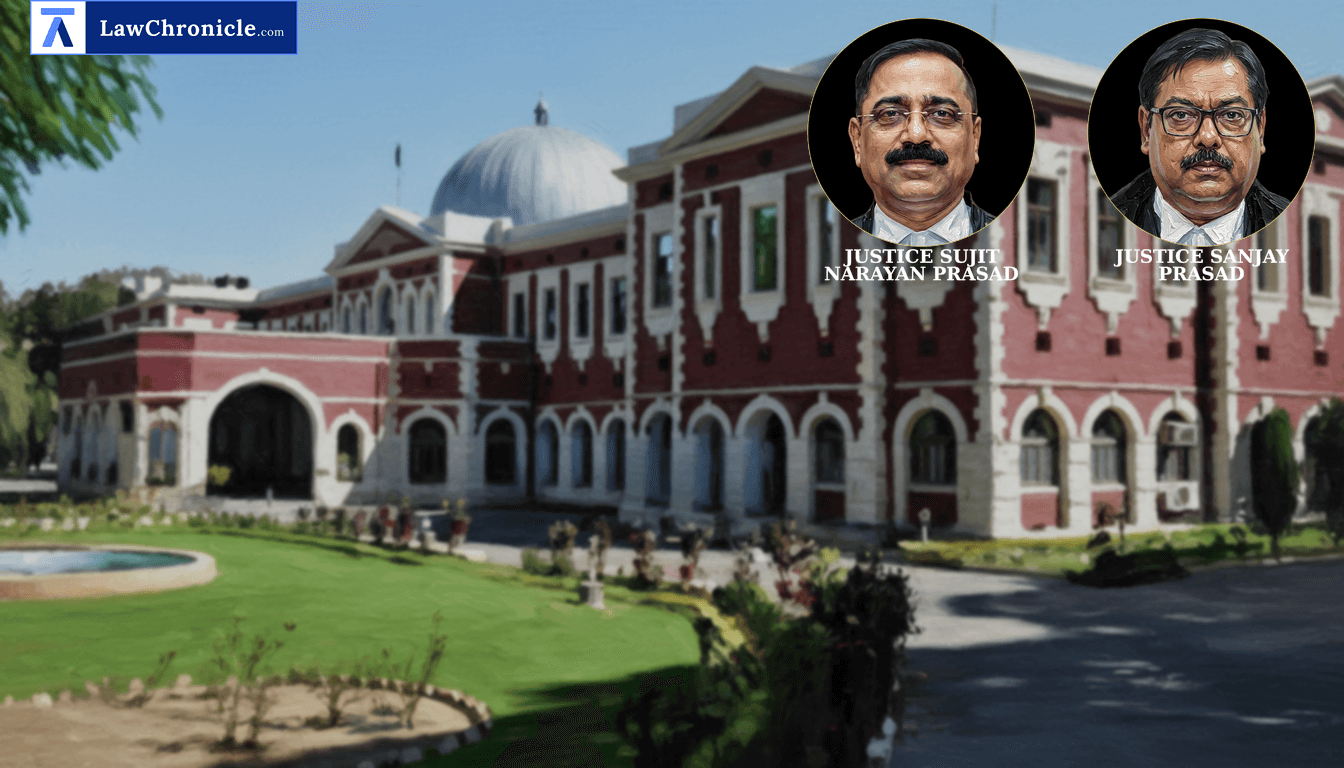
Adjudicating a plea for regular bail, a Division Bench comprising Justice Sujit Narayan Prasad and Justice Sanjay Prasad scrutinized the balance between prolonged pre-trial incarceration and the severity of accusations involving a banned organization. The appellant, allegedly a member of the Maoist Communist Centre (MCC), was accused of participating in a conspiracy that led to the 2013 ambush and killing of the Superintendent of Police, Pakur, and four other officers.
Key Takeaways
National Security Trumps Delay
In prosecutions involving the sovereignty and security of the State, mere delay in trial does not automatically entitle an accused to bail under Constitution of India, 1950.
Strict Interpretation of Section 43D(5)
Bail under the Unlawful Activities (Prevention) Act, 1967 remains the exception and jail the rule, provided the Court finds the accusations to be prima facie true based on the case diary.
Parity is Not Absolute
Parity cannot be claimed mechanically; Courts must focus on the specific role, degree of participation, and materials collected against the specific accused rather than just the weapon used or common FIR status.
Judicial Circumvention of Embargo
Constitutional Courts retain the power to grant bail despite statutory restraints only when detention becomes 'unconscionable', but this requires proportional balancing against the gravity of the offence.
Court's Rationale on Anti-Terror Jurisprudence
The Court observed that the conventional bail jurisprudence of 'bail is the rule, jail is the exception' finds no place within the framework of the Unlawful Activities (Prevention) Act, 1967. It noted that Section 43D(5) of the Act creates a unique statutory embargo, making the degree of satisfaction required for bail significantly lower a 'prima facie' standard than the 'strong suspicion' standard used for discharge. The Bench highlighted that once charges are framed, a presumptive opinion of factual ingredients exists, placing an arduous task on the accused to disprove the allegations for the purpose of bail.
Referring to the mandate of the National Investigation Agency Act, 2008 and the Unlawful Activities (Prevention) Act, 1967, the Court held that the legislative intent was to provide effective prevention of unlawful activities. It stressed that the role attributed to the accused, particularly in conspiracy, is a vital determinant. The Court, in its reasoning, observed: "In prosecutions alleging offences which implicate the sovereignty, integrity, or security of the State, delay does not operate as a trump card that automatically displaces statutory restraint. Rather, delay serves as a trigger for heightened judicial scrutiny. The outcome of such scrutiny must be determined by a proportional and contextual balancing of legally relevant considerations, including the gravity and statutory character of the offence alleged, the role attributed to the accused within the alleged design or conspiracy, the strength of the prima facie case... and the extent to which continued incarceration has become demonstrably disproportionate."
Rejection of Parity and Prolonged Custody Pleas
Analysis of Parity Claims
The appellant sought parity with co-accused who were granted bail after 7-8 years of custody. However, the Court distinguished the cases, noting that the materials against the present appellant (specifically paragraphs 150 and 151 of the case diary) indicated his attendance at a specific planning meeting just days before the ambush. The Bench relied on Ramesh Bhavan Rathod vs. Vishanbhai Hirabhai Makwana ( "(2021) 6 SCC 230": 2021 CaseBase(SC) 701) to reiterate that parity is not the law and the role of the accused is of utmost importance.
Article 21 vs. Statutory Restraints
While acknowledging the appellant's custody since November 2022, the Court cited Gurwinder Singh Vs State of Punjab and Another ( "2024 SCC OnLine SC 109": 2024 CaseBase(SC) 558) and Gulfisha Fatima versus State (Govt. of NCT of Delhi) ( "2026 LiveLaw (SC) 1": 2026 CaseBase(SC) 1) to conclude that in grave offences, mere delay cannot hamper the process of justice. The Court noted that the trial is at a material stage with 12 out of 47 witnesses already examined.
The Court has the following directions:
"In the result, the instant appeal fails and it is dismissed. However, liberty is reserved to the appellant that, in the event the trial is not concluded within a reasonable period of time, he shall be at liberty to move an appropriate application before the Court concerned seeking his release, which shall then be considered on its own merits and in accordance with law. It is made clear that any observation made herein will not prejudice the case of the appellant in course of trial and the view as expressed by this Court is only limited to the instant appeal."
Ratio
In cases involving offences under Chapter IV and VI of the Unlawful Activities (Prevention) Act, 1967, the principle of 'bail is the rule' is inverted. Prolonged incarceration under Constitution of India, 1950 does not automatically entitle an accused to bail if the accusations are prima facie true; the Court must perform a proportional balancing test, where the gravity of the offence against national security and the specific conspiratorial role of the accused can outweigh the duration of pre-trial detention.
Background
The case originated from an ambush on July 2, 2013, where a police convoy led by the SP of Pakur was attacked by MCC members, resulting in five fatalities. The FIR was registered under various sections of the Indian Penal Code, 1860, Criminal Law (Amendment) Act, Arms Act, 1959, and the Unlawful Activities (Prevention) Act, 1967. The appellant was arrested in 2022. He challenged the Dumka Sessions Court's order dated February 2, 2026, which denied him regular bail. He argued that he was not named in the FIR and that his continued detention violated his rights under Constitution of India, 1950. The State opposed the bail, citing specific witness statements linking him to the conspiracy meeting. The High Court, after perusing the case diary and following precedents like National Investigation Agency v. Zahoor Ahmad Shah Watali ( "2019 (5) SCC 1": 2019 CaseBase(SC) 2976) and Sri Ganesh Vrs. State of Tamil Nadu & Anr., found sufficient prima facie evidence to sustain the denial of bail.
Case Details:
Case No.: Criminal Appeal (DB) No.499 of 2026
Neutral Citation: 2026:JHHC:29508-DB
Case Title: Raj Kumar Bhagat @ Rajkumar Bhagat vs. The State of Jharkhand
Appearances:
For the Petitioner(s): Mr. Ayush Kumar, Advocate; Mr. Rakesh Kumar Mandal, Advocate; Mr. Abhijeet Karan, Advocate
For the Respondent(s): None
Source: 2026 CaseBase(JHKD) 3169
Similar Articles

 Breaking News


